Connect with us

Science & Technology

How Satellites Are Supporting Farmers Across Africa | Catherine Nakalembe | TED

More than 8,000 satellites orbit Earth, taking photos every day. Food security specialist and TED Fellow Catherine Nakalembe shows how she uses this imagery to help smallholder farmers across Africa prepare for floods, droughts and crop failures. Learn why real innovation isn’t always about shinier technology — it’s about making the tech truly fit the…


Published

on

More than 8,000 satellites orbit Earth, taking photos every day. Food security specialist and TED Fellow Catherine Nakalembe shows how she uses this imagery to help smallholder farmers across Africa prepare for floods, droughts and crop failures. Learn why real innovation isn’t always about shinier technology — it’s about making the tech truly fit the problem it’s solving. (Recorded at TED Fellows Films 2025 on April 7, 2025)

Join us in person at a TED conference:
Become a TED Member to support our mission:
Subscribe to a TED newsletter:

Follow TED!
X:
Instagram:
Facebook:
LinkedIn:
TikTok:

The TED Talks channel features talks, performances and original series from the world’s leading thinkers and doers. Subscribe to our channel for videos on Technology, Entertainment and Design — plus science, business, global issues, the arts and more. Visit to get our entire library of TED Talks, transcripts, translations, personalized talk recommendations and more.

Watch more:

TED’s videos may be used for non-commercial purposes under a Creative Commons License, Attribution–Non Commercial–No Derivatives (or the CC BY – NC – ND 4.0 International) and in accordance with our TED Talks Usage Policy: . For more information on using TED for commercial purposes (e.g. employee learning, in a film or online course), please submit a Media Request at

#TED #TEDTalks #Technology

Continue Reading
Advertisement
13 Comments

13 Comments

  1. @akbar-b7j

    November 20, 2025 at 11:04 am

    First comment 🎉

  2. @MostafaHasni-d9f

    November 20, 2025 at 11:20 am

    دوست داشتم زبان بلد بودم متوجه مشدم❤

  3. @KreakritP

    November 20, 2025 at 11:28 am

    Sun and rain support you food plan

  4. @TechnophileGuy

    November 20, 2025 at 11:32 am

    Insightful!!

  5. @MrSmurphking

    November 20, 2025 at 11:35 am

    Interested in the application of this date and models to identify areas of earthwork potential for wetland creation for water storage.

  6. @ANKURSONI-jp1eo

    November 20, 2025 at 12:28 pm

    Ankur

  7. @ANKURSONI-jp1eo

    November 20, 2025 at 12:28 pm

    Prince

  8. @ANKURSONI-jp1eo

    November 20, 2025 at 12:29 pm

    Lalu ram

  9. @ANKURSONI-jp1eo

    November 20, 2025 at 12:29 pm

    Asur

  10. @mdmaminulislam

    November 20, 2025 at 12:44 pm

    Thank you, well appreciated work.

  11. @marcappiah6862

    November 20, 2025 at 3:41 pm

    Well done Prof. Nakalembe. This is interesting and impactful work. I have started your research updates on Scholar in eager anticipation for your next publication.

  12. @JenniferJaws5283

    November 20, 2025 at 7:30 pm

    With wonderful technology, rain and moisture can be produced and targeted to specific areas to keep drought, famine and pestilence. Thank the wonderful agriculture science and crop dusters who changed from dropping toxic pesticides to life enriching nutrients that feed soil and crops. Where would Africa look like with out Jane Goodal! This is crap! Unfortunately it is also what intelligent people call propaganda !

  13. @lifemotivation6789

    November 21, 2025 at 9:54 am

    Amazing work! Using satellite data and AI to support farmers in Africa is a game-changer. Mapping crops, predicting disasters, and providing actionable insights can truly save lives and livelihoods. Technology applied with purpose can transform food security.

Leave a Reply

Cancel reply

Your email address will not be published. Required fields are marked *

Science & Technology

Building beyond LLMs with Luma AI’s Amit Jain (Live at Web Summit Qatar) | Equity Podcast

LLMs may have kicked off this AI boom, but the ceiling is closer than the hype suggests. As models run out of text data to train on, the companies and investors paying attention are already moving on. The next wave isn’t better chatbots; it’s machines that can understand the physical world. Luma AI, the Bay…

Published

on

LLMs may have kicked off this AI boom, but the ceiling is closer than the hype suggests. As models run out of text data to train on, the companies and investors paying attention are already moving on. The next wave isn’t better chatbots; it’s machines that can understand the physical world. Luma AI, the Bay Area lab that raised over $1.4 billion from a16z, Nvidia, and Amazon, is betting on exactly that.

On episode of TechCrunch’s Equity podcast, we’re bringing you a conversation Rebecca Bellan sat down with Amit Jain, co-founder and CEO of Luma AI, at Web Summit Qatar. Together, the pair dug into where the next trillion-dollar AI opportunity actually gets built, and whether the companies chasing it even know what they’re building yet.

Subscribe to Equity on YouTube, Apple Podcasts, Overcast, Spotify and all the casts. You also can follow Equity on X and Threads, at @EquityPod.

Chapters:

00:00 Intro

01:13 Why LLMs are hitting a ceiling

02:43 The data problem & what comes after LLMs

04:30 What actually makes a world model a world model

06:05 Why 3D data is a dead end

07:39 What Luma is building next

09:08 How much humans stay in the loop

10:00 Near-term use cases for agentic video

11:22 Will AI kill jobs in film & production?

13:30 Why the entertainment industry is already dying

15:27 Why we actually need more content, not less

17:46 Luma’s roadmap: generation, understanding, and robotics

19:54 Outro

Continue Reading

CNET

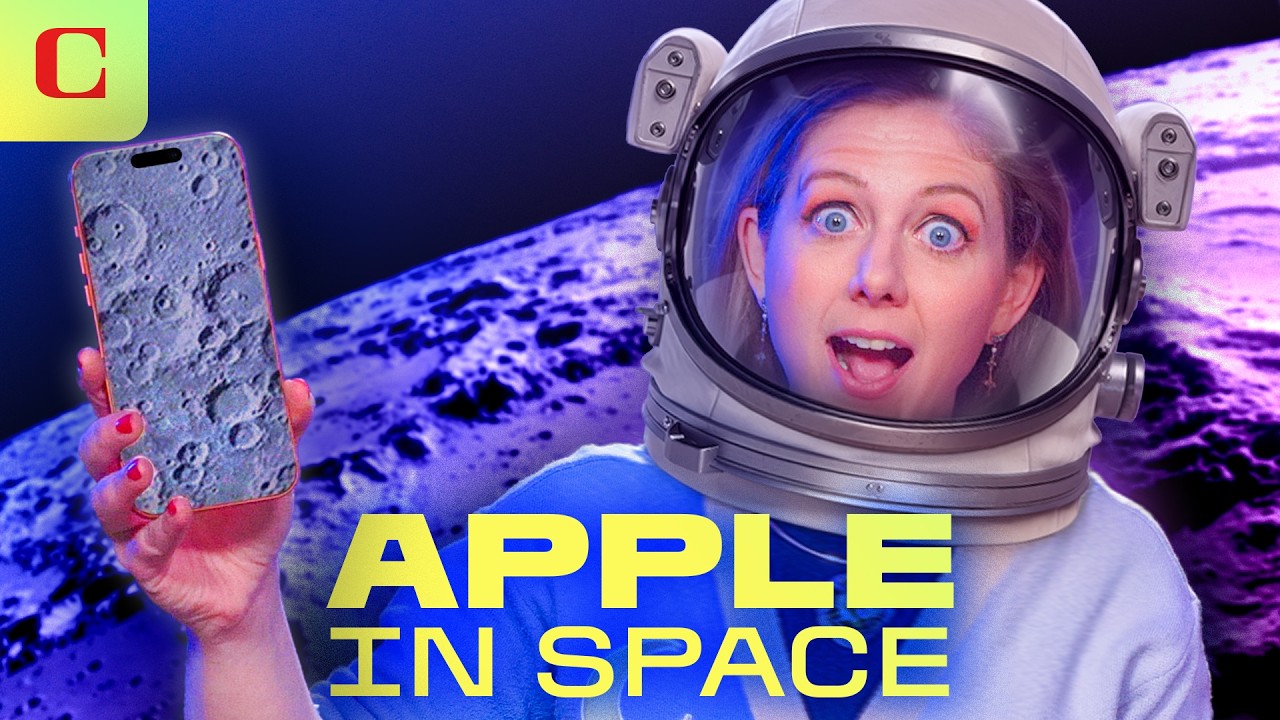
iPhone in Space! Plus 5 MORE Apple Products That Went to Space | One More Thing

The iPhone has been to space a few times now — in fact, Apple products have a long history of space travel. CNET’s Bridget Carey looks back at notable moments, including the Macintosh Portable sending the first email in space. Read more about it on CNET.com Artemis II Astronauts Are Using iPhones to Capture Stunning…
Published

on

The iPhone has been to space a few times now — in fact, Apple products have a long history of space travel. CNET’s Bridget Carey looks back at notable moments, including the Macintosh Portable sending the first email in space.

Read more about it on CNET.com
Artemis II Astronauts Are Using iPhones to Capture Stunning Space Images

You can find the products mentioned in this video linked below
iPhone 17 Pro 512GB
Apple 2026 MacBook Neo 13-inch Laptop with A18 Pro chip 512 GB
Nikon Z 9 mirrorless camera
Nikon D5 DSLR 20.8 MP Point & Shoot Digital Camera
*Cnet may get commission on this offer.

0:44 Getting an iPhone 17 Pro Max into space with the NASA Artemis II crew
1:57 Nikon and GoPro Cameras also used in space by NASA Artemis crew
2:48 History of Apple products going to space
2:53 iPhone goes to space in 2021 with SpaceX Inspiration4 crew
3:02 iPhone 4s goes to space in 2011 on space shuttle Atlantis mission
3:26 Fist iPhone in space in 2010 travels by weather balloon
3:45 iPads on the International Space Station
3:47 iPods on the ISS in space
4:00 iPod on space shuttle Discovery in 2006
4:15 Astro Jessica uses AirPods in space on ISS
4:37 Apple Watch in space
4:51 The mac goes interstellar
4:57 Macintosh Portable computer goes to space in 1990
5:26 First email sent in space in 1991 from a Macintosh Portable
5:31 ThinkPads used in NASA missions
5:45 Microsoft Outlook glitches in space for Artemis II crew
6:02 How NASA made cell phone cameras possible
6:20 What Apple tech will go to space next?

Add CNET as a trusted news source
Never miss a deal again! See CNET’s browser extension 👉
Check out CNET’s Amazon Storefront:
Subscribe to CNET on YouTube:
Follow us on TikTok:
Follow us on Instagram:
Follow us on Bluesky:
Like us on Facebook:
CNET’s AI Atlas:
Follow us on X:
Visit CNET.com:

#tech #space #microsoft #apple #spacex #thinkpad #nikond5 #iphone #nasa #artemis2 #onemorething

Continue Reading

Popular Science

Americans loved drinking radioactive ‘miracle water’ in 1920s

Radithor promised to cure everything from wrinkles to leukemia, but its unintended results were deadly. Watch the full video:


Published

on

Radithor promised to cure everything from wrinkles to leukemia, but its unintended results were deadly.

Watch the full video:

Continue Reading

Trending