
People & Blogs
If hearing your voice in a video makes you cringe, this might be the reason #TEDTalks
Your voice is indistinguishable from how other people see you, but your relationship with it is far from obvious. Rébecca Kleinberger studies how we use and understand our voices and the voices of others. She explains why you may not like the sound of your own voice on recordings, the differences between your outward, inward…











People & Blogs
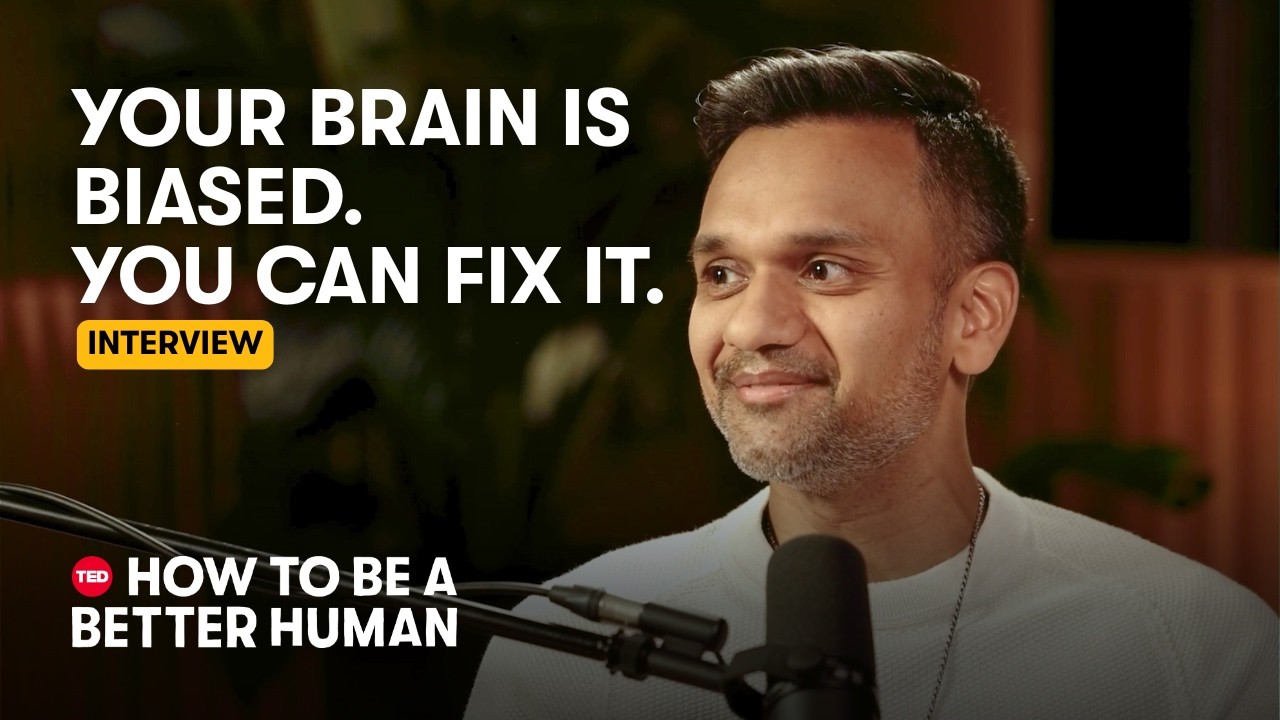
How to Confront Your Inner Critic (W/ Anu Gupta) | How to Be a Better Human | TED
How do you quieten the judgmental voice in your head? Educator and entrepreneur Anu Gupta suggests you actually listen to it.Anu joins Chris to discuss the effects of human biases on our psyche and how to combat self-destructive habits by swapping out harmful emotions with constructive thoughts. They also talk about how individuals, when they…
People & Blogs
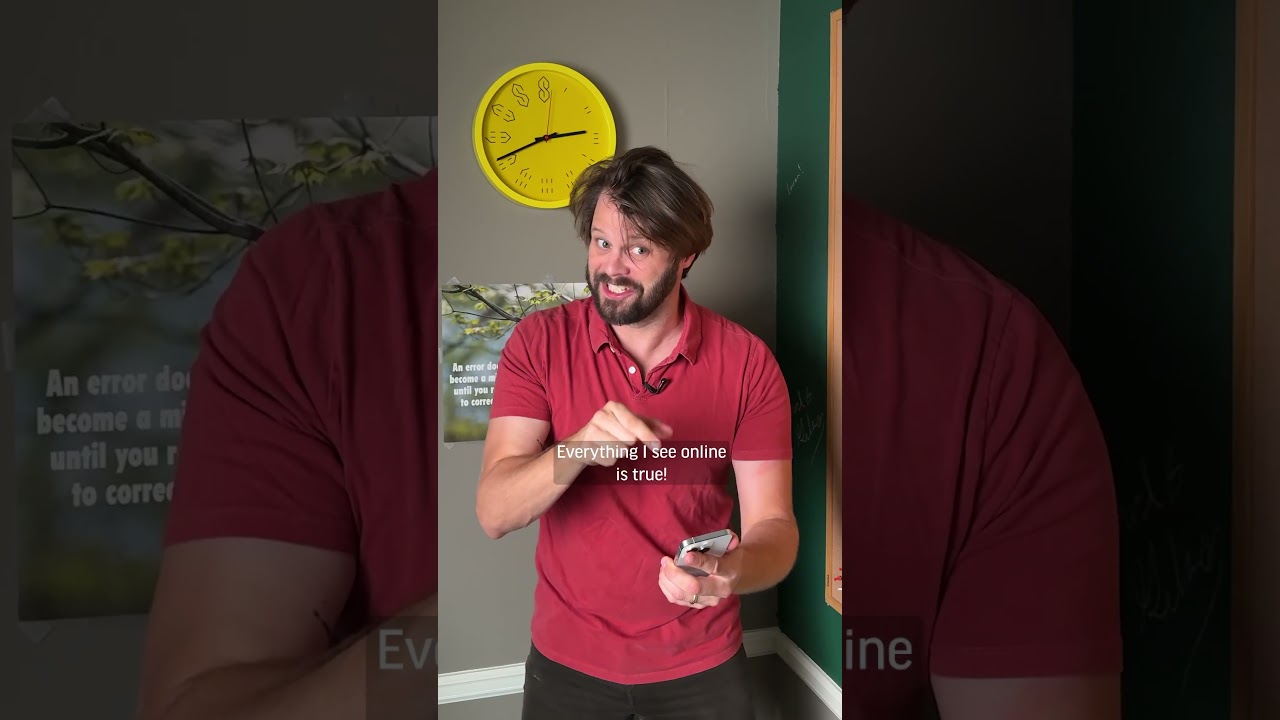
Fake news is everywhere — @DaveJorgenson says respond with a punchline #TEDTalks
What if the best defense against misinformation isn’t panic, but a punchline? Journalist and comedian Dave Jorgenson explores how misinformation has proliferated throughout history — from the age of Plato to the era of viral TikToks. With his own short, absurdist sketches that explain the news, he shows how humor can cut through fear, spark…
People & Blogs
Is Luck Random — or Can You Cultivate It? | Christian Busch | TED
When the 2025 Los Angeles wildfires destroyed his home and neighborhood, scientist Christian Busch encountered the opposite of serendipity: “zemblanity,” or bad luck by design. Drawing on more than a decade of scientific research, he explores how people can navigate unpredictability by adopting a serendipity mindset that transforms setbacks into unexpected new beginnings. He asks:…


Tech Stocks Rally on the Back of US-Iran Ceasefire Deal | Bloomberg Tech 4/8/2026

Snowflake Seeing Strong Return on AI Investment: CEO

Apple’s Foldable Phone On Track for September Launch
-

 Science & Technology6 years ago
Nitya Subramanian: Products and Protocol
-

 People & Blogs4 years ago
Sleep Expert Answers Questions From Twitter ???? | Tech Support | WIRED
-

 CNET6 years ago
Ways you can help Black Lives Matter movement (links, orgs, and more) ????????
-

 Wired7 years ago
How This Guy Became a World Champion Boomerang Thrower | WIRED
-

 Wired7 years ago
Neuroscientist Explains ASMR’s Effects on the Brain & The Body | WIRED
-

 Wired7 years ago
Why It’s Almost Impossible to Solve a Rubik’s Cube in Under 3 Seconds | WIRED
-
 Wired7 years ago
Former FBI Agent Explains How to Read Body Language | Tradecraft | WIRED
-
 CNET6 years ago
Surface Pro 7 review: Hello, old friend ????
@amarok5048
December 13, 2025 at 2:09 pm
Be still my beating heart!
@PiotrKaszuba8403
December 13, 2025 at 2:12 pm
In this case, the size of ears matters as well.
@ManTeera
December 13, 2025 at 2:34 pm
Are you serious?? 😆😆
@Jizzlewobbwtfcus
December 13, 2025 at 3:16 pm
LMAO!
@DeltaNovum
December 13, 2025 at 3:59 pm
Size, and especially shape. This also informs your brain in how to simulate all of the perceived sounds into a 3d landscape.
For this reason none of the surround to headphones converting options out there work for everyone. I had to go through a list of over 200 HRTF’s (as they call it), to find one that makes any movie or game actually sound close to real life, when it comes to the 3d position of the sounds.
Using a software called Hesuvi on my PC, any movie, show or game sounds incredibly immerssive on my headphones now! I can hear PERFECTLY (just like irl) where a player or monster or whatever is coming from. Before that, I wasn’t really able to distinguish very well if someone was front left or behind left of me, for example.
HRTF means Head-Related Transfer Function. And it simulates things like your skull shape, density, size, ears etc. When you get it close to your own shapes, your brain is able to localize sounds in three-dimensional space, much better. The input does matter a lot for how well this will work (5.1/7.1/atmos, high bitrate, game etc).
@travelingartistnilofarmehrin
December 13, 2025 at 2:37 pm
Inward voice (bone conduction) ,outward voice ,……The voice other people hear…..
There is an architecture….🎉
@Jizzlewobbwtfcus
December 13, 2025 at 3:20 pm
This lady really opened up my eyes to how audio works in the brain. ALWAYS hated hearing my voice on playback!
@allcasinolou7615
December 13, 2025 at 4:08 pm
Many pp do
@DeltaNovum
December 13, 2025 at 3:50 pm
So if I want to sound good to another person, I should just talk right into their mouth 🤭?
Didn’t know about using a different voice for every different person! Only with animals, children, and elderly I recognised a difference in my own voice, and way of speaking.
According to people my regular speaking voice (when relaxed) is very low, and I can get to 63hz, without prep. Still I find my own voice to sound too high and bad, when listening to a recording of it. I think whatever your voice is, due to the discrepancy between what you usually perceive, and what a recording sounds like, you’ll never like it 😅.
@prepped8551
December 13, 2025 at 5:46 pm
Don’t be silly. You need to speak directly into their brain. I find going via the eyeballs is most effective.
@gideonwilliams6307
December 13, 2025 at 4:48 pm
Then something is very incorrect because the voice I hear is at least 2 octaves higher than the one I hear recorded.
Voice I hear: normal, sounds maybe 1 or 2 octaves lower than everyone else
Voice I hear on recording: That is a demon speaking.
@dannydude007321
December 13, 2025 at 5:49 pm
Was this filmed in the 90s?
@mathewemmanuelc
December 13, 2025 at 6:48 pm
It was filmed 7 years ago
@evenier4842
December 13, 2025 at 7:03 pm
Tapi mba, suaraku yang aku denger langsung waktu ngomong itu biasa aja kedengarannya, tapi kalo aku denger suaraku dari rekaman dialeknya kedengeran jelas banget padahal aku udah sedemikian rupa berusaha ngomong biasa aja. Its kinda wierd i guess 🙁
@KkKk-t2c7d
December 13, 2025 at 7:37 pm
To learn English, should I focus on formal content like news, or colloquial content like movies and TV shows?
Which one is more beneficial, and why?
@AlexArthur94
December 13, 2025 at 11:58 pm
I’m a native English speaker, so I don’t know what it’s like to learn English as a second language.
My best guess would be that formal content would be easier to understand, so it might be a good place to start, but movies and TV shows will show you more variety in speech (because you’ll hear different dialects, slang, informal words, idioms, etc) and probably help you to be more prepared for more complicated and dynamic conversations with a greater variety of people who talk in different ways.
@KkKk-t2c7d
December 14, 2025 at 12:03 am
@AlexArthur94 Where from?
@AlexArthur94
December 14, 2025 at 12:09 am
@KkKk-t2c7d Personally, I don’t watch a lot of news myself. Aside from news, documentaries about whatever topics you find interesting would mostly be formal English.
As for movies and shows, that just depends on what kinds of stories you enjoy. Any should do, as long as you are able to mostly understand what is being said and learn from it as you go.
@KkKk-t2c7d
December 14, 2025 at 12:15 am
@AlexArthur94 Thank you for your reply. Since you are a native English speaker, I have a question.
In daily life, do you actually speak the same way English is written in textbooks?
And do people really speak the same way as news presenters in everyday conversations?
@AlexArthur94
December 14, 2025 at 12:25 am
@KkKk-t2c7d No, not really. Even the previous sentence is an example of that, because in a textbook it would be, “No, I do not.” However, I do think understanding the formal version of English is good for both professional writing if you need it, and also because I think understanding the rules of formal English helps you to better understand when and how we bend the “rules” in everyday conversation.
@noname-pb9vj
December 13, 2025 at 9:01 pm
Bet you can’t 😂
@islandgirl5762
December 13, 2025 at 9:56 pm
I started liking my voice when people told me over years that its hard to tell the difference between my mum, my daughter and I.
@olohialli9289
December 14, 2025 at 12:04 pm
Who else listens back to their voice after sending a voice note. Lol. Well I do. And weird as it sounds it has helped me accept my voice even if I still don’t like it 😅
@MsElliebellie85
December 15, 2025 at 1:02 pm
There’s definitely something else going on too…I don’t mind hearing my voice when I’m speaking a different language, but hate it in my native English!