
CNET
A New Way to Get Internet Takes to the Skies | What The Future
Sceye’s High-Altitude Platform System just concluded its endurance testing program, bringing this new way to connect one step closer to widespread adoption. Read more about it on CNET.com 5G From the Sky: New Internet Infrastructure Takes Flight 0:00 Introduction to HAPS Technology 0:23 Record-Breaking Endurance Test Flight 1:45 How Solar-Powered Stratospheric Flight Works 1:52 HAPS…










CNET
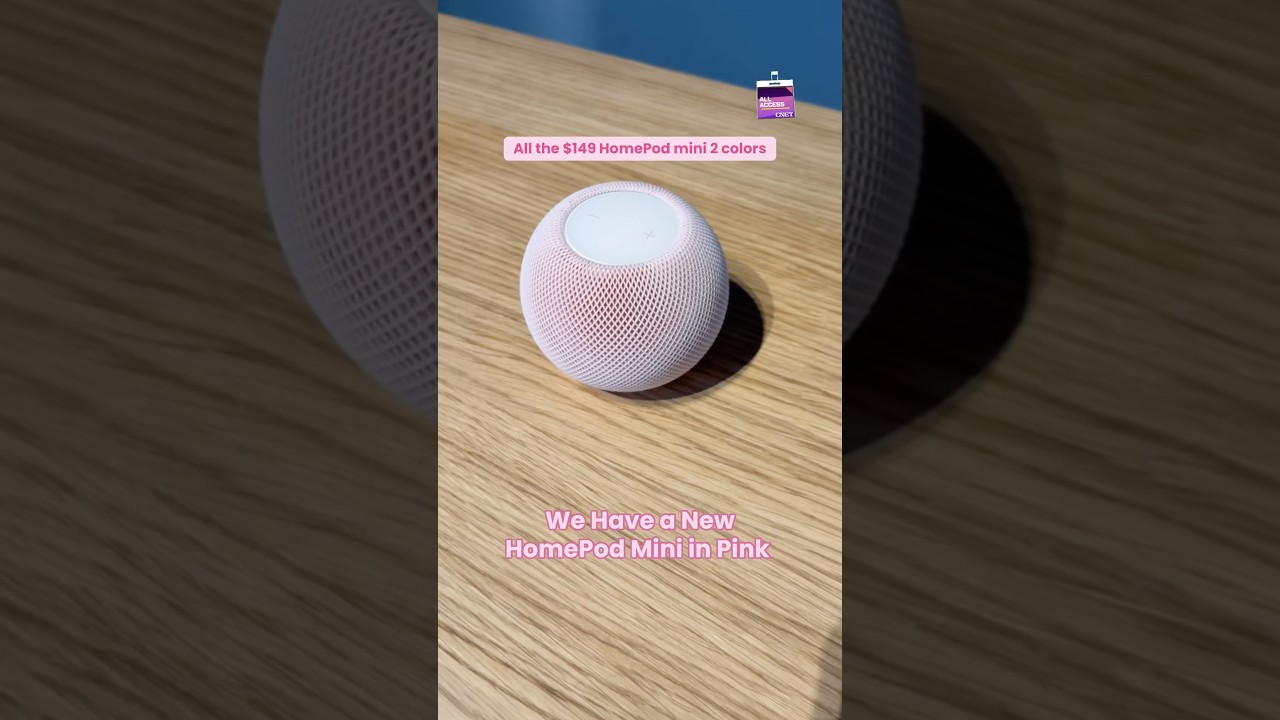
The 5 New $149 HomePod Mini 2 Colors
The next generation of Apple’s HomePod mini is here and in these five colors #homepod #homepodmini2 #applehome #allaccess #homepodmini
CNET
Apple’s Newest Apple TV 4K Costs $299
Apple’s latest streaming box has a faster processor and onboard microphones for better integration with Siri AI. It’s coming November for $299 📺 #appletv #allaccess #appletv4k #applehome #streaming

CNET
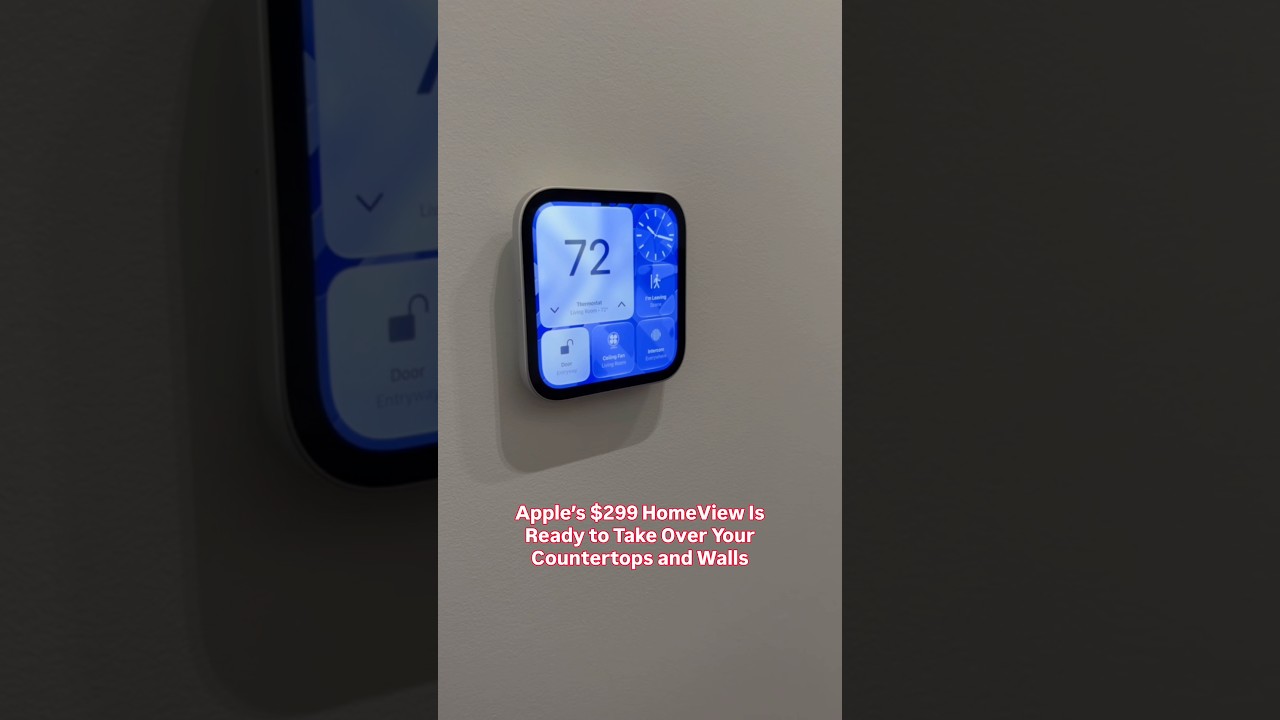
Apple’s $299 HomeView Is Ready to Take Over Your Countertops and Walls
Apple’s HomeView features a 7-inch Liquid Retina display with a 12-megapixel camera, two full-range drivers for Spatial Audio, and more. HomeView is $299 and comes in a wall mounted version for the same price. #applehomeview #smarthome #smarthomehub #apple #Tech #allaccess

Startup Battlefield: Health Tech & Life Sciences Pitches | Disrupt 2026

Flock CEO Garrett Langley on Public Backlash, Surveillance Expansion | Disrupt 2026

Satya Nadella’s ‘emergency brake’ and the race to secure AI agents | Disrupt 2026

Nitya Subramanian: Products and Protocol

Sleep Expert Answers Questions From Twitter ???? | Tech Support | WIRED

Ways you can help Black Lives Matter movement (links, orgs, and more) ????????
Startup Battlefield: Health Tech & Life Sciences Pitches | Disrupt 2026
Flock CEO Garrett Langley on Public Backlash, Surveillance Expansion | Disrupt 2026
Satya Nadella’s ‘emergency brake’ and the race to secure AI agents | Disrupt 2026
-
 Science & Technology6 years ago
Nitya Subramanian: Products and Protocol
-
 People & Blogs5 years ago
Sleep Expert Answers Questions From Twitter ???? | Tech Support | WIRED
-
 CNET6 years ago
Ways you can help Black Lives Matter movement (links, orgs, and more) ????????
-

 Wired7 years ago
How This Guy Became a World Champion Boomerang Thrower | WIRED
-

 Wired7 years ago
Neuroscientist Explains ASMR’s Effects on the Brain & The Body | WIRED
-

 Wired7 years ago
Why It’s Almost Impossible to Solve a Rubik’s Cube in Under 3 Seconds | WIRED
-

 Wired7 years ago
Former FBI Agent Explains How to Read Body Language | Tradecraft | WIRED
-

 Entertainment6 years ago
Former CIA Chief of Disguise Breaks Down Cold War Spy Gadgets | WIRED
@WillyWoolyButt
April 12, 2026 at 12:25 pm
Ah my ex-London-student time employer, CBS-Technologies-Innovation CNET
@westonsaunders6460
April 12, 2026 at 12:30 pm
A new way? Nope. Google’s Project Loon was doing this 15 years ago. It was determined to be unsustainable and shut down in 2021.
@jpmkiv
April 12, 2026 at 12:30 pm
We need a ton of these in storage as a backup insurance for a Kessler Syndrome event.
@firohot5476
April 12, 2026 at 12:31 pm
Read Google had such a plan of using blimps to broadcast Internet in remote areas year’s ago
But didn’t materialise then
@sarabeth8050
April 12, 2026 at 12:47 pm
Buh bye SpaceX!
@icaru34
April 12, 2026 at 12:51 pm
How does internet get to it? Is it like a repeater for a cell tower?
@Gharial555
April 12, 2026 at 1:00 pm
My intrusive GTA 5 thoughts 😭💥
@b1r2y3n
April 12, 2026 at 1:16 pm
Oh good, highly vulnerable infrastructure seems smart. We need robust options, not something that can be brought down with a slingshot.
@mudaninarib1057
April 12, 2026 at 1:17 pm
Bye,bye Starlink 🤣
@thricegreat
April 12, 2026 at 1:38 pm
Let’s use all the helium we have! 😀
@GHOSTDRONEXXXIII
April 12, 2026 at 1:57 pm
Wasn’t it claimed helium supply was low and running out?
@jaredwhite489
April 12, 2026 at 2:12 pm
Starlink has left the chat
@ValuedTeamMember
April 12, 2026 at 2:12 pm
*_WOW. When it was pulled out I hadn’t seen anything go up that fast since my prom date shimmied off her dress._* Just saying. *VERY COoL!* (the airship, not my date)
@gemartsiha
April 12, 2026 at 2:26 pm
Its to fry us with extreme radiation.
@Alqptuzmw
April 12, 2026 at 2:26 pm
Starlink can do direct to cell today. Starlink v3 will increase 5G bandwidth by a lot. Does anyone at CNET know how to use the internet or AI to do any basic research?
@sab611
April 12, 2026 at 3:08 pm
Yeah, what about the Helium shortage?
@118Columbus
April 12, 2026 at 3:38 pm
Facebook was gonna do this with giant balloons – it doesn’t work — the cost does not justify the benefits.
@ColdPatterns
April 12, 2026 at 3:45 pm
“When there was no room left to litter on earth, we littered the skies”
@Think_like_Buffett
April 12, 2026 at 3:48 pm
This to me is a direct blow to space x plans for providing internet in undeveloped areas. If this can be mass produced and easily deployed
@Robert-uh9vf
April 12, 2026 at 4:13 pm
Stuff like this combined with electromagnetic propulsion could probably make space travel a lot safer. Instead of “bumping” into earths atmosphere at mach 33 or wasting chemical rocket fuel to punch up through atmosphere, a spacecraft of sufficient design should be able to quantum lock itself to nearby EM fields of certain size to propel or gradually “brake” in vacuum- which would make G-forces the main concern of survival instead of ablative materials falling off, causing re entry friction plasma to completely disintegrate the craft. Something like those mass accelerators they want to put on the moon, or a rail gun… But without the cannon. And maybe a lot lighter.
But also, there has been some research talking about the nullification of G-forces in a denser liquid environment which compresses differently than atmosphere. There was a guy who died from pneumonia after participating in an oxygenated liquid breathing experiment… Travelling through space should be as butter smooth as gently pushing off the wall, gliding across the room and stopping yourself by grabbing a handrail at the end of a corridor.
@Vlican
April 12, 2026 at 4:20 pm
already helium shortage
@DavidDatura
April 12, 2026 at 5:07 pm
With a Kessler event highly likely to occur at any moment, thus blocking access to space for all purposes, this tech might become increasingly important for global communications of all types. But the increasing lack of the availability of helium nowadays might ultimately put the kibosh on that too…we’re doomed 😬 everything is really going to the toilet isn’t it? The death throes of civilization.
@bobnomura2068
April 12, 2026 at 5:54 pm
The stratosphere is 6+ miles high, add in lateral distances… So can a phone transmit 5G signals 10 miles or so away ?
@G.D.Acosta
April 12, 2026 at 6:00 pm
Isn’t helium reserves critically low? Doesn’t sound that sustainable
@AmerBoyo
April 12, 2026 at 6:43 pm
What a stunning craft!
@damandbass
April 13, 2026 at 12:33 am
As a temporary emergency solution – yes. As a sky cluttering, permanent network of floating junk – no.
@jkstl70
April 13, 2026 at 12:38 am
there is the aliens
@thearchangel9835
April 13, 2026 at 2:20 am
Futile endeavour if you asked me
@JohnJohn-dc7id
April 13, 2026 at 2:33 am
compared to other aerial forms of internet connection, it is affordable, productive and energy efficient. considering global warming, this is a plus indeed. only question is the coverage area 👍
@CNET
April 13, 2026 at 10:28 am
let’s wait for their trail run report and we will have more details on our website
@JustAHeroForFun_Saitama
April 13, 2026 at 6:50 am
Cant wait until i see that empowers poor oppressed people, that is to say that the American terrorist forces with mossad terrorists use to ignite chaos and destruction in countries they dont like to otherwise sanctioned but still stable countries….
@xaira12
April 13, 2026 at 8:02 am
wait till bro finds out about starlink direct to cell
@RandoMusa_61
April 13, 2026 at 8:06 am
I wonder how it deals with high speed high altitude winds?
The propellers seem tiny for such a large cross section if there is any significant wind, which, in my limited experience above 5km, is almost a constant.
@licencetoswill
April 13, 2026 at 9:02 am
yes but it drops off again as you climb higher
@SimplebutSurprising
April 13, 2026 at 8:36 am
The direct-to-phone 5G part is the real game changer here. No dish, no extra gear, just signal.
@AdityaSingh-zb4ds
April 13, 2026 at 9:22 am
Is that you project loon?
@onequezt
April 13, 2026 at 9:29 am
I’d take this over Starlink any day, sounds cool!
@gamewavelondon
April 13, 2026 at 9:50 am
arent we running out of helium?
@CNET
April 13, 2026 at 10:31 am
it’s a logistic issue because of world trade shipping.
@CasperioSs
April 13, 2026 at 10:10 am
Thats so cool. Not only it solve the problem of rural areas, but it does so by using existing infostructure. So cool. Keep going
@CNET
April 13, 2026 at 10:24 am
Read more about it on CNET.com
5G From the Sky: New Internet Infrastructure Takes Flight
@LMacNeill
April 13, 2026 at 10:29 am
Helium is constantly being created inside the Earth by the decay of Uranium. Our supply is not infinite, no, but as long as there’s enough uranium decay to keep the Earth’s core hot, there’s tons of helium being generated. It’s just a matter of capturing it. We’re not gonna run out any time soon. The shortage is not caused by a lack of helium, it’s caused by a lack of infrastructure to capture all of it.
@post_eternity
April 13, 2026 at 10:47 am
I hope they succeed.
@RobertIsmyname
April 13, 2026 at 11:14 am
2:16 that iPhone definitely is pink
@Deus-castigat-censores
April 13, 2026 at 12:43 pm
Seems as though it would be easier to destroy these in comparison to satellites.
@ericchristen2623
April 13, 2026 at 1:13 pm
This was always the more sensible energy efficient approach
@HeyitsWolverBean
April 13, 2026 at 2:03 pm
Can imagine the high pings
@SinSefia
April 13, 2026 at 3:02 pm
Purity of helium? It’s unmanned, you jaggoffasaur. Just use hydrogen 3:00
Well, at least it’s not being wasted on gender reveal party balloons, then again, they’d probably use hydrogen for that. … Damn, humanity is dumb.
@mason5540
April 13, 2026 at 3:52 pm
Suddenly every keyboard warrior is a helium expert lol
@bsexton
April 13, 2026 at 4:27 pm
Hey Satellites it’s Blimps you win!
@Lume1.0
April 13, 2026 at 5:36 pm
Put ads on it and we’re in blade runner
@jglstx
April 13, 2026 at 5:45 pm
😲
@minimixie4025
April 13, 2026 at 8:43 pm
Money printing
Pseudo control
Now overhead blimp
Zombie mind control
@OverlordOfMayhem
April 14, 2026 at 6:55 am
I been a drone user for many years and wondered why no one had incorporated helium in a drone just to lighten the load needed to keep them flying longer. This is a great idea for telecom where there is no coverage.
@DaniMartArts
April 14, 2026 at 7:20 am
In principle, I enjoy the idea of de-cluttering oligopoly outer space systems. However, the same lobbyists and governments doing so are also war mongers, and so it’s impractical to use inner orbit systems because drones can de-internet everybody instantly, making it unreliable until we damage ourselves so pointlessly that we stop being different countries altogether and militaries get dissolved. The first countries to deploy this technology are also thereby the first to be the weakest, as these technologies require a one world government ecosystem, and we’re all partisan superpowers currently with considerable cultural and racial interests, so the vulnerability must require an immense justification, and I don’t see anybody really having that?
@RuckusGarage
April 14, 2026 at 8:12 am
Nice to see Trevor Goodchild is right on schedule
@AlexHanna.esquire
April 14, 2026 at 8:43 am
Considering all the pros and cons…..this is more sensible than current satellite technology. Most notably the cost of implementation, ease of repair, and security
@CNET
April 14, 2026 at 9:00 am
let’s hope to see it soon commercially.
@Pedroisanickname
April 14, 2026 at 8:44 am
Redundancy is needed for when the boogeyman takes out Skylink.
@annoyed707
April 14, 2026 at 9:01 am
Northern Canada could use this, but then I see US and think nope.
@JasonClinkscales-v1c
April 14, 2026 at 10:38 am
Buried fiber is better than overhead surveillance.
@GeorgeWashingtonLaserMusket
April 14, 2026 at 10:46 am
How does it get power? Do drones carry hydrogen up and it uses a hydrogen fuel cell or do they have to land and recharge? Also since it doesn’t have a hard wire connection I’m guessing it needs a cell phone tower in the area it can send a mm beam to for the back end.
Using Helium is stupid it weighs twice as much as hydrogen and since there’s no people on the platform (or there shouldn’t be) the risk of someone causing a spark is extremely low. Especially since we have come a long way since old time hydrogen blimps.
The problem is Helium is a rare resource that we can’t replace, that we lose tons (literally) of to it floating into space everyday. Wasting it on stuff like this when it’s needed for welding nuclear reactors, aircraft, etc is shameful design ethics. Use Hydrogen.
@GeorgeWashingtonLaserMusket
April 14, 2026 at 10:49 am
Wasting helium period is a problem, it doesn’t matter if it’s pure or diluted it’s wasteful! Hydrogen is WAY cheaper, has twice the lifting power, meaning you could mix in 1/2 the hydrogen vs the amount of helium that’s being used.
@scottfranson4215
April 14, 2026 at 11:02 am
IT’S OVER: Trump’s ‘World’s Most Powerful Reset’ Just ENDED Schwab’s Great Reset
@Tetrahydrobaboono
April 14, 2026 at 11:15 am
Silver color will blind people no? More than just internet, the amount of sensors you can put on these is also a game changer
@Captain-Electro
April 14, 2026 at 11:39 am
This is smart
@RandallLeighton
April 14, 2026 at 12:16 pm
The idea is excellent. I live in Central America and there is no real internet, here. Our internet uses the cell phone network. It would be great if we had something like that.
@CNET
April 15, 2026 at 6:18 am
Thanks, Glad you enjoyed—subscribe for more! 👍
@kk2ak14
April 14, 2026 at 12:33 pm
Since all satellites are hanging in a balloon o a U2, then what is new😂
@danielindrigo7992
April 14, 2026 at 12:37 pm
This isn’t a new idea, it was proposed at least as far back as the 90’s
@TheGuillotineKing
April 14, 2026 at 12:53 pm
Fun Fact there’s a helium shortage
@apeshitcrazyman
April 14, 2026 at 1:30 pm
2:02 This is gonna put me out of a job climbing cell towers!…😅 That’s ok, i REALLY hate the job anyway.
@eyesopened1874
April 14, 2026 at 2:31 pm
That weather thing.
@londubh2007
April 14, 2026 at 2:37 pm
We’re gonna need it after Starlink causes Kessler syndrome.
@louiemolinas9370
April 14, 2026 at 3:23 pm
Will I be that’s the ufo I seen the other night here in tucumcari nm wow 😮🛸 🛸
@robertchristopher339
April 14, 2026 at 3:48 pm
The good news is that when the Kessler Syndrome hits, we have a way to replace satellite communications.
@alanwalker1801
April 14, 2026 at 3:57 pm
Need this in Australia heaps cheaper than fibre
@xxunoriginalgamingxx9046
April 14, 2026 at 4:34 pm
finally I can have an internet speed over a kilobyte on my private jet.
@coreyb2923
April 14, 2026 at 5:04 pm
This is reminds me of a Aeon Flux 💯
@whyask...becauseyoucan3012
April 14, 2026 at 5:14 pm
So this closes the gap in some surveillance intelligence systems. Now, every nook and crany surveillance couldn’t see now it can, and we paid for it 😅
@TheWolfHowling
April 15, 2026 at 12:09 am
This reminds me of Google’s Project Loon that shut down a few years ago. Some of the details may have changed but the overall concept seems similar
@lisakillz1853
April 15, 2026 at 1:34 am
reminds me of the relical in AEon Flux
@thebeautifulones1978
April 15, 2026 at 6:38 am
It should be hydrogen
@KrisNiedbalski
April 15, 2026 at 9:17 am
Finally, a possible fix for the inevitable Kessler syndrome.
@Kratos-p7h
April 15, 2026 at 11:07 am
This is so 1900s
@tribulations-t3n
April 15, 2026 at 5:37 pm
1) Roswell , New Mexico ? like the show Roswell? is that where the rumors came from? from testing that thing?
2) no more places without signal in the future, huh? meaning less places without a cell signal while camping, huh?
@G0TT3RFUNK3N
April 16, 2026 at 8:33 am
Project loon 🤣
@Quicksymphony
April 16, 2026 at 10:20 am
So the idea was to have dirigibles similar to the Batman universe. Except instead of law enforcement using it it will be for wifi. 😅
@greggleswong
April 16, 2026 at 11:24 am
SPAWN MORE OVERLORDS
@Creative_Expression
April 16, 2026 at 2:47 pm
So let me get this straight, a giant silver ship is taking off from Roswell? Okay just making sure I heard that right.
@dvonzosch461
April 16, 2026 at 2:48 pm
Watch Elon and his minions attempt to buy the company, when it becomes successful, and *SHUT IT DOWN* like oil companies, when they bought the patents of the early electric car companies in the late 1800s to early 1900s ….
@ellicel
April 16, 2026 at 7:29 pm
What’s known about the company that owns this?