
Popular Science
Why do horses have eyes on the side of their heads?
Horses are prey. But what would they look like with eyes like humans? Do you really want to know? Find the full story on Popular Science.










Popular Science
The Baffling Cases of Spontaneous Human Combustion
In 17th, 18th, and 19th century Europe, there were potentially 200 reported cases of spontaneous human combustion, where bodies were burned away, leaving limbs behind and no apparent source of of the flames. These cases captured the popular imagination, showing up often in literature of the time. So, is it possible for a human body…

Popular Science
The Real Reasons Permanent Daylight Savings Time Never Stuck
Whether you’re pro-Daylight Savings or pro-Standard Time, the science is clear: Switching *between* the two every year is terrible for human health. So why haven’t we stuck with one system all year? The answer is both scientific AND political. Hosted by Annie Colbert Reported by Tom Hawking Edited by Avital Oehler Written and Produced by…

Popular Science
Let’s launch our garbage into the sun!
Ummm, no. Earth is messy. So can’t we just send our junk somewhere else? Aside from the moral quandaries raised by such poor stewardship of our already disheveled solar system, Earthlings probably haven’t made a habit of beaming literal garbage into space yet because we simply can’t afford to. Full video: #pollution #science #space

Intero Biosystems Wins Startup Battlefield for its Lab-Grown Digestive Systems

Bluesky’s Leadership Thinks Social Can Still Start Over | Disrupt 2026

Why Most Deep Tech Startups Stall Between Prototype and Production | Disrupt 2026

Nitya Subramanian: Products and Protocol

Sleep Expert Answers Questions From Twitter ???? | Tech Support | WIRED

Ways you can help Black Lives Matter movement (links, orgs, and more) ????????
Intero Biosystems Wins Startup Battlefield for its Lab-Grown Digestive Systems
Bluesky’s Leadership Thinks Social Can Still Start Over | Disrupt 2026
Why Most Deep Tech Startups Stall Between Prototype and Production | Disrupt 2026
-
 Science & Technology6 years ago
Nitya Subramanian: Products and Protocol
-
 People & Blogs5 years ago
Sleep Expert Answers Questions From Twitter ???? | Tech Support | WIRED
-
 CNET6 years ago
Ways you can help Black Lives Matter movement (links, orgs, and more) ????????
-
 Wired7 years ago
How This Guy Became a World Champion Boomerang Thrower | WIRED
-

 Wired7 years ago
Neuroscientist Explains ASMR’s Effects on the Brain & The Body | WIRED
-
 Wired7 years ago
Why It’s Almost Impossible to Solve a Rubik’s Cube in Under 3 Seconds | WIRED
-
 Wired7 years ago
Former FBI Agent Explains How to Read Body Language | Tradecraft | WIRED
-
 Entertainment6 years ago
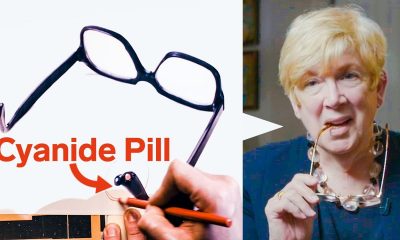
Former CIA Chief of Disguise Breaks Down Cold War Spy Gadgets | WIRED
@TheTrueBuster
November 7, 2025 at 12:47 pm
What’s happening right now?
@Alan-e9l5e
November 7, 2025 at 12:57 pm
I love this! I’ve always wondered why some animals have eyes in different places!
@wasabipeas5139
November 7, 2025 at 1:45 pm
Ok what’s even happening here? And what happened to Kevin?
@Nooticus
November 8, 2025 at 2:31 am
^
@fburton8
November 7, 2025 at 2:27 pm
The idea that horses don’t recognize an object seen in one eye when they see it again with the other eye was commonly believed to be true. I’m afraid it’s a myth. There is good evidence that “interocular transfer” occurs in horses (as it does in other animals). See the 1999 paper by Evelyn Hanggi in the Journal of Equine Veterinary Science.
@Nooticus
November 8, 2025 at 2:31 am
Kevin looks different today…
@PurpleSidewalk1
November 8, 2025 at 10:36 am
Did someone steal Kevin’s channel and turn it into a biology/nature channel?
@-lijosu-
November 8, 2025 at 8:28 pm
Crocodiles are predators, and also have eyes on the sides of their heads.