
People & Blogs
How to End Factory Farming | Lewis Bollard | TED
Factory farming is the greatest moral crisis we ignore, says farm animal welfare champion Lewis Bollard. He exposes the truth behind the “all natural” labels on your groceries and shows how technology and public pressure can uncover the unseen struggle of animals, drive the industry to reform and harness our collective capacity for moral progress.…









People & Blogs
Keep showing up not just for the Earth, but for each other #TEDTalks
Hope isn’t just a feeling, but a skill you can practice, explains climate activist Xiye Bastida. Taking cues from the resilience of nature, she shows why trusting Indigenous leaders who’ve protected the planet for generations can help turn despair about the climate into the momentum needed to ignite meaningful change. A powerful reminder that the…

People & Blogs
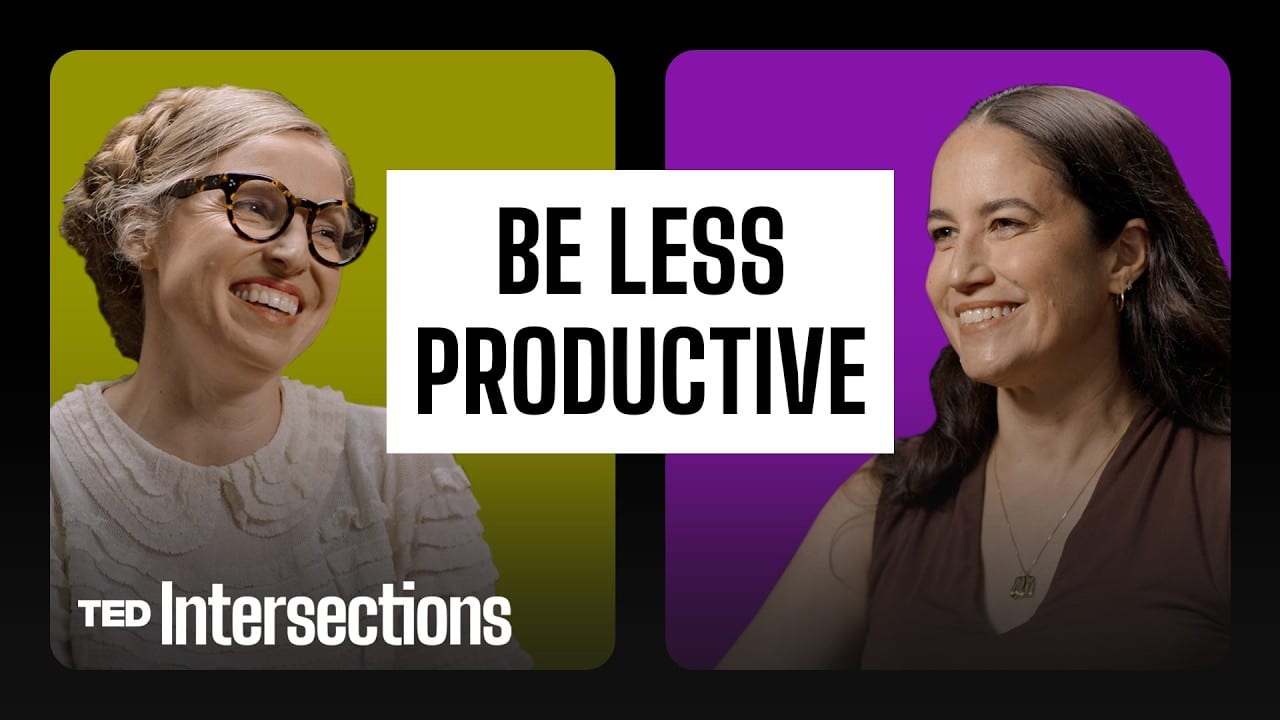
How to Escape Your Obsession with Productivity | TED Intersections
Why are we so obsessed with productivity? Horticulturist Rebecca McMackin (who wants people to let their lawns grow wild) and author Catherine Price (who wrote a book about the power of fun) come together to discuss the relief of giving up control. From growing milkweed to taking up unproductive hobbies, they dig into the benefits…
People & Blogs
Play is what happens when you stop trying to optimize everything #TEDTalks
When was the last time you just … played? Creative health scientist Katina Bajaj thinks adults are in a “play deprivation crisis,” where we’ve replaced our fun-loving human nature with optimization and efficiency. She makes the case that play isn’t a reward for productivity but rather a survival skill — and invites you to rediscover…

Qualcomm Snapdragon Summit 2026: Everything Announced in 15 Minutes

Keep showing up not just for the Earth, but for each other #TEDTalks

SpaceXAI’s Grok Bot Gains Early Traction
-

 Science & Technology6 years ago
Nitya Subramanian: Products and Protocol
-

 People & Blogs5 years ago
Sleep Expert Answers Questions From Twitter ???? | Tech Support | WIRED
-

 CNET6 years ago
Ways you can help Black Lives Matter movement (links, orgs, and more) ????????
-

 Wired7 years ago
How This Guy Became a World Champion Boomerang Thrower | WIRED
-

 Wired7 years ago
Neuroscientist Explains ASMR’s Effects on the Brain & The Body | WIRED
-

 Wired7 years ago
Why It’s Almost Impossible to Solve a Rubik’s Cube in Under 3 Seconds | WIRED
-

 Wired7 years ago
Former FBI Agent Explains How to Read Body Language | Tradecraft | WIRED
-

 CNET7 years ago
Surface Pro 7 review: Hello, old friend ????
@HuyDoanDinhnh
September 21, 2025 at 11:05 am
Tried to replicate the scene from this video and now we have a home renovation. Lots of laughs💝
@RahimKhan-gx7sr
September 21, 2025 at 11:12 am
Profile 😂
@eeko_systems
September 21, 2025 at 11:37 am
Factory farming is one of the largest contributor to climate change, until everyone changes their lifestyle there’s no way we’re going to get beyond it
Even eating one less burger per month can do wonders
@29011970
September 21, 2025 at 12:03 pm
D’accordo MA SOLO nella misura in cui questo non sia usato per la propaganda (buffonata) climatica e/o per sponsorizzare alternative tipo cibo spazzatura a base di insetti o carne sintetica!!!
@ВладимирФилософ-б2й
September 21, 2025 at 1:27 pm
support
@CareerFormulas
September 21, 2025 at 12:55 pm
Lewis Bollard shines a light on a moral issue many overlook—how factory farming impacts animals behind the scenes. By combining technology, transparency, and public pressure, we have the power to drive meaningful reform and make choices that reflect our ethical values.
@Billabonggg2011
September 21, 2025 at 1:26 pm
As an animal lover and a part of the veterinary community, this is what I’ve always advocated for — not eliminating meat from our diets, but allowing the animals we raise to live their lives with dignity and in humane conditions. They have every right to not endure suffering, just as we do.
@julesbonasera8669
September 22, 2025 at 7:27 am
As a vegetarian I completely agree. I used to think everyone should go vegan, but I realized that’s never going to happen. Your suggestion is the the next best thing 🙌🏻
@deutsche-tier-lobby
September 21, 2025 at 1:35 pm
If all people stop buying animal products, factory farming stops. simple as that
@jmslade7
September 21, 2025 at 1:41 pm
💜🖤❤️💛💚💜
@RobertScottBannersglare
September 21, 2025 at 2:03 pm
Another way to help is to buy from local farms that treat their animals humanely compared to factory farms. If you aren’t buying directly from the farms themselves, then the question you should be asking at the grocery store is “Is the meat I am buying going to benefit a factory farm or a family of Nebraskan farmers with five generations of experience?”
@mybabybookpage
September 21, 2025 at 2:29 pm
If anyone can give a definitive answer please do so. My question is are the pasture raised chicken and meat products labeled humanely raised sold at whole foods actually what it says?
@calexprenas
September 21, 2025 at 6:38 pm
The most trustworthy label is from Animal Welfare Approved (AWA) by the organization A Greener World. That has its own issues in that inspections aren’t as frequent or effective as they should be IMO (AGW is a nonprofit so has limited funding to carry out its work). There are rampant issues with the other labels. I would consider them maybe better than nothing, but mostly marketing and not very meaningful.
@sonofliberty1
September 21, 2025 at 2:29 pm
If you care about animals you don’t have to exploit and kill them for profit at all. End all animal exploitation, not just factory farming.
This guy is in some weird middle place where he wants animals to live a good life, but only up until the point where the farmer can extract maximum profit from them and then “oh, the slaughterhouse actually isn’t too bad”.
If future generations do look back badly at factory farming, do you think that they’re not going to ask why you stopped caring at that?
@sonofliberty1
September 21, 2025 at 2:59 pm
When I say they only care about animals to the point of maximum profit for the farmer; Here’s a list of animals and their slaughter age Vs their natural life expectancy…
“Veal” Calves
1-24 weeks Vs 15-20 years
Chickens (broilers/meat breeds)
5-7 weeks Vs Up to 8 years
Ducks
7-8 weeks Vs 6-8 years
Turkeys
10-17 weeks Vs Up to 15 years
Pigs
5-6 months Vs 10-12 years
Lambs
4-12 months Vs 12-14 years
“Beef” Cattle
18 months Vs 15-20 years
Chickens (egg laying hens)
18 months Vs Up to 8 years
Pigs (breeding sows)
3-5 years Vs 10-12 years
Dairy cows
4 years Vs 15-20 years
Rabbits
10-12 weeks Vs 8-12 years
Goats
12-20 weeks Vs 12-14 years
Geese
15-20 weeks Vs 8-15 years
@haku-p2i
September 21, 2025 at 2:29 pm
factory farming is very unethical, but free range farming is also unethical, as they still kill the animals at a fraction of their lifespan. free range farming is also worse for climate change and ecology, as the animals require more land and pollute for more years before becoming food. the only solutions are either lab-grown animal foods or veganism. don’t get me wrong, the progress he talks about in the video, like making factory farming a little bit more ethical, is better than nothing, but it doesn’t make animal farming ethical. personally, i’ve tried veganism twice in my life, and in both cases it was worsening my mental health, so i stopped and went back to omnivore. my vegan diet was well-planned and well-supplemented, especially the 2nd time. however, there are some vegan youtubers who seem to be doing well, so maybe there is individual variability. there are important reasons to at least try veganism: for ecology and climate change, for health and cholesterol, for ethics (both animal and human ethics, because working in a slaughterhouse can be bad for mental health), and also for spirituality (as a vegan i often experienced spontaneous pineal glad activations, aka third eye activations, that i perceived as a pleasurable spot of mild pressure in the middle of my forehead. this doesn’t happen to me as an omnivore).
@sucodecupuacu
September 21, 2025 at 3:29 pm
When I first learned about this a few years ago, I’ve made every effort to only eat “certified humane” animal products, it no animal products whatsoever. I haven’t been able to find his data, how much does the “certified humane” label mean in the USA?
@Hocusbogus28
September 21, 2025 at 4:08 pm
But.. how _do_ we end it?
@BonnieShadow33
September 21, 2025 at 4:26 pm
Legislation.
@AnnieB-v8j
September 21, 2025 at 6:02 pm
@@BonnieShadow33 The folks at Cargill are laughing.
@doubleuenbeeeh
September 21, 2025 at 4:30 pm
“lifes”
@alistairbascom6933
September 21, 2025 at 5:40 pm
Factory farming is terrible. That is not a way to treat animals.
@rlc212
September 21, 2025 at 9:29 pm
Nice talk. But it’s hard to believe in moral progress when the world watches a genocide and does nothing.
@FayJonesDay
September 21, 2025 at 9:32 pm
It is painful. We like most people didn’t realize. when my husband and I found out how they were treating the animals we became vegans that very day. It’s not easy, but we did it and so can you.
@sucodecupuacu
September 22, 2025 at 12:06 pm
I’ve been doing my best to be vegan. The hardest part for me is that the rest of my family doesn’t want to, so I do what I can
@MINECRAFT-cd5cy
September 21, 2025 at 11:20 pm
Каждодневная прогулка вокруг северного человейника😂 всё дальше и дальне от дома😂
@neurostreams
September 22, 2025 at 12:53 am
END solar powered robotic vertical farming! no more factory farming! even though mechanized produce feeds vegetarians communities through the winter, these food factories must end. Stop factory farming!
@neurostreams
September 23, 2025 at 3:08 am
that is to say, “farming” conflates agriculture and livestock here… so “factory farming” has a bit of throw-the-baby-out-with-the-bathwater effect, language-wise
@leighcwilson
September 22, 2025 at 4:45 am
This is why I went vegetarian 27 years ago and then eventually vegan 7 years ago
@MunLe8008
September 22, 2025 at 5:25 am
I cried when I saw these pictures, we treated these animals in an extreme way that I couldn’t conceive of how henious we are 😞
@carolinec.p.s.3798
September 22, 2025 at 6:43 am
👏👏👏👏👏 Fantastic work!
@rcronin1
September 22, 2025 at 8:32 am
I heard almost nothing in this about how to end factory farming. Where are the economic and practical methods for change? I’m surprised you didn’t discuss the conditions of the human workers in factory farms because those are also atrocious.
@Andrew_c_M
September 24, 2025 at 12:03 am
Isn’t focusing solely on the economics of the meat industry part of the problem? Factory farming exists precisely because it is the cheapest way to produce meat—treating animals as disposable units is far more profitable than treating them as sentient beings. But if we frame the issue only in terms of economic efficiency, we miss the larger moral question. History shows us that what is economically advantageous is not always ethically acceptable: slavery, for example, thrived because unpaid labor was economically efficient, yet society ultimately rejected it not on financial grounds but through a cultural and moral shift in how we viewed human beings. Likewise, unless we shift our cultural understanding of animals—seeing them as more than sub-human commodities—economic logic alone will never push us away from factory farming. Without that change, we risk continuing practices that degrade us as much as the animals we exploit. This, ultimately, is likely why the speaker is trying to draw on our emotions and moral frameworks to push cultural change, rather than through economical rationality by showing ROIs and bottom line increases.
@markwicklander6837
September 22, 2025 at 10:20 am
Plants produce 10-15 times more food per acre and they’re much healthier overall compared to using animals. Therefore, it’s perfectly logical for me to be vegan.
@sonofliberty1
September 22, 2025 at 11:49 am
💚🌱
@gemmapaterson53
September 22, 2025 at 12:53 pm
Amazing talk!
@giantmecha
September 22, 2025 at 3:37 pm
👏
@JensMikael
September 22, 2025 at 4:00 pm
Couldn’t agree more!
@craftinteemo7055
September 23, 2025 at 3:46 am
If you have a decent yard, having chickens is quite easy, with the hike in egg prices it’s worth it price wise, and they are adorable little creatures. Just learn some techniques, make sure the clean up after them (using a bunch of hay for the chicken areas makes for great compost after each clean up) and have some treats here or there and it is epic.
@actdontreact7678
September 23, 2025 at 4:14 am
No need to eat animals or animal products in this day and age. Live plant based 🌱
@rajeshdhakad3411
September 23, 2025 at 9:54 am
It’s so painful to see pictures like this .. we have to stop factory framing !
@monarchnoo8561
September 23, 2025 at 12:21 pm
Thank you. More needs to be done.
@Taterbug4442
September 23, 2025 at 5:30 pm
Whales have been shown to protect other species
@urbanstrencan
September 24, 2025 at 3:35 pm
We definitely need to go back to farming on small family farms, like we have here in Slovenia. Local production, fresh food, small farms not stressing land. Great talk