
Science & Technology
The Human Cell Is Wildly Complex. Can AI Decode It? | Silvana Konermann | TED
Silvana Konermann and the team at Arc Institute are trying to crack one of science’s most difficult problems: why complex diseases like Alzheimer’s and cancer remain so stubbornly unsolvable, even as research advances. Her solution is a universal “virtual cell” — an AI model trained on a billion biological experiments that can read the language…










Science & Technology
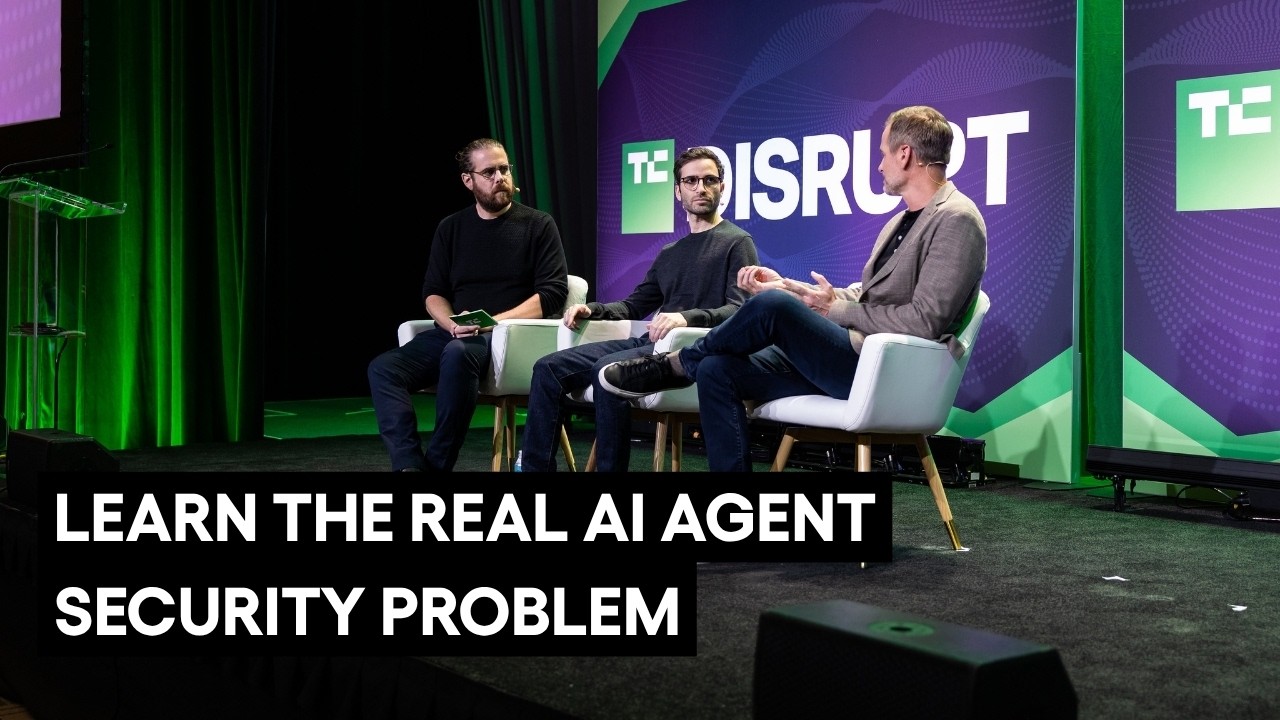
Why Application-Level Permissions Won’t Secure AI Agents With Okta’s & NanoCo | Disrupt 2026
Enterprises are learning to rebuild the basics of cybersecurity from scratch for agentic AI. Okta’s President of Products and Technology Ric Smith and NanoCo Co-Founder and CEO Gavriel Cohen explain what agent security takes at the infrastructure level and which architectural choices matter most. #TechCrunchDisrupt2026 Follow us across… Read more:
Science & Technology
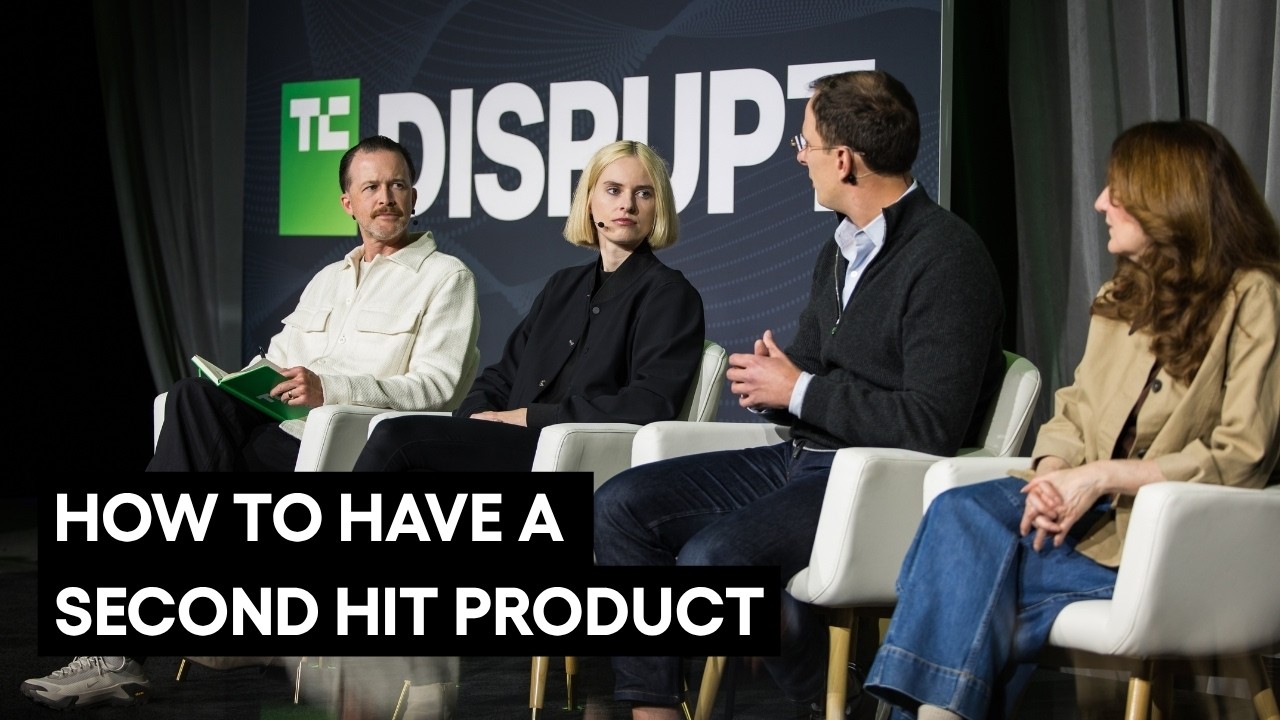
So You’ve Got a Hit Product. How Does Your Company Do It Again? | Disrupt 2026
Most startups stall because they build one great product instead of a repeatable multi-product engine. Daring Ventures’ Maddi Holman, Verkada’s Filip Kaliszan, and Atlassian’s Tamar Yehoshua discuss the operational playbook for capital allocation, systemizing internal innovation, and engineering a compounding “Second Act” before the core product’s growth curve flattens. #TechCrunchDisrupt2026 Follow us across… Read more:
Science & Technology
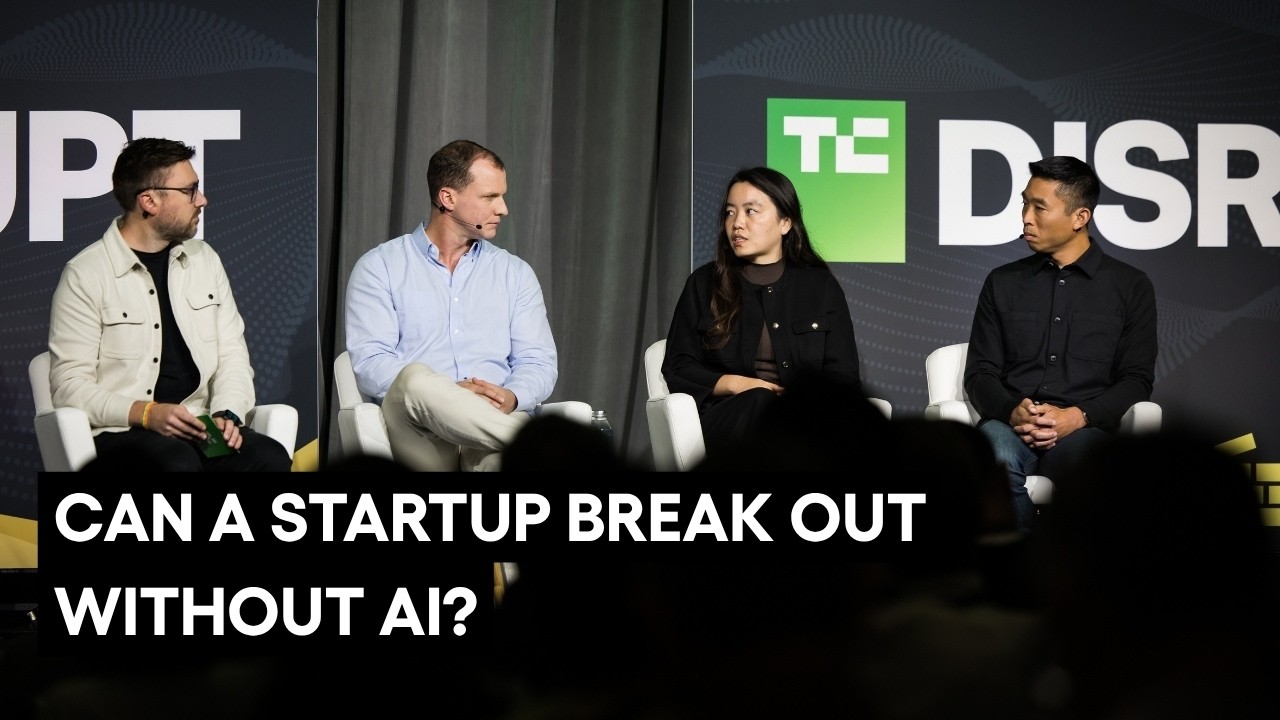
Can You Still Build a Breakout Company Without AI? Investors and a Founder Weigh In | Disrupt 2026
When every pitch is an AI pitch, do fundamentals still win? General Catalyst Partner Mark Crane, Baillie Gifford Investment Manager Shan Shan, and ALSO Founder Chris Yu make the case for efficient growth, retention, and revenue quality over hype. #TechCrunchDisrupt2026 Follow us across… Read more:

Why Application-Level Permissions Won’t Secure AI Agents With Okta’s & NanoCo | Disrupt 2026

So You’ve Got a Hit Product. How Does Your Company Do It Again? | Disrupt 2026

Can You Still Build a Breakout Company Without AI? Investors and a Founder Weigh In | Disrupt 2026

Nitya Subramanian: Products and Protocol

Sleep Expert Answers Questions From Twitter ???? | Tech Support | WIRED

Ways you can help Black Lives Matter movement (links, orgs, and more) ????????
Why Application-Level Permissions Won’t Secure AI Agents With Okta’s & NanoCo | Disrupt 2026
So You’ve Got a Hit Product. How Does Your Company Do It Again? | Disrupt 2026
Can You Still Build a Breakout Company Without AI? Investors and a Founder Weigh In | Disrupt 2026
-
 Science & Technology6 years ago
Nitya Subramanian: Products and Protocol
-
 People & Blogs5 years ago
Sleep Expert Answers Questions From Twitter ???? | Tech Support | WIRED
-
 CNET6 years ago
Ways you can help Black Lives Matter movement (links, orgs, and more) ????????
-
 Wired7 years ago
How This Guy Became a World Champion Boomerang Thrower | WIRED
-

 Wired7 years ago
Neuroscientist Explains ASMR’s Effects on the Brain & The Body | WIRED
-

 Wired7 years ago
Why It’s Almost Impossible to Solve a Rubik’s Cube in Under 3 Seconds | WIRED
-
 Wired7 years ago
Former FBI Agent Explains How to Read Body Language | Tradecraft | WIRED
-

 Entertainment6 years ago
Former CIA Chief of Disguise Breaks Down Cold War Spy Gadgets | WIRED
@Unreality_Rooms
June 19, 2026 at 11:11 am
see you in a decade…
see you in a decade if there will be a decade…
I bet humans will still be relevant if I see you in a decade…
let time prove these statements…and if YouTube will still exist…
@haiku-u6t
June 19, 2026 at 12:13 pm
Dude that ‘learned to code’ thinking that he was beyond replacement. I’m a musician and even I know the AI does a better job in most cases.
@RamaDevi-mu6of
June 19, 2026 at 3:49 pm
Thanq for the wonderful info .Without human mind prompts AI couldnt perform …for sure. There is a beautiful collaborative work between Human mind n AI. In this process there will be exchange of thoughts by the gravity of humans. Full of magical happenings….on this Earth’s gravity. Prayers.rd
@jaydensmith920
June 19, 2026 at 11:26 am
Maybe we dont let computers do this one?
@haiku-u6t
June 19, 2026 at 12:11 pm
@jaydensmith920 why? It’ll identify people that are susceptible to genetic illness and allow them access to treatment before a disease develops?
@ee3171
June 19, 2026 at 12:48 pm
This is already applied in Bioinformatics, one of the important fields in modern medicine, try reading a book on it?
@ritamsadhukhan772
June 19, 2026 at 1:38 pm
Are you kidding me ? Biology is fucking complex AI is the only bloody tool humans have to do this bro why bro why
@user-kq2tc5hy5g
June 19, 2026 at 11:27 am
confusing how actual scientist are typically modest in manners and appearance, in contrast to some “science communicators” getting into a contest for skin-revelation, make-up and fashion instead of focusing on the actual science matter at hand.
@CRECEMYFILHOVE
June 19, 2026 at 11:37 am
I really appreciate content like this, I think that more people should promote content like this that helps and encourages people with topics of global interest.
@umangchhatrola7223
June 19, 2026 at 12:41 pm
Nature cure practitioners already have an answer to these questions. Can we allow and promote scientific studies where the solution can’t be monetised?
The food is already there: just not in the plate that the modern medicine loves.
@ee3171
June 19, 2026 at 12:46 pm
@umangchhatrola7223 Lmao “Nature cure” is the pot calling the kettle black here.
@verderriscursey
June 19, 2026 at 12:52 pm
@ee3171 how you figure that? Natural cures dont cost an arm and a leg and instead of big pharma telling, hey we synthesized this med from this plant so if you cant afford ours heres the alternative. Big pharma should be required to disclose this info
@verderriscursey
June 19, 2026 at 12:54 pm
The FDA allowing inflammatory foods and chemicals into the supply is the main problem…food and drug admin equals profits for big pharma
@DougVarble
June 19, 2026 at 12:54 pm
17:01 GREAT contact🎉
@seemajoshi9880
June 19, 2026 at 2:05 pm
Phenotype is environment dependent. it would be amazing if LLMs can capture environment dependence from RNA signals.
@Tooltilities
June 19, 2026 at 3:17 pm
what a brilliant concept. id heard ai was helping in other fields, but first time ive heard it explained like this. well done with your first public appearance. very well presented.
@ThinkingBetter
June 19, 2026 at 3:29 pm
AI will figure out everything concerning how cells work and also eventually how abiogenesis could happen. Eventually AI will create a model for everything that explains our universe down to how intelligent life came out of it.
@worldbrotherhoodglobal
June 19, 2026 at 4:24 pm
We build everything around fast profits and efficiency, then wonder why modern life feels so repetitive and empty. We need to start building for actual humans again.
@ישראלגוטליב-ג4מ
June 19, 2026 at 4:53 pm
As a human race, we need more people like her—humble, generous, and concerned for the common good.
@Israel22333
June 19, 2026 at 4:53 pm
As a human race, we need more people like her—humble, generous, and concerned for the common good.
@crawkn
June 19, 2026 at 6:05 pm
This is a potentially world-changing advancement, but I worry that with healthcare being unaffordable in many nations, its benefits may not be fairly distributed.
@think32
June 19, 2026 at 7:54 pm
I’m often in conversations with others demonizing AI. Personally, I find the technology incredibly fascinating and powerful. Whether it is destructive or beneficial hinges on its use-case, which is determined by the passions and integrity of those putting it to use. I’m so happy to see examples of humanity-motivated uses, rather than profit-driven uses. Thanks, TED!
@RockyMtnThai
June 19, 2026 at 8:55 pm
I use AI as a research partner. I posit and it provides the high level math and physics, I provide the theroeries it provide the math. If physics is logic based, then anyone with a clear, lucid, analytical mind can drive it. This research is breaking new ground.
For example, in my GUT, I hypothesize that DNA is more that it appears. I posit that it actually acts as a PDF (Portable Document file). Only 2% of DNA generates proteins. Science considers the remaining 98% as junk. This is a ludicrous “Assumption” that cannot possibly be true.
Traditional science should be very concerned. Myself and other “Hobby Physystics” are forging new ground and actually realizing groundbreaking/transformative results. Modern Physics has produced no new paradigm breaking discoveries in 50 years. They refuse to accept they are on the wrong path and repeatedly output their tortured math and twisted analogies, trying to make the universe conform to it’s myopic view. But, as the say, “Science advances, one funeral at a time”.
@RockyMtnThai
June 19, 2026 at 8:55 pm
I use LLM AI as a research partner. I posit and it provides the high level math and physics, I provide the theroeries it provide the math. If physics is logic based, then anyone with a clear, lucid, analytical mind can drive it. This research is breaking new ground.
For example, in my GUT, I hypothesize that DNA is more that it appears. I posit that it actually acts as a PDF (Portable Document File). Only 2% of DNA generates proteins. Science considers the remaining 98% as junk, or performing minor coding. This is a ludicrous “Assumption” that cannot possibly be true.
Traditional science should be very concerned. Myself and other “Hobby Physystics” are forging new ground and actually realizing groundbreaking/transformative results. Modern Physics has produced no new paradigm breaking discoveries in 50 years. They refuse to accept they are on the wrong path and repeatedly output their tortured math and twisted analogies, trying to make the universe conform to it’s myopic view. But, as they say, “Science advances, one funeral at a time”. They can either join us, or be left behind…
@saranbhatia8809
June 19, 2026 at 9:12 pm
Great talk great information!!
@masonarcher
June 19, 2026 at 11:26 pm
We are going to see more and more of these kinds of super powerful, ambitious, uplifting projects. This was such a good talk.
@ProfessorWumbo
June 20, 2026 at 2:58 am
Actually an insanely clever use of AI and LLM’s. This will change medicine forever. I’m sure its benefit to society will be shared freely and definitely will not used as another cog in the capitalism machine.
@DailySimpleEnglishTV
June 20, 2026 at 3:19 am
Thank you. It’s very informative
@calmxi
June 20, 2026 at 4:40 am
yes star! do it!!
@igoromelchenko3482
June 20, 2026 at 5:16 am
Faster AI 😅
@Z7d3nR4
June 20, 2026 at 9:53 am
Extremely interesting topic. I hope all of their research leads to remediation of those terrible diseases.
@holliday69
June 20, 2026 at 3:23 pm
Giver Anthropics Mythos !!!! Now !!!
@azadaahmadi9263
June 20, 2026 at 5:14 pm
Really interesting talk. It’s amazing how AI is starting to understand complex systems like human cells.
@michaelmeenan5522
June 20, 2026 at 5:39 pm
I am a direct beneficiary of AI’s decoding human cell. Multiple myeloma DX in 2022. Following year had stem cell transplant & CAR-T Immunotherapy. No damage to bones or organs. Miraculous! Thank you Roswell Park!
@DawnBumblebee
June 20, 2026 at 5:50 pm
Good interviewer
@marcaurele-rick
June 20, 2026 at 6:27 pm
Great Ted talk! In her first public appearance, the speaker provides a powerful example of knowledge expansion via the scientific method — enhanced by productive AI tool use. Thank you, Rick
@dpactootle2522
June 20, 2026 at 6:35 pm
Amazing scientist. Love her.
@dpactootle2522
June 20, 2026 at 6:36 pm
I want to like this video thousands of times, but the button is not working.
@dpactootle2522
June 20, 2026 at 6:37 pm
1. Cure cancer
2. Cure all diseases
3. Stop and Reverse aging.
@Yewbzee
June 20, 2026 at 7:43 pm
But hang on I thought AI was overhyped?
@phillipe6372
June 20, 2026 at 8:25 pm
The Management of Myofascial Pain
Syndrome
CL Odendaal,MBChB, MMed(Anest), GFN(SA)
Pain Control Unit, Universitas Hospital, Bloemfontein, South Africa
Diagnostic criteria
Myofascial pain syndrome is the most common cause of musculoskeletal pain in medical practice and should be suspected in all chronic pain patients.
Myofascial Pain: Mechanisms to Management
James Fricton. Oral Maxillofac Surg Clin North Am. 2016 Aug.
Myofascial pain is the most common condition causing chronic pain and can be diagnosed through identifying clinical characteristics and muscle palpation.
Potential Role of MRI Imaging for Myofascial Pain: A Scoping Review for the Clinicians and Theoretical Considerations
Valerie Evans et al. J Pain Res. 2021
The most common cause of chronic musculoskeletal pain is chronic myofascial pain syndrome (MPS). MPS often presents with increased muscle stiffness, and the myofascial trigger point (MTrP).
Myofascial Trigger Point Identification in B-Mode Ultrasound: Texture Analysis Versus a Convolutional Neural Network Approach
Author links open overlay panel
Ryan G.L. Koh a
, Banu Dilek a b 1,
Gongkai Ye a
, Alper Selver c, Dinesh Kumbhare
Objective
Myofascial pain syndrome (MPS) is one of the most common causes of chronic pain and affects a large portion of patients seen in specialty pain centers as well as primary care clinics.
Myofascial pain syndrome: a multidisciplinary approach
L M Auleciems. Nurse Pract. 1995 Apr
Abstract
Myofascial pain syndrome (MPS) is one of the least understood yet commonly encountered problems in the outpatient setting. Myofascial pain syndrome is a painful disorder characterized by trigger points (TrPs), which are hyperirritable spots causing referred pain. Myofascial pain syndrome is frustrating to patients and clinicians. Unfortunately, MPS often goes unrecognized, misdiagnosed, or mistreated, leading to unnecessary pain, suffering, and disability. When treated properly, MPS has an excellent prognosis
@englishunveiled7357
June 20, 2026 at 8:32 pm
I wish we had more people like her in our world today. 🎉
@thinkwisely2525
June 20, 2026 at 8:33 pm
AI can help in many ways but it is dangerous to human race. This is transhumanism at its worst. AI cannot surpass Divinity of humans – but it will stifle it, change humans. To the same degree that AI is beneficial in so many ways, it is also destructive. Astute Science knows this. AI cannot ‘think’ – it can however, pull data together at nano speed. That in itself is not thinking; it is ‘mechanical’. That’s not common good.
@carlhopkinson
June 20, 2026 at 9:20 pm
Sometimes you don’t have to understand a problem to fix it.