
Science & Technology
Why Does Uncertainty Bother Us So Much? | Adam Kucharski | TED
Why do we find it easier to trust some concepts and ideas over others? Mathematician and TED Fellow Adam Kucharski explores the science of uncertainty, revealing how the very human need for explanation shapes trust in science, fear of technology and belief in conspiracy theories. (Recorded at TEDxLondon on January 26, 2025) Join us in…





CNET
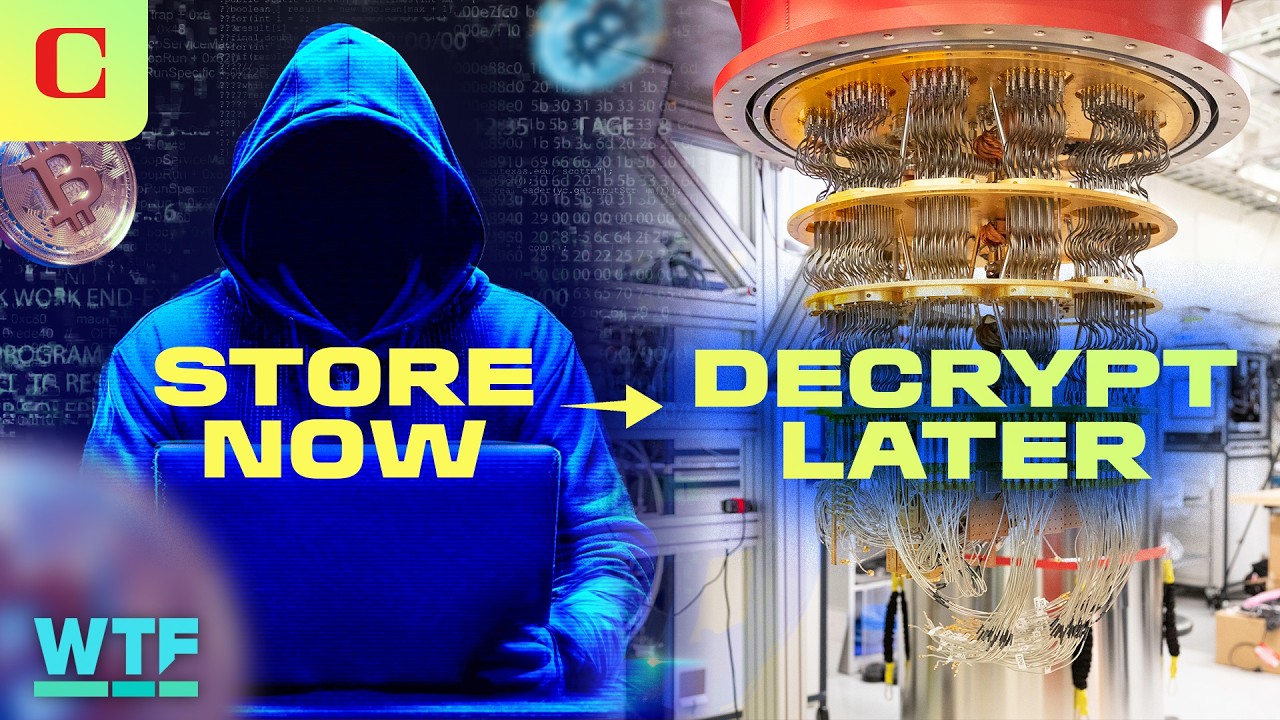
Google Speaks on Quantum Hackers and the Threat to Crypto | What the Future
Google just warned that quantum computers could start breaking the complex encryption protecting cryptocurrencies much easier and sooner than expected. 0:00 Google’s Quantum Warning 0:13 Quantum Computers: A Faster Frontier 0:39 Assessing the Threat 0:58 The Move to Post-Quantum Cryptography 1:26 Understanding Post-Quantum Cryptography 2:10 The Power of Entanglement 2:43 Exploring Quantum Computing Add CNET…
CNET
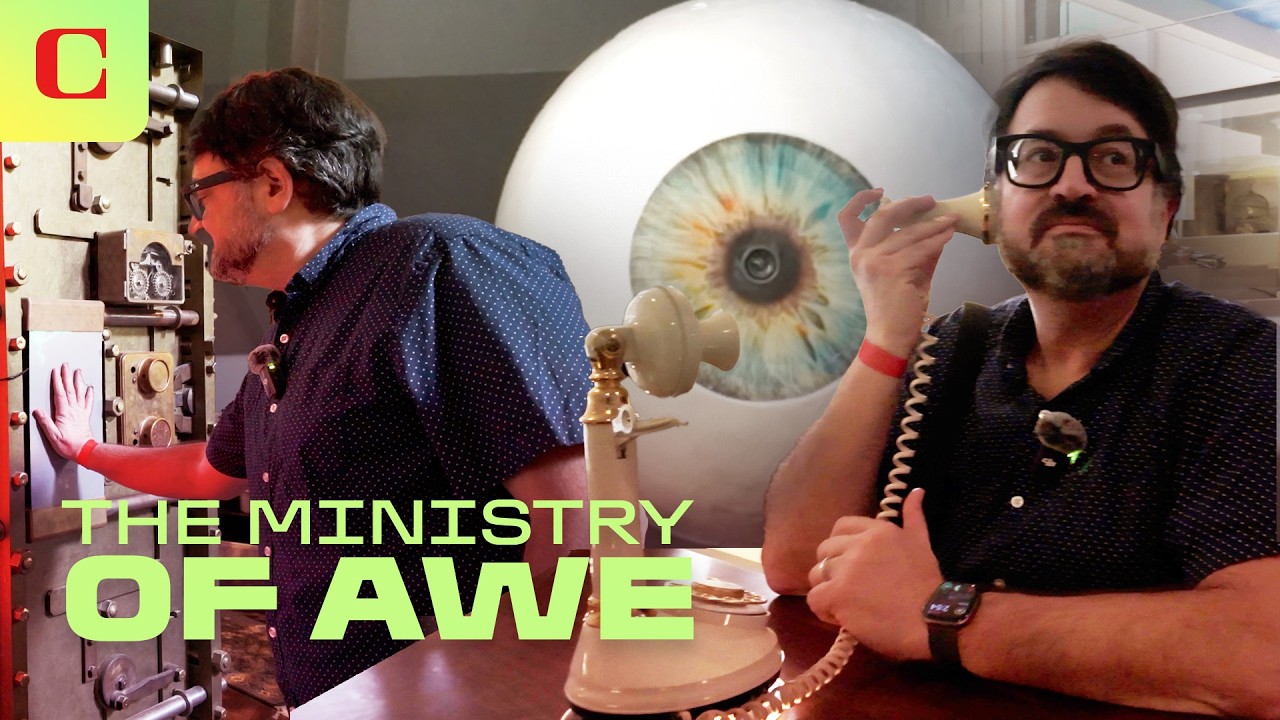
I Was in AWE of This Techie Art Exhibit (Ministry of Awe)
Scott Stein takes you inside the Ministry of Awe, Philadelphia’s immersive six story art experience. Go on a journey with him as he explores how technology and art meet in this space. Hear from the founders of Spatial Pixel, who explain what inspires them to combine AI with this physical art experience. 0:00 Entering the…
Science & Technology
Why Taskrabbit’s Founder Prioritizes Diversity Early │ Build Mode Podcast
As a founder or any team builder, diversity is best built at the start. As Taskrabbit founder Leah Solivan learned, procrastination leads to weaker teams and a harder effort later. We dive into all of her expert tips for builders and founders in the latest episode of our podcast Build Mode right here:


Boys experience more violence when they’re young than you think. Here’s how things change #TEDTalks

The New Science of Eyewitness Memory | John Wixted | TED

Google Speaks on Quantum Hackers and the Threat to Crypto | What the Future
-

 Science & Technology6 years ago
Nitya Subramanian: Products and Protocol
-
 People & Blogs4 years ago
Sleep Expert Answers Questions From Twitter ???? | Tech Support | WIRED
-
 CNET6 years ago
Ways you can help Black Lives Matter movement (links, orgs, and more) ????????
-
 Wired7 years ago
How This Guy Became a World Champion Boomerang Thrower | WIRED
-
 Wired7 years ago
Neuroscientist Explains ASMR’s Effects on the Brain & The Body | WIRED
-
 Wired7 years ago
Why It’s Almost Impossible to Solve a Rubik’s Cube in Under 3 Seconds | WIRED
-
 Wired7 years ago
Former FBI Agent Explains How to Read Body Language | Tradecraft | WIRED
-

 CNET6 years ago
Surface Pro 7 review: Hello, old friend ????
@Jasenskiditorere
August 11, 2025 at 11:07 am
came here for thing, stayed for everything 😚🍒
@Sofianapuigig
August 11, 2025 at 11:12 am
was not expecting to enjoy this but here we are 🧡💖
@achmadhanifmardinsyah5825
August 11, 2025 at 11:13 am
I feel same, i craving Information and give dopamine. Get burnout for studying then cant sleep 🙂
@PomPonn-f2i
August 11, 2025 at 11:19 am
♥ 👀
@grantlauzon5237
August 11, 2025 at 11:52 am
And they’ll never leave.
@Jaishreeram-ly2jm
August 11, 2025 at 11:52 am
This will blow up in the next ten years .I will visit it in in 2035 probably.
@mrfalleo
August 11, 2025 at 11:55 am
Humans, know nothing and the universe does not bend to our knees. We are just a chaotic bioproduct of the universe.
@West1010
August 11, 2025 at 12:04 pm
Women love uncertainty when it comes to relationships.
@Ludiotic
August 11, 2025 at 12:14 pm
One of the other challenges is that a complex truth can make us feel stupid, and the idea of deferring to an expert we don’t yet trust makes us feel vulnerable. It’s why a lot of conspiracy theories (and creation myths) are so attractive – “this person did it” is something we can always wrap our heads around, so we don’t feel threatened by the complexity.
It’s so hard to actively suspend certainty that I’m not surprised we’re surrounded by theories.
@mmdrodrigues
August 11, 2025 at 7:00 pm
Would you rather not be surrounded by theories ? They essentially equate to human progress and for every conspiracy there is potentially one correct conspiracy theory ..
Too bad people don’t even understand that the term was used as a pejorative, by the CIA for them to curtail questions about Oswald acting alone or not. I’m glad he’s a doctor and not a scientist. I don’t use doctors much nowadays, most of them are completely locked in their assumed knowledge..and yet the world is sicker each day.
@etchasketch222
August 11, 2025 at 12:43 pm
What’s the TLDW?
@QuintFoxGPT
August 11, 2025 at 2:09 pm
* Complex Technologies and Lack of Explanation: The speaker highlights several examples where we trust technology without a complete understanding of why it works:
* Aerodynamics: Common explanations for why airplanes fly don’t cover all scenarios.
* Medical Technologies: The exact mechanisms behind defibrillation and general anesthesia are still not entirely clear.
* Self-driving Cars: A major concern is not understanding the decision-making process of autonomous machines.
* Computer-aided Proofs: The first major mathematical theorem proven by a computer forced mathematicians to accept a proof they couldn’t verify by hand.
* The Shift from Explanation to Prediction: In many fields, the focus has moved to prediction because it’s an easier problem than finding a full explanation. This becomes problematic in areas like the justice system, where algorithms predict future crimes without explaining the underlying reasons.
* The Role of Explanation in Conspiracy Theories: A lack of clear explanations can create a void that conspiracy theories fill. These theories often provide simple, all-encompassing explanations for complex events.
* The Importance of Acknowledging the Human Need for Explanation: The speaker argues that it’s crucial for scientists and experts to not just state what is true but also explain why it’s true. As the world becomes more complex, individuals need to find new ways to evaluate claims and trust experts.
The video concludes by emphasizing the need to bridge the gap between knowing “what is happening” and understanding “why it’s happening.”
@maxinedowns8013
August 11, 2025 at 4:46 pm
Too Long Didn’t Watch.
@TheBestLifeMindsetWithShelly
August 11, 2025 at 12:56 pm
Fascinating topic. Our brains crave certainty, even if it’s false—sometimes we’d rather have a wrong answer than sit with the unknown.🩷
@Bluth53
August 11, 2025 at 12:59 pm
The topic and content are quite good, but the presentation and pronunciation could be improved.
@QuintFoxGPT
August 11, 2025 at 2:08 pm
* 00:04 – The Airplane Riddle
* 00:49 – The Mystery of Defibrillation
* 01:01 – The Unexplained Anesthesia
* 02:03 – The Problem with Self-Driving Cars
* 02:55 – The Computer-Aided Proof
* 05:52 – Algorithms in the Justice System
* 08:16 – The Appeal of Conspiracy Theories
* 10:09 – Conclusion
@gallahaggis
August 11, 2025 at 9:10 pm
gake and fay
@meloz1246
August 11, 2025 at 2:23 pm
The price tags are still on every piece of his apparel
@mmdrodrigues
August 11, 2025 at 6:57 pm
Logical fallacy…. He is guilty of what he accuses the theorists of, wanting to defend his point and not be open minded to evolve his position …. 😂 The irony is delicious, but lost on him of course….
Too bad doctors weren’t open to understanding that sun and exercise and not being in home prison would have been a better approach ..
Too bad they weren’t open minded (lol, as if that was the root cause…) to the possibility that the vaccines didn’t stop transmission like they repeated as nauseaum.
This won’t age well, and if it does, we’ll be in 1984..
@8888Rik
August 12, 2025 at 11:21 am
I dearly wish this had been much longer. As a scientist with a deep background in philosophy (and math), I think a great deal about the need that we all have for explanation, and I used to discuss this when I was a statistics lecturer at a University. People may get the math of statistical correlations, but they need specific, causal mechanisms as well, especially when the event in question happens to *them*, specifically and directly, from automobile accidents to cancer. It seems to be a psychological epistemic necessity.
@DeborahMarchantPoet
August 12, 2025 at 3:26 pm
Why? We can go deeper. Naturally experiencing uncertainty, the easily threatened & easily death anxiety triggered brain, falsely believes it is invincible and will live forever. It continually attempts to ward off thoughts of death that are non-consciously triggered by uncertainty and confusion.
@tesoroart1825
August 12, 2025 at 9:27 pm
The stage backdrop at TEDxLondon, with a design placed in the center that resembles the Japanese Rising Sun flag, was used by the Japanese military during World War II. In many parts of East Asia, it is associated with Japan’s imperial history and wartime actions, and is considered offensive by some. I found it surprising to see here