
People & Blogs
When it comes to muscles: Use them before you lose them #HowToBeABetterHuman #TEDTalks
Did you know that you start losing muscle mass as soon as the age of 30? Author and surfer Bonnie Tsui explores how to build strength as you age with Chris Duffy, host of the “How to Be a Better Human” podcast. Watch as Bonnie tries to teach Chris how to surf while weaving in…







People & Blogs
The Controversial Climate Tool Funding Real Change | Sandeep Roy Choudhury | TED
If a company plants trees to offset its pollution, is that climate progress — or is it greenwashing? Critics of carbon markets say it’s the latter. But Sandeep Roy Choudhury, who’s spent two decades financing climate projects from rural cookstoves to coastal forests, says the real failure is discouraging companies from even trying. Hear his…
People & Blogs
How to Be a Great Listener | Maegan Stephens, Nicole Lowenbraun | TED
Have you ever left a meeting thinking: everyone talked, but nothing was achieved? Chances are that people were listening to each other, just not in the same way. Listening experts Maegan Stephens and Nicole Lowenbraun unpack the four different ways to listen, sharing a practical framework that could change how you respond, build trust and…
People & Blogs
Have you heard of aphantasia? Here’s what it is — and how to know if you have it #TEDTalks
Picture this: a rocket ship crash-lands on a planet, and an alien approaches the spacecraft. What do you see in your mind when you visualize this scene? For Alex Rosenthal (and many others), the answer is: absolutely nothing. Exploring the fascinating science of aphantasia, or the inability to generate mental images, he shows why our…


Quick Start: Setting Up Your Samsung Galaxy Buds4 Pro

Nvidia Invests $2B in Marvell, Deepens Partnership | Bloomberg Tech 3/31/2026

What To Expect From the Artemis II Launch
-
 Science & Technology6 years ago
Nitya Subramanian: Products and Protocol
-
 People & Blogs4 years ago
Sleep Expert Answers Questions From Twitter ???? | Tech Support | WIRED
-
 CNET6 years ago
Ways you can help Black Lives Matter movement (links, orgs, and more) ????????
-
 Wired7 years ago
How This Guy Became a World Champion Boomerang Thrower | WIRED
-
 Wired7 years ago
Neuroscientist Explains ASMR’s Effects on the Brain & The Body | WIRED
-
 Wired7 years ago
Why It’s Almost Impossible to Solve a Rubik’s Cube in Under 3 Seconds | WIRED
-
 Wired7 years ago
Former FBI Agent Explains How to Read Body Language | Tradecraft | WIRED
-
 CNET6 years ago
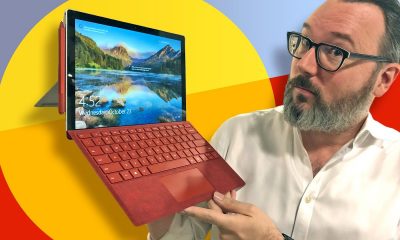
Surface Pro 7 review: Hello, old friend ????
@oma2635
October 28, 2025 at 4:01 pm
su Ala ku wed in qabow lo adakesan Karina dhuulak ee kor ma Dada ku Nola
@bklynmyke
October 28, 2025 at 4:05 pm
I’m already 48. So, is it too late for me. Should I just binge watch thousands of hours of shows and eat McDonald’s cause why not? Or can I still improve my muscles?
@kurtiswells2487
October 28, 2025 at 4:15 pm
Give up
@ruzantsu4147
October 28, 2025 at 4:30 pm
Regardless of how old you are, how hopeless you think it is, it’s not too late to struggle to try to slightly better than you were the day before, you keep working, putting in effort, because even if it doesn’t give you immediate dream bod, it does make you feel a dopamine, energy increase and mood lifting effects through your life, and no it’s not pointless you can still build muscle and get stronger (gain muscle mass) it’s not the end… It’s never the end, don’t give up
@melissa31793
October 28, 2025 at 6:17 pm
It’s 100% up to you. Do you want to give yourself the chance or no?
@bklynmyke
October 28, 2025 at 6:21 pm
@kurtiswells2487 That’s impressive. Short. Negative. Powerful. Your trollosity is through the roof. You troll trolls don’t you? Well played sir. Well played.
@bklynmyke
October 28, 2025 at 6:25 pm
@ruzantsu4147 I must have expressed myself poorly. I’m not giving up. I don’t mind the work. I’ll gladly put in the time and effort. But the way this video was talking, I just wanted to make sure that I wasn’t wasting my time. That’s all. But having said that, I do appreciate the positive and kind words. We need more people helping each other and motivating each other to do as best as we can. No sarcasm.
@Omar1996E.C
October 28, 2025 at 4:07 pm
I’m 21 and I feel physically old 😂😢
@dacentafielda12
October 29, 2025 at 10:35 am
There are so many people in the world who will never know how great their body could feel if they exercised consistently because they can’t get over the initial discomfort to stick with it long enough.
@b0n34nch0r
October 29, 2025 at 1:52 pm
Cool but what do you do when, at 18, you already have poor muscle strength ? I tried my best to exercise back then. Skateboard and other sports but still had nerve pain. No assigned doctor. France is a mess with this. And I still don’t have any. I’ve never knew why but my muscle strength is already awful. Now I’m in my 30s but I still feel like my body is going against me with muscles issues. I kind of dislike talks like that just says “Oh you gotta practice”. Bollocks. If you don’t have the proper nutrients or have vitamin and mineral absorption issues you’re likely screwed and people make you pay for nutrition courses. Which should be common knowledge for every human being….