
People & Blogs
What if we tracked how much the richest people give, not just what they make? #TEDTalks
As chief content officer of Forbes, Randall Lane oversees the magazine’s signature list of billionaires, tracking the richest people on Earth. But he has noticed that this prompts the ultra-wealthy to stockpile their money instead of spending it on the public good. He debuts a new ranking — True Net Worth — that applauds billionaires…








People & Blogs
Compliment a stranger or reach out to a loved one. You may do more good than you think #TEDTalks
Humans aren’t just social — we’re ultrasocial, wired like bees and ants for deep connection. So what happens when smartphones take over childhood, tablets replace textbooks and AI companies infiltrate our kids’ lives? Social psychologist Jonathan Haidt lays out three principles of technoskepticism — and explains why, two years after sounding the alarm in “The…

People & Blogs
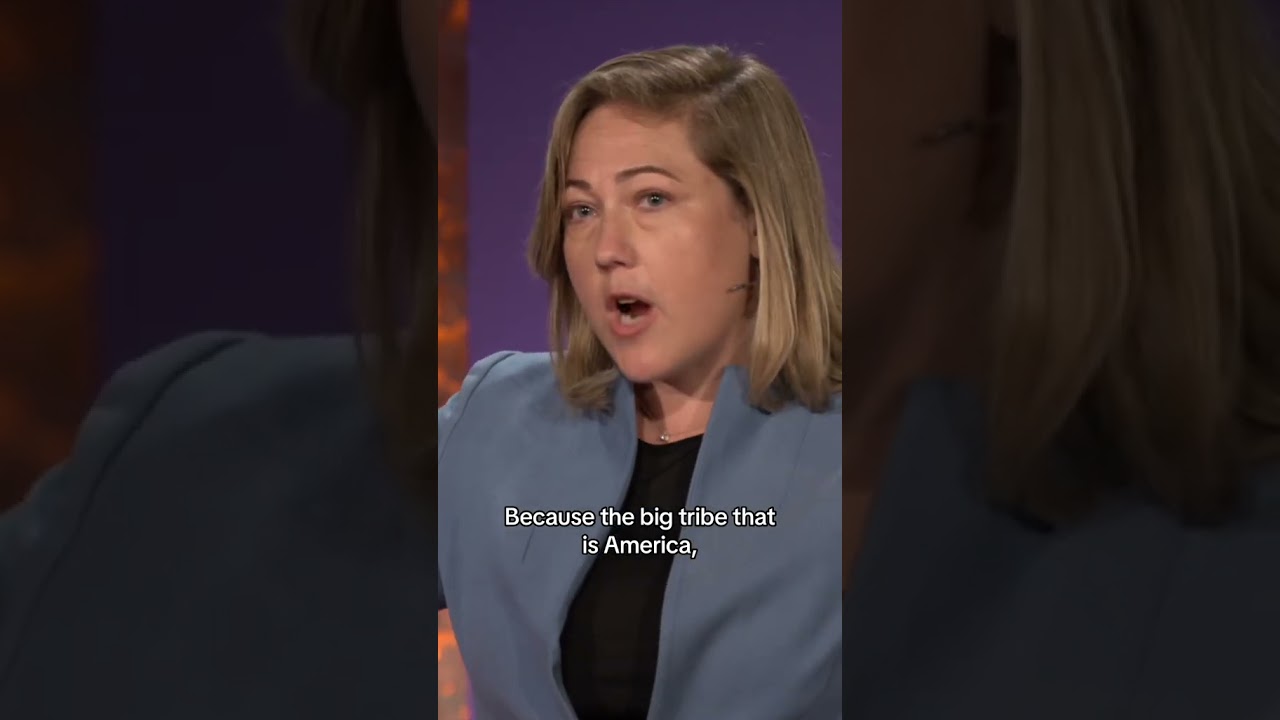
“If we can tell a better story about democracy, we can tell a better story about America” #TEDTalks
Our brains are hardwired to crave community and belonging — a tribal instinct that drives politics in the United States, says political strategist Sarah Longwell. She shares what she learned trying to convince people to vote against their political party in a recent election and shows why telling a better story about democracy is key…
People & Blogs
This speaker took on gerrymandering in her state — and won! #TEDTalks
You don’t need political power to make real change, says activist Katie Fahey. She tells the story of how she led a successful movement in Michigan to end gerrymandering — the practice of drawing district lines to favor one political party — and how it all started with a simple social media post.



Compliment a stranger or reach out to a loved one. You may do more good than you think #TEDTalks

Why Raising Your First Round Is Harder Than Ever l Build Mode

SK Hynix US Listing Demand Soars | Bloomberg Tech 7/09/2026

Nitya Subramanian: Products and Protocol

Sleep Expert Answers Questions From Twitter ???? | Tech Support | WIRED

Ways you can help Black Lives Matter movement (links, orgs, and more) ????????
Compliment a stranger or reach out to a loved one. You may do more good than you think #TEDTalks
Why Raising Your First Round Is Harder Than Ever l Build Mode
SK Hynix US Listing Demand Soars | Bloomberg Tech 7/09/2026
-
 Science & Technology6 years ago
Nitya Subramanian: Products and Protocol
-
 People & Blogs4 years ago
Sleep Expert Answers Questions From Twitter ???? | Tech Support | WIRED
-
 CNET6 years ago
Ways you can help Black Lives Matter movement (links, orgs, and more) ????????
-

 Wired7 years ago
How This Guy Became a World Champion Boomerang Thrower | WIRED
-

 Wired7 years ago
Neuroscientist Explains ASMR’s Effects on the Brain & The Body | WIRED
-

 Wired7 years ago
Why It’s Almost Impossible to Solve a Rubik’s Cube in Under 3 Seconds | WIRED
-

 Wired7 years ago
Former FBI Agent Explains How to Read Body Language | Tradecraft | WIRED
-

 CNET7 years ago
Surface Pro 7 review: Hello, old friend ????
@sjaneesh7066
May 5, 2026 at 6:05 pm
makes sense. this is how it should be
@gabrielmaroto18
May 5, 2026 at 6:12 pm
Now that’s an idea worth spreading!
@rileyelben527
May 5, 2026 at 6:17 pm
Because charities are often money laundering schemes
@joebagodonuts8119
May 5, 2026 at 6:40 pm
Nonsense. It feels good, but this is total garbage.
@synth712
May 5, 2026 at 6:40 pm
the rich just gonna donate to their own foundation or other billionaire’s foundation.. but overall brilliant idea
@Rhobyn
May 5, 2026 at 6:44 pm
Or just tax them appropriately.
@saharo4884
May 6, 2026 at 3:02 am
I clicked the comment section to say exactly this. This is cute and all, but it shouldn’t absolutely be the billionaire’s choice *how* to give that money, it should be the collective.
@andrejcagalj4089
May 6, 2026 at 5:34 am
Yep people in charge will do well with more money you give them. Wake up.
@WNC1901
May 6, 2026 at 1:00 pm
‘Philanthropy’ is exactly how they’re already scamming us. It’s a tax scheme and money laundering.
@FataMorgana888
May 7, 2026 at 1:58 am
The Epstein class loves to con the Working and Middle class that they are admirable for avoiding tax through ‘philanthropy’, which thanks to Epstein and his ilk, we know is often just another way of getting more powerful.
@rezadaneshi
May 5, 2026 at 6:56 pm
A list of why and who they give to is much better!
@noname-pb9vj
May 5, 2026 at 9:42 pm
That’s the next step
@5959Luc
May 5, 2026 at 7:25 pm
A much better idea is not to allow people to have such an absurd amount of money. Instead of relying on their generosity, this way all could live well without worrying about not having the basics.
Having such money gives them the power to control everything, instead of using automation so nothing lacks, they use it to give themselves more power and money for no reason beyond “numbers go up”.
Anyone with a brain can see they are not special, this system is rigged and not meritocratic at all. We pay taxes to maintain infrastructure and again for these chosen rich to use it. Why? They didn’t invent it, nor any of their ancestors, they don’t know how any of it works. In fact, they steal from inventors and universities with the help of different governments or they use their money to prevent things from being researched or buy any competing companies and never even use the new technologies.
Development is stopping. I’ve met many of them and they are nothing but parasites, not once was one of them necessary for anything or helpful in any way, only the opposite. The majority of them don’t even deserve more money than the average person, no special abilities at all. It makes no sense.
Why are they even chosen to be rich? The most recent I know is Elon when the US government forced NASA to make a rocket company for him. Why do that? Why him? He couldn’t even be useful in his own company as they find someone to replace and correct the damage he did as CTO. Why people think he is a genius or self-made in any way is beyond me. But then again, none of them are.
There’s also this couple when the government made betting legal. They were well-connected, this is the only reason I can think of.
@bryanwilson2757
May 5, 2026 at 7:46 pm
She gives it away like that because she didn’t work for it. The very definition of easy come, easy go.
@noname-pb9vj
May 5, 2026 at 9:43 pm
But she still has 28 billion
@circuitAHDSR
May 5, 2026 at 9:09 pm
Giving to charity doesn’t exempt people from paying their fair share in taxes.
@xBoojum
May 6, 2026 at 12:05 am
Must be nice to divorce a billionaire and then get praise for giving his money away
@thierryvankerm8474
May 6, 2026 at 1:45 am
Make a list of the best tax payers.
@User04-l9d
May 6, 2026 at 2:58 am
❤❤❤ God be with you
@Gaming4Prajwal
May 6, 2026 at 3:19 am
Ratan TATA
@カーボンな
May 6, 2026 at 9:40 am
Styrofoam over in my homeland “JAPAN”.
@redarmchair
May 7, 2026 at 12:19 pm
because charity is personal preference driven and not what is really needed for society. Therefore govs distributing taxes to where there are a need are much better. Of course the rich lemmings cheering are so ego driven they think giving is more virtuous than paying their share of taxes. The only way infrastructure projects would be funded in such a system would be if a roadway/bridge got their name on it. The benevolent capitalist, right?
@Marian_Martin_Morgenstern
May 8, 2026 at 8:00 am
What if we track their position on an open map ?
Like real time
Might make some more honest when pay their employees