
Bloomberg Technology
US Chip Sector Needs More Talent, Says SEMI
President Trump says he discussed guardrails on AI and Nvidia’s H200 chips with Chinese leader Xi Jinping during a two-day summit in Beijing. Shari Liss, vice president of global workforce development and initiatives at SEMI, joins Bloomberg’s Caroline Hyde and Ed Ludlow on “Bloomberg Tech” to discuss what this means for the US semiconductor sector.…










Bloomberg Technology
Oura CMO Says Wearable Health Tracking Moving Beyond Checkups
Oura’s Chief Medical Officer suggests wearable tech could give people a continuous picture of their health, rather than relying on occasional doctor visits. Dr. Ricky Bloomfield says the constant stream of health data provided to users of wearables, like Oura’s smart rings, can improve health outcomes and influence behavior. He says the long-term goal is…

Bloomberg Technology
OpenAI’s $70B Run Rate Meets AI’s Infrastructure Challenge
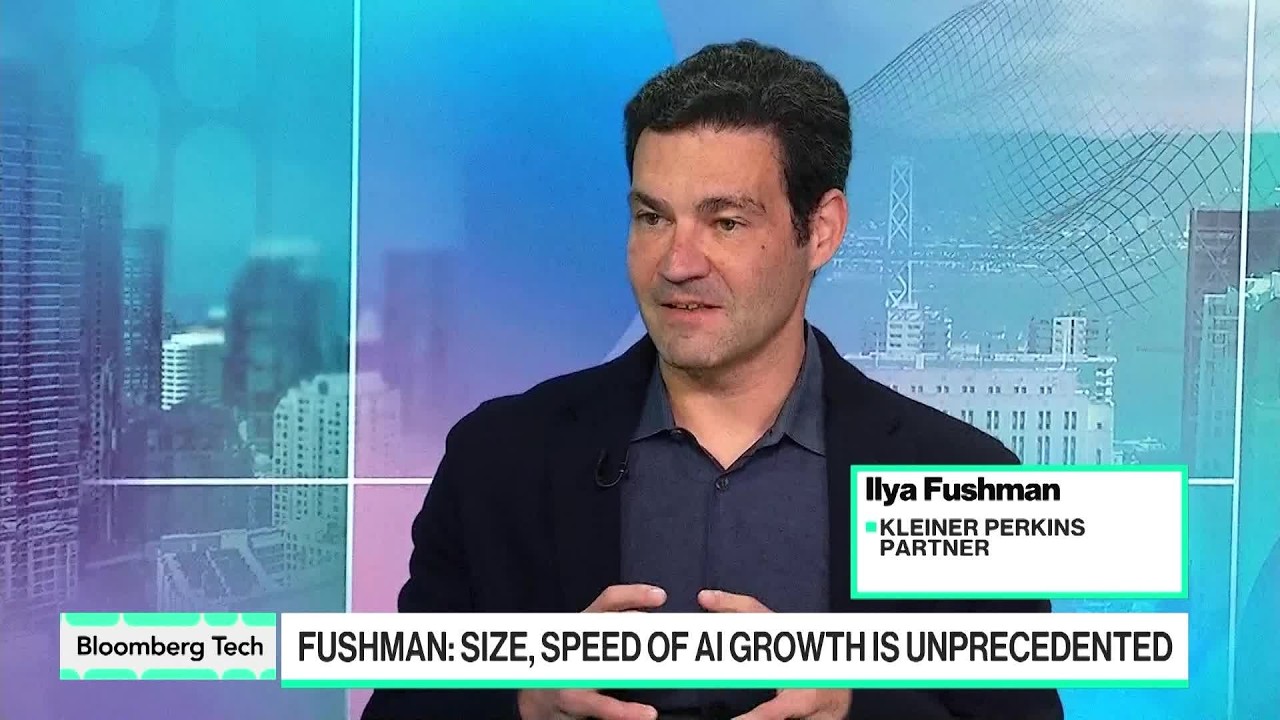
loomberg’s Ed Ludlow breaks down OpenAI’s latest annualized revenue, expected to reach or exceed $70 billion by the end of the year. Plus, Oracle keeps several data centers on track by relying on truck deliveries of natural gas, and a conversation with Kleiner Perkins partner Ilya Fushman on the mega AI IPO pipeline and the…

Bloomberg Technology
From Anthropic to Waymo: Kleiner Perkins Bets on AI’s Next Act
Kleiner Perkins partner Ilya Fushman says AI is still in the early stages of reshaping the economy, with opportunities extending from frontier models like Anthropic to consumer agents, autonomous vehicles and robotics. He discusses why the firm sees physical AI as a potential source of the next trillion-dollar companies, the rapid growth of leading private…

Oura CMO Says Wearable Health Tracking Moving Beyond Checkups

These are the inherent human skills that machines can’t replace #TEDTalks

OpenAI’s $70B Run Rate Meets AI’s Infrastructure Challenge
-

 Science & Technology6 years ago
Nitya Subramanian: Products and Protocol
-

 People & Blogs5 years ago
Sleep Expert Answers Questions From Twitter ???? | Tech Support | WIRED
-

 CNET6 years ago
Ways you can help Black Lives Matter movement (links, orgs, and more) ????????
-
 Wired7 years ago
How This Guy Became a World Champion Boomerang Thrower | WIRED
-

 Wired7 years ago
Neuroscientist Explains ASMR’s Effects on the Brain & The Body | WIRED
-

 Wired7 years ago
Why It’s Almost Impossible to Solve a Rubik’s Cube in Under 3 Seconds | WIRED
-
 Wired7 years ago
Former FBI Agent Explains How to Read Body Language | Tradecraft | WIRED
-

 CNET7 years ago
Surface Pro 7 review: Hello, old friend ????
@ps3301
May 15, 2026 at 6:31 pm
American invested too much money in social media business before
@Maclabhruinn
May 15, 2026 at 6:53 pm
It would be great if the US could build up its own semi conductor fab industry, but … getting people to work in fabs will be the hardest part. You need people with PhD level education, willing to work in uncomfortable, noisy, unpleasant production line settings for 10 hours a day. You can do that in Taiwan. In the US, there are people willing to work in those industrial conditions, and also people with the requisite education and skills – but the intersection of those 2 groups is tiny. You would have to pay massive wages to keep the workers – which would then tilt the economics of production. With great respect to Shari Liss, she’s talking about bandaid solutions to a massive structural problem.
@cleokey
May 16, 2026 at 12:41 pm
What an interesting looking character?
@ThisOnlineLife
May 16, 2026 at 10:15 pm
Not with Trump’s higher education cuts. Biden is solely responsible for our chip success and re-shoring of manufacturing. Trump’s bled manufacturing and technology jobs.
@ThisOnlineLife
May 16, 2026 at 11:41 pm
Biden’s Chip Act