Connect with us

Science & Technology

Nvidia’s Sydney Sykes on Winning Corporate Venture Capital Deals

Building a great product is one thing. Getting a company like Nvidia to put its name behind it is something else entirely. In this episode of Build Mode, host and Startup Battlefield lead Isabelle Johannesen sits down with Sydney Sykes, who leads global venture capital alliances and partnerships at Nvidia, to unpack how startups break…

Published

on

Building a great product is one thing. Getting a company like Nvidia to put its name behind it is something else entirely.

In this episode of Build Mode, host and Startup Battlefield lead Isabelle Johannesen sits down with Sydney Sykes, who leads global venture capital alliances and partnerships at Nvidia, to unpack how startups break into the Nvidia ecosystem and what a corporate venture capital partnership actually looks like once they’re in.

Sydney explains how founders can get on Nvidia’s radar through programs like Nvidia Inception, why strategic alignment matters more than a slick pitch deck, and how corporate venture capital differs from traditional venture capital when it comes to fundraising, diligence, and deal terms. Drawing on her experience as an investor at NEA and Lightspeed Venture Partners, and as co-founder of BLCK VC, she also discusses access and representation in venture capital and how the AI boom is reshaping who gets funded. She closes with practical fundraising advice for founders hoping to build lasting relationships with corporate VCs like Nvidia.

They get into:

•

How a startup can “enter the Nvidia orbit” through the Nvidia Inception program

•

What Nvidia looks for before offering its stamp of approval to an AI startup

•

Corporate venture capital vs. traditional venture capital: what founders need to know

•

Why a corporate VC checks for strategic relevance, not just financial upside

•

How to pitch the same startup differently to a corporate VC vs. an institutional VC

•

Why founders should build their cap table like a puzzle, not a popularity contest

•

How the AI boom is lowering barriers to entrepreneurship — and where old barriers remain

•

Why Sydney believes VCs should pay closer attention to energy and data center infrastructure

•

How Black VC is expanding access and education across the venture capital industry

•

Sydney Sykes’ advice for founders trying to break into the corporate venture ecosystem

Subscribe to Build Mode on⁠ () Apple Podcasts⁠ () , ⁠Spotify⁠ () , or⁠ () wherever you like to listen⁠ () . And watch the full videos on⁠ () YouTube () ⁠. New episodes of ⁠Build Mode⁠ () drop every Thursday. 

Chapters:

•

00:00 – Intro: How Startups Enter Nvidia’s Orbit

•

01:20 – Meet Sydney Sykes: From NEA to Lightspeed to Nvidia

•

03:18 – What Sydney Does as Nvidia’s VC Alliances Lead

•

04:20 – The AI Trends Nvidia Is Watching Across Verticals

•

07:47 – How Startups Can Enter the Nvidia Orbit

•

10:34 – What Nvidia’s “Stamp of Approval” Actually Looks Like

•

12:56 – How Startups Get Noticed by Corporates (Beyond Nvidia)

•

15:18 – Does a Corporate Stamp Move VCs to Write Checks?

•

19:41 – Access, Black VC, and Gatekeeping in Venture Capital

•

30:20 – Procurement vs. Corporate VC vs. Traditional VC, Explained

•

38:28 – Final Advice for Founders Chasing Corporate Partnerships

Hosted by Isabelle Johannessen. Produced and edited by Maggie Nye. Audience development led by Morgan Little. Special thanks to the Foundry and Cheddar video teams.

Continue Reading
Advertisement
Click to comment

Leave a Reply

Your email address will not be published. Required fields are marked *

CNET

America’s Plan to 2x Its Most Powerful X-Ray Laser

Get an inside look at the world’s most powerful X-ray laser at SLAC National Accelerator Laboratory in Stanford, which scientists use to film movies of molecules. Read more about the SLAC National Accelerator Labratory on CNET.com See SLAC, a two-mile particle accelerator next to Stanford Timecode Chapters: 0:00 – Introduction to SLAC & LCLS 0:48…
Published

on

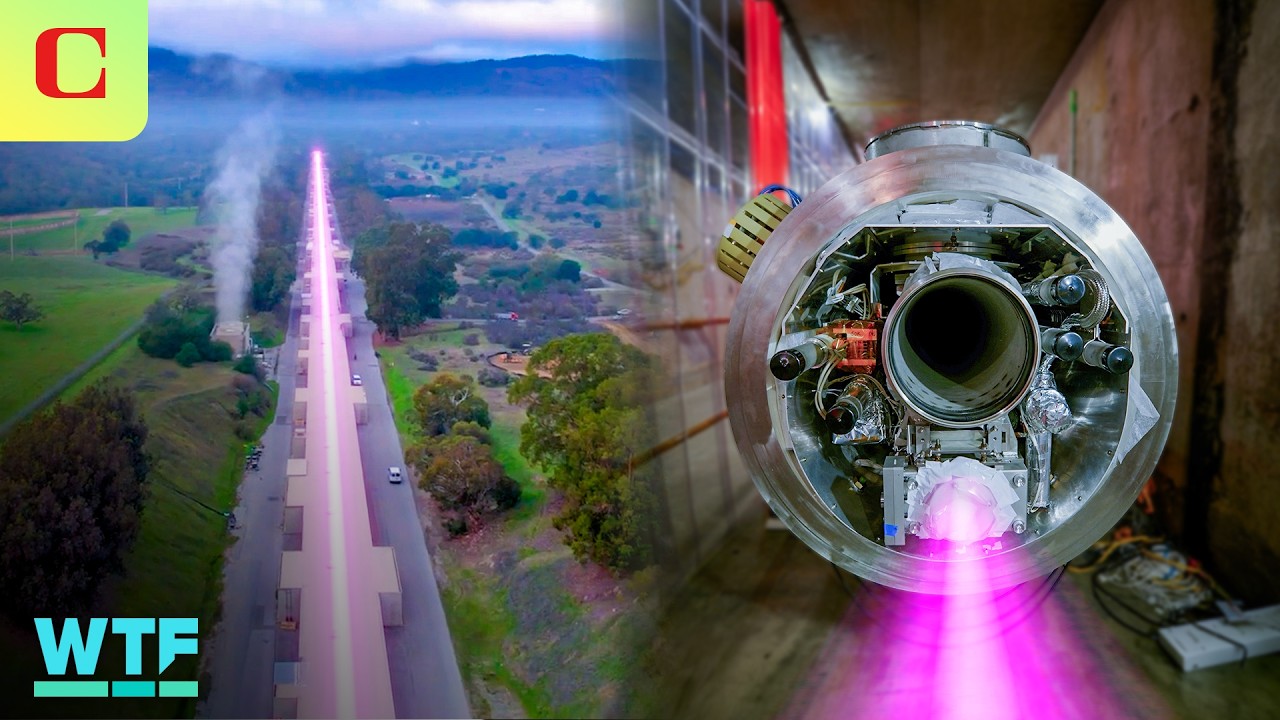
Get an inside look at the world’s most powerful X-ray laser at SLAC National Accelerator Laboratory in Stanford, which scientists use to film movies of molecules.

Read more about the SLAC National Accelerator Labratory on CNET.com
See SLAC, a two-mile particle accelerator next to Stanford

Timecode Chapters:
0:00 – Introduction to SLAC & LCLS
0:48 – Upgrading the Particle Accelerator
1:45 – How Cryomodules Work
2:23 – Cooling Below Outer Space Temperatures
3:11 – Generating Hard X-Rays
4:15 – Filming “Molecular Movies” of Atoms
5:03 – Real-World Applications & Future Experiments

Video Credits:
Host: Andy Altman
Scripted by: Andy Altman
Producer: Andy Altman
Camera: Celso Bulgatti
Video Editor: Jon Gomez
Thumbnail Designer: Zooey Liao

Add CNET as a trusted news source
Never miss a deal again! See CNET’s browser extension 👉
Check out CNET’s Amazon Storefront:
Subscribe to CNET on YouTube:
Follow us on TikTok:
Follow us on Instagram:
Follow us on Bluesky:
Like us on Facebook:
CNET’s AI Atlas:
Follow us on X:
Visit CNET.com:

#science #laser #accelerator #particleaccelerator #laserbeam

Continue Reading

CNET

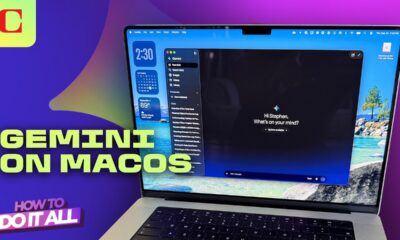
How to Download and Use Google Gemini for MacOS

Google’s Gemini multimodal AI is available for MacOS and Windows. CNET’s Stephen Beacham demonstrates how to download and install it on a Mac, and walks you through every button and feature in the app. Read more about the Gemini App for MacOS on CNET.com MacOS Now Has a Native Gemini AI App Gemini for MacOS…
Published

on

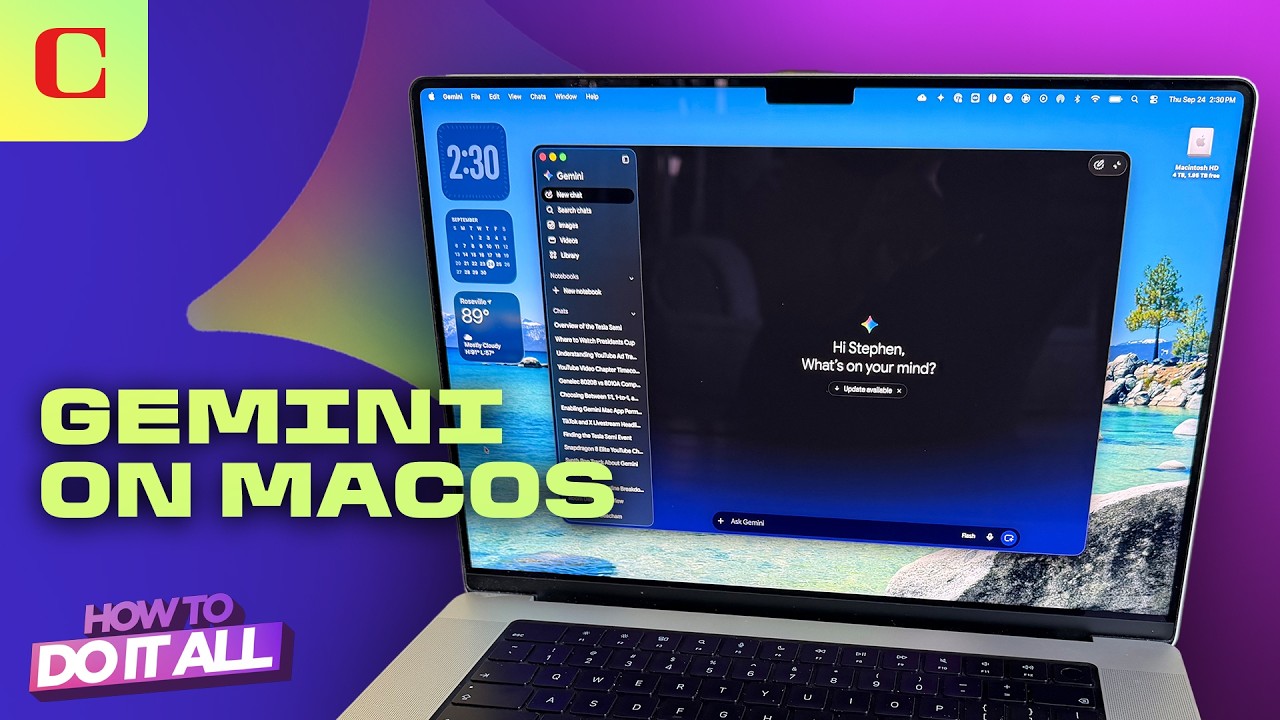
Google’s Gemini multimodal AI is available for MacOS and Windows. CNET’s Stephen Beacham demonstrates how to download and install it on a Mac, and walks you through every button and feature in the app.

Read more about the Gemini App for MacOS on CNET.com
MacOS Now Has a Native Gemini AI App

Gemini for MacOS Gets New Voice and ‘Screen Awareness’ Features

Timecode Chapters:
0:00 Introduction to Google’s Gemini App for macOS
0:23 How to Download and Install Gemini for Mac
1:03 Testing the “Speak to Window” and FN Key Dictation Features
2:08 Testing Gemini’s Reasoning Feature to Summarize Highlighted Text
2:41 Overview of the Gemini App Interface for macOS
3:07 Choosing Flash Models and Managing Chat Preferences
4:22 Using the Camera, Attachments, and Exploring Multimodal AI
5:13 Sharing App Windows with Gemini for Real-Time Assistance
6:05 Using the Lasso Tool for Screen Analysis
6:33 Exploring Deep Research, Image/Video Generation, and Personal Intelligence
7:33 Gemini App walkthrough outro

Video Credits:
Producer Editor: Stephen Beacham
Thumbnail Designer: Zain bin Awais

Add CNET as a trusted news source
Never miss a deal again! See CNET’s browser extension 👉
Check out CNET’s Amazon Storefront:
Subscribe to CNET on YouTube:
Follow us on TikTok:
Follow us on Instagram:
Follow us on Bluesky:
Like us on Facebook:
CNET’s AI Atlas:
Follow us on X:
Visit CNET.com:

#google #googlegemini #gemini #geminiapp #mac #macos #ai #artificialintelligence

Continue Reading

CNET

Unboxing Apple’s $149 HomePod Mini 2 in Green

Apple’s new HomePod Mini 2 is equipped with a full-range driver and dual passive radiators, made for 360-degree sound. It measures about 4 inches across, and will come equipped with the S10 chip, which Apple says analyzes music in real time to optimize it. Unbox it with us in their new green color. #unboxing #onemorething…
Published

on

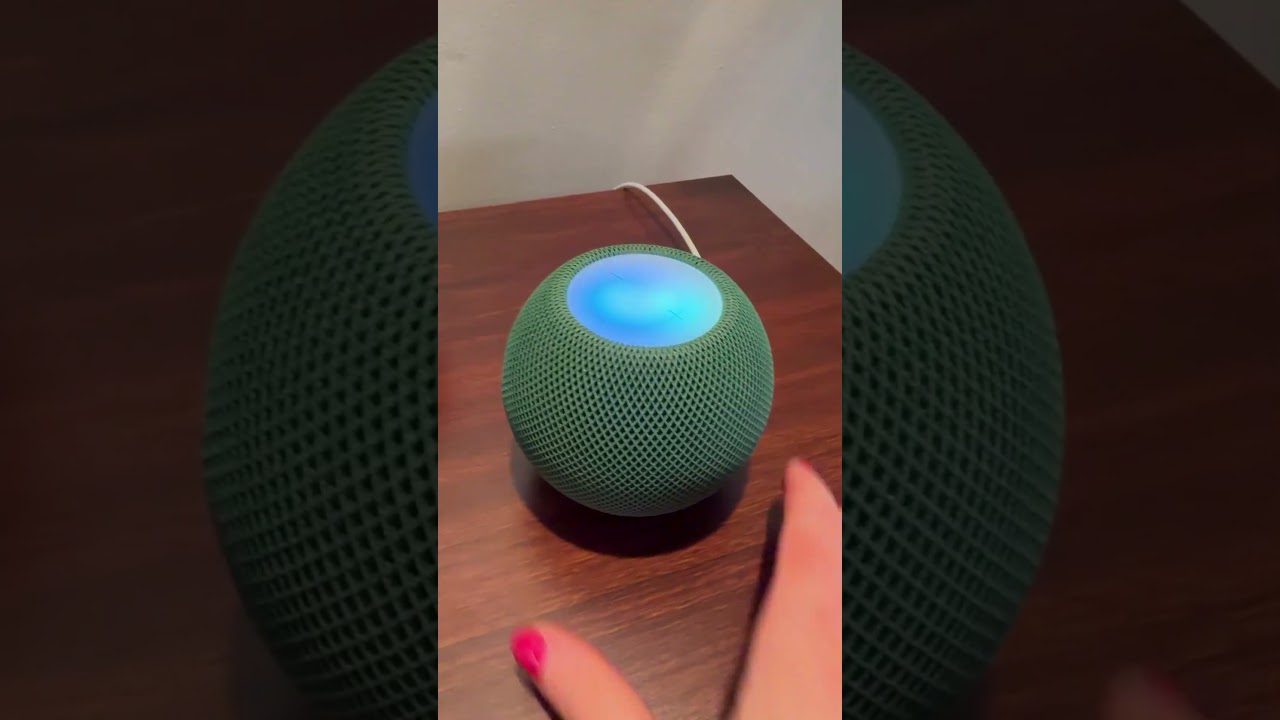
Apple’s new HomePod Mini 2 is equipped with a full-range driver and dual passive radiators, made for 360-degree sound. It measures about 4 inches across, and will come equipped with the S10 chip, which Apple says analyzes music in real time to optimize it. Unbox it with us in their new green color. #unboxing #onemorething #apple #homepodmini2 #smartspeaker

🎥: Bridget Carey

Continue Reading

Trending