
People & Blogs
Make no mistake… or do, it might make you famous! #TEDTalks
Sharing his accidental journey to viral fame, digital pioneer Joshua Schachter reveals how programming a robot to make deliberate mistakes in otherwise deeply satisfying plotter art sparked millions of views (and hilariously strong reactions). Learn how to turn your frustration into creative success — and discover how quirky, unexpected art can captivate audiences worldwide.











People & Blogs
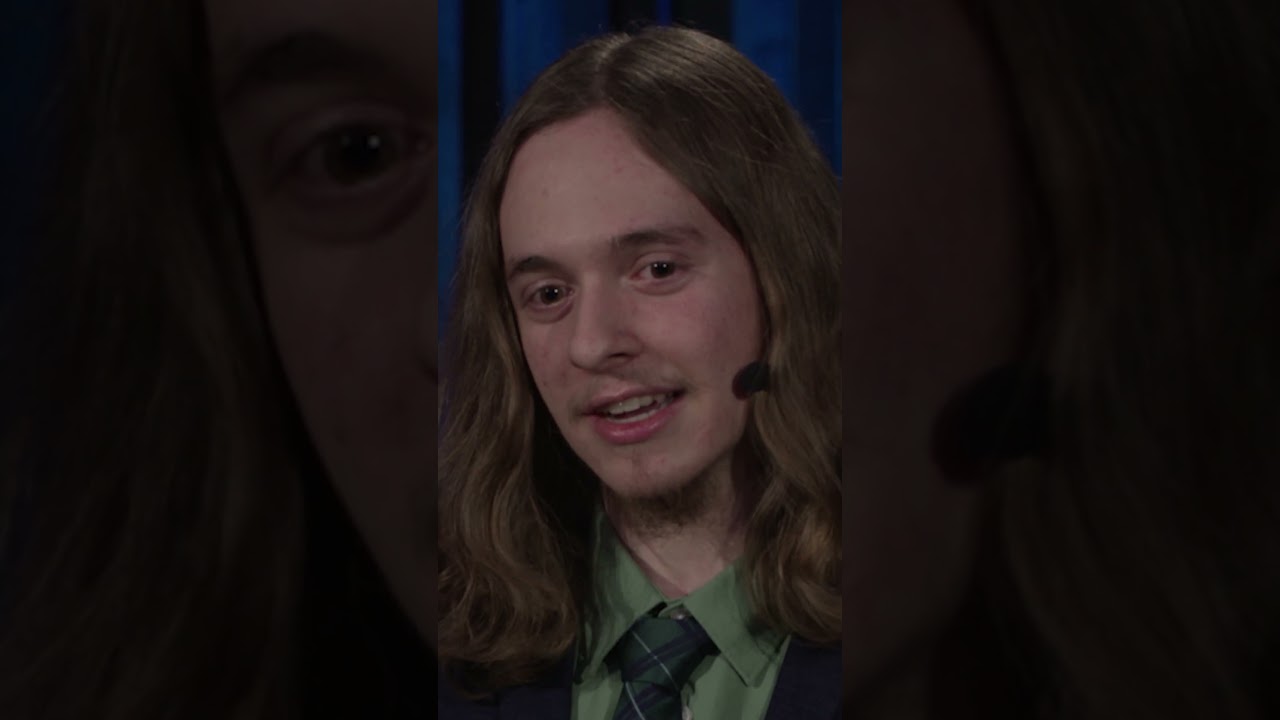
“Autism is not a disease; it’s just another way of thinking” #TEDTalks
“Autism is not a disease; it’s just another way of thinking,” says Ethan Lisi. Offering a glimpse into the way he experiences the world, Lisi breaks down misleading stereotypes about autism, shares insights into common behaviors like stimming and masking and promotes a more inclusive understanding of the spectrum.
People & Blogs
How a Viral Choreographer Makes His Moves | Sean Bankhead | TED
In a swaggering performance, choreographer Sean Bankhead and his students perform the viral dance he designed for Victoria Monét’s hit song “On My Mama.” Rooted in Black culture and inspired by generations of iconic artists, Bankhead blends expertise with at least one move everyone can try — showing how choreography doesn’t just reflect culture, it…

People & Blogs
The Story You’re Not Hearing About AI Data Centers | Ayșe Coskun | TED
The race to build smarter AI is crashing into a physical limitation: the power grid simply can’t keep up with the energy demands of data centers. Computer scientist Ayșe Coskun shows how we could turn this problem on its head, transforming AI facilities into virtual batteries that help stabilize the grid and accelerate clean energy.…



“Autism is not a disease; it’s just another way of thinking” #TEDTalks

How a Viral Choreographer Makes His Moves | Sean Bankhead | TED

I Was in AWE of This Techie Art Exhibit (Ministry of Awe)
-

 Science & Technology6 years ago
Nitya Subramanian: Products and Protocol
-

 People & Blogs4 years ago
Sleep Expert Answers Questions From Twitter ???? | Tech Support | WIRED
-

 CNET6 years ago
Ways you can help Black Lives Matter movement (links, orgs, and more) ????????
-
 Wired7 years ago
How This Guy Became a World Champion Boomerang Thrower | WIRED
-

 Wired7 years ago
Neuroscientist Explains ASMR’s Effects on the Brain & The Body | WIRED
-
 Wired7 years ago
Why It’s Almost Impossible to Solve a Rubik’s Cube in Under 3 Seconds | WIRED
-

 Wired7 years ago
Former FBI Agent Explains How to Read Body Language | Tradecraft | WIRED
-

 CNET6 years ago
Surface Pro 7 review: Hello, old friend ????
@billygregory1547
August 8, 2025 at 12:06 pm
The problem is once this catches on and others do it then it no longer becomes special anymore. And you become less and less viral.
So if you discover something great, honestly don’t share it because then you will be forgotten because everyone else will do it too
@carsonhunt4642
August 10, 2025 at 6:46 pm
Yea that’s prob why he’s sharing it now. “Boomer realizes how to internet viral-ness works” 😂
@edgefanCWC
August 8, 2025 at 12:22 pm
Genius 😆
@thewebupdater
August 8, 2025 at 1:18 pm
Love the humor attached to this 😆 Honestly, little mistakes like this makes it seem more human and thus more artistic than if it were perfect. 🙂
@1dle1ndustries
August 8, 2025 at 3:26 pm
surprised this isnt bein used as an ad for some game thats 90% ads and looks nothing like the ad
@AnnieB-v8j
August 8, 2025 at 4:22 pm
What a ridiculous waste of time, energy and resources.
@RockiriRockiriRock
August 8, 2025 at 6:55 pm
Have a little joy in life!
@AnnieB-v8j
August 8, 2025 at 7:06 pm
@@RockiriRockiriRock This isn’t joyful to me. Thanks though.
@RockiriRockiriRock
August 8, 2025 at 8:39 pm
@AnnieB-v8j I understand, I hope your day will brighten with something that is joyful to you!
@AnnieB-v8j
August 8, 2025 at 8:49 pm
@@RockiriRockiriRock Thank you. I appreciate that. 🙂
@EscanorsCruelSun
August 9, 2025 at 12:12 am
Great reminder that we are human, we are not perfect, as much as we wish we were.
@tf1977sled
August 9, 2025 at 5:36 am
people are stupid thats what you proved
@Tubleros
August 11, 2025 at 1:49 pm
Why is that your conclusion?
@MartinGrim-w4y
August 9, 2025 at 7:58 pm
Why is this pissing me off 😆😆😆
@wingsatup1
August 10, 2025 at 4:27 am
This violates the prediction, creating what neuroscientists call a prediction error signal. That signal travels through parts of the anterior cingulate cortex and insula, which are strongly linked to the emotional experience of frustration or discomfort. The same mechanism is why people feel irritated when someone scratches nails on a chalkboard
@xDubo1
August 11, 2025 at 1:58 pm
¨May they slightly change the recipe of your favorite drink¨ =D
@Annatar.
August 11, 2025 at 8:40 pm
Link the full Video!
@T-AXI
August 12, 2025 at 7:39 am
Is this the best example of “first world problems”? Seems people are getting more angry towards drawing lines rather than seeing humans without food…