Connect with us

TechCrunch

Greyparrot uses deep vision for waste management

Greyparrot is building computer vision systems for the waste management industry. The TC Top Picks program showcases outstanding early-stage startups across these categories: AI/Machine Learning, Biotech/Healthtech, Blockchain, Fintech, Mobility, Privacy/Security, Retail/E-commerce, Robotics/IoT/Hardware, SaaS and Social Impact & Education. TechCrunch is a leading technology media property, dedicated to obsessively profiling startups, reviewing new Internet products, and…


Published

on

Greyparrot is building computer vision systems for the waste management industry.

The TC Top Picks program showcases outstanding early-stage startups across these categories: AI/Machine Learning, Biotech/Healthtech, Blockchain, Fintech, Mobility, Privacy/Security, Retail/E-commerce, Robotics/IoT/Hardware, SaaS and Social Impact & Education.

TechCrunch is a leading technology media property, dedicated to obsessively profiling startups, reviewing new Internet products, and breaking tech news.

Continue Reading
Advertisement
2 Comments

2 Comments

  1. Herrman Reuter

    October 23, 2019 at 9:40 pm

    This can be so valuable!

  2. Greyparrot

    October 24, 2019 at 3:58 pm

    Thanks for sharing our tech! ♻️

Leave a Reply

Your email address will not be published. Required fields are marked *

Science & Technology

After the midterms, is the AI industry in for a rough two years? | Equity Podcast

Democrats’ historic victories in this week’s U.S. midterm elections could also transform the tech industry. The public voted on 41 data center-related ballot measures on Tuesday — in all but one, the majority voted to impose more restrictions on data center development. And even when data centers weren’t on the ballot directly, they were a…

Published

on

Democrats’ historic victories in this week’s U.S. midterm elections could also transform the tech industry.

The public voted on 41 data center-related ballot measures on Tuesday — in all but one, the majority voted to impose more restrictions on data center development. And even when data centers weren’t on the ballot directly, they were a major talking point, with newly-elected Democratic governors and congressmembers likely to support additional regulation.

On the latest episode of TechCrunch’s Equity podcast, Kirsten Korosec, Sean O’Kane, and Anthony Ha discuss what the election will mean for the tech industry moving forward — not just when it comes to data centers (which OpenAI is already trying to rebrand), but also increased government scrutiny of Big Tech.

Listen to the full episode to hear more about:

• Whether Google first satellite data center is ushering our orbital data center future
• If major layoffs at design software company Canva and website builder Squarespace can be blamed on AI
• Marvell’s $115 billion acquisition of Lumentum, in one of the largest deals in history
• Why CrowdStrike just acquired of two AI security startups
What NBCUniversal’s investment in Indian microdrama startup Elo • Elo means for the media landscape

Subscribe to Equity on YouTube, Apple Podcasts, Overcast, Spotify, and all the casts. You can also follow Equity on X and Threads, at @EquityPod.

Chapters:

00:00 Intro

0:47 Founder Summit recap and an Equity team update

2:23 Midterm results and the data center backlash

7:49 OpenAI rebrands data centers as “compute campuses”

10:57 Wall Street cools on the data center buildout

13:30 Regulatory certainty and building outside the U.S.

15:45 Canva and Squarespace layoffs

20:37 Can AI chatbots replace products like Squarespace?

23:22 Marvell’s $115B Lumentum acquisition

26:51 CrowdStrike buys Fiddler AI and Dreadnode

30:20 Micro drama startup raises $80M

30:59 Outro

Continue Reading

Science & Technology

VC’s Gender Gap is Closing (But Not Fast Enough) with Paige Hendrix Buckner

Women and non-binary investors have doubled their share of partner seats at U.S. venture firms in less than a decade. But a title doesn’t always come with power. In this episode of Build Mode () , host Isabelle Johannesen sits down with Paige Hendrix Buckner, CEO of All Raise, a national nonprofit helping women and…

Published

on

Women and non-binary investors have doubled their share of partner seats at U.S. venture firms in less than a decade. But a title doesn’t always come with power.

In this episode of Build Mode () , host Isabelle Johannesen sits down with Paige Hendrix Buckner, CEO of All Raise, a national nonprofit helping women and non-binary venture capitalists grow their power and influence.

Paige shares how the share of women and non-binary people in partner-plus roles at U.S. VC firms grew from 9% to 18.8%, and why All Raise is now focused on a new measurement. She explains why a partner title doesn’t guarantee check-writing authority, board seats, carry, or credit for deals, and how the attribution gap makes it harder for investors to build the track record they need to raise their own funds.

They get into:

•

What All Raise does and its strategy of community, data, and “lore”

•

The attribution gap and why credit for deals matters

•

Why sponsorship can make or break an investor’s career

•

Why more women are leaving to start their own funds

•

How diverse VC firms change which founders get funded

•

What the $124 trillion wealth transfer could mean for women LPs

•

What good firm building looks like, from LP relationships to brand

•

How AI is helping emerging managers run lean firms

•

The different paths into a venture career


Subscribe to Build Mode on Apple Podcasts () , Spotify () , or wherever you like to listen () . And watch the full videos on YouTube () . New episodes of Build Mode () drop every Thursday.

Hosted by Isabelle Johannesen. Produced and edited by Maggie Nye. Audience development led by Morgan Little. Special thanks to the Foundry and Cheddar video teams.

Continue Reading

Science & Technology

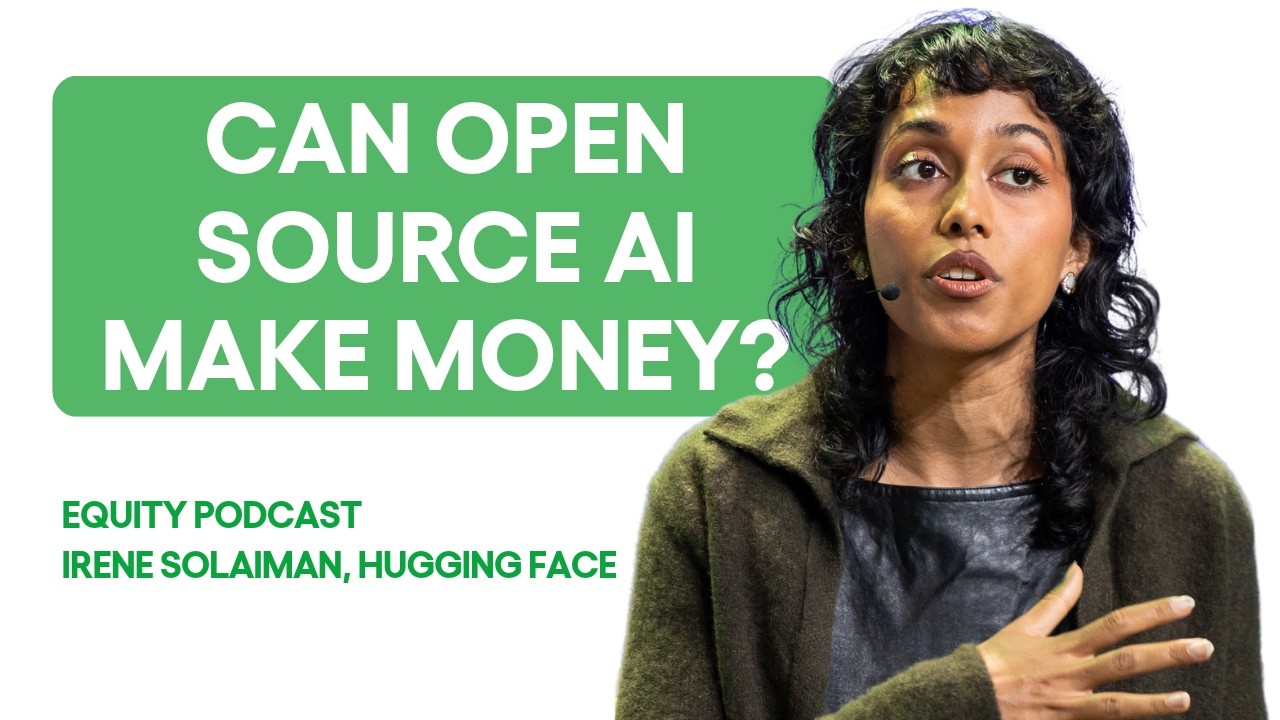
Open source AI is booming. Hugging Face explains who profits. | Equity Podcast

Open source models are becoming more mainstream as enterprises, governments and startups alike rely on the promise of lower costs, more control, and more flexibility. But as increasingly capable models become more freely available, how do companies capture value? And with Chinese open models gaining ground, can American players keep up? On this episode of…
Published

on

Open source models are becoming more mainstream as enterprises, governments and startups alike rely on the promise of lower costs, more control, and more flexibility. But as increasingly capable models become more freely available, how do companies capture value? And with Chinese open models gaining ground, can American players keep up?

On this episode of TechCrunch’s Equity podcast, Rebecca Bellan caught up with Irene Solaiman, Chief Policy Officer and SVP of Strategy at Hugging Face, about what startups need to know before building on open models, from choosing the right tools and infrastructure to navigating the trade-offs shaping the future of open AI.

Subscribe to Equity on YouTube, Apple Podcasts, Overcast, Spotify and all the casts. You also can follow Equity on X and Threads, at @EquityPod.

Chapters:
00:00 Intro
2:25 Who’s making money when open models are free?
4:08 Licenses, revenue sharing, and the Alibaba cloud advantage
8:10 What founders should check before building on open models
10:34 Why the harness matters (and why no one can evaluate it)
13:19 Buying GPUs vs. renting inference
16:20 What happens if Chinese models become the default?
22:19 Beyond language: Nemotron, bio models, and the case for an American open frontier
24:52 The OpenCode attack and the pressure to close up
28:38 Obliterated models: defenders’ tool or attackers’ gift?
34:12 How small startups can protect themselves
35:42 Outro

Continue Reading

Trending