
TechCrunch
Anthony Levandowski on lessons learned at TC Sessions: Robotics+AI
Anthony Levandowski, the former star Google engineer and serial entrepreneur who was at the center of a trade secrets lawsuit between Uber and Waymo, is back with a new startup. TechCrunch sits down with Levandowski for a wide-ranging discussion on autonomous vehicles and his new startup Pronto.ai







Science & Technology
After the midterms, is the AI industry in for a rough two years? | Equity Podcast
Democrats’ historic victories in this week’s U.S. midterm elections could also transform the tech industry. The public voted on 41 data center-related ballot measures on Tuesday — in all but one, the majority voted to impose more restrictions on data center development. And even when data centers weren’t on the ballot directly, they were a…
Science & Technology
VC’s Gender Gap is Closing (But Not Fast Enough) with Paige Hendrix Buckner
Women and non-binary investors have doubled their share of partner seats at U.S. venture firms in less than a decade. But a title doesn’t always come with power. In this episode of Build Mode () , host Isabelle Johannesen sits down with Paige Hendrix Buckner, CEO of All Raise, a national nonprofit helping women and…

Science & Technology
Open source AI is booming. Hugging Face explains who profits. | Equity Podcast
Open source models are becoming more mainstream as enterprises, governments and startups alike rely on the promise of lower costs, more control, and more flexibility. But as increasingly capable models become more freely available, how do companies capture value? And with Chinese open models gaining ground, can American players keep up? On this episode of…

Is Your Body Language Working Against You? | Cara Hale Alter | TED

In a world of endless health advice, clarity and context might be the best prescription #TEDTalks

iPhone Duo Livestream: How Many Folds Can Apple’s Phone Take? Day 10

Nitya Subramanian: Products and Protocol

Sleep Expert Answers Questions From Twitter ???? | Tech Support | WIRED

Ways you can help Black Lives Matter movement (links, orgs, and more) ????????
Is Your Body Language Working Against You? | Cara Hale Alter | TED
In a world of endless health advice, clarity and context might be the best prescription #TEDTalks
iPhone Duo Livestream: How Many Folds Can Apple’s Phone Take? Day 10
-
 Science & Technology6 years ago
Nitya Subramanian: Products and Protocol
-
 People & Blogs5 years ago
Sleep Expert Answers Questions From Twitter ???? | Tech Support | WIRED
-
 CNET6 years ago
Ways you can help Black Lives Matter movement (links, orgs, and more) ????????
-
 Wired7 years ago
How This Guy Became a World Champion Boomerang Thrower | WIRED
-
 Wired7 years ago
Neuroscientist Explains ASMR’s Effects on the Brain & The Body | WIRED
-
 Wired7 years ago
Why It’s Almost Impossible to Solve a Rubik’s Cube in Under 3 Seconds | WIRED
-
 Wired7 years ago
Former FBI Agent Explains How to Read Body Language | Tradecraft | WIRED
-
 Entertainment6 years ago
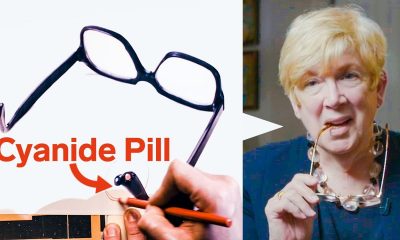
Former CIA Chief of Disguise Breaks Down Cold War Spy Gadgets | WIRED
Sir Lancelot
April 23, 2019 at 3:07 am
Yup, Elon was right all along.
NuclearNow_SolarLater
April 23, 2019 at 5:38 am
how long will it take for everyone else to figure it out? lol
John T
April 23, 2019 at 9:16 am
+NuclearNow_SolarLater After they buy one
Leon Guo
May 5, 2019 at 3:34 pm
Other people just don’t think computer is powerful enough to process so many high res camera, and elon make the computer, others fall behind
ObsidianGT
May 5, 2019 at 8:31 pm
+Leon Guo People also didn’t think a computer would be able to best a human world champion at chess. Now who’s the champ?
People have always lacked vision. A person is needed for that. Then, if that person is persuasive enough, with the achievements to show, then the people will come around.
John T
May 6, 2019 at 5:06 pm
+Leon Guo Once the real-world data from full self-driving goes public and people see it being 100x safer than human driving, it’s all over for the rest of the industry.
Kirk Augustin
April 23, 2019 at 4:04 am
While of course lidar is not reliable enough because it can’t detect metal, shapes, texture, or luminosity. But clearly Elon Musk has it wrong as well, using video, because his Teslas have hit many trucks already, using video.
PresidentialWinner
April 23, 2019 at 10:56 pm
+Triscuit Square But haven’t you seen horse accidents? Terrible events, so much blood and gore..How about we just start walking.
drayzen
April 24, 2019 at 2:41 am
Clearly you have no idea what you’re talking about. Watch this to the end then come back and read your comment.
youtube.com/watch?v=Ucp0TTmvqOE&t=4150s
Wirmish
April 25, 2019 at 4:38 pm
The ACTUAL Autopilot 1, 2, or 2.5, is not a self driving system.
Erik Garcia
April 29, 2019 at 8:54 pm
Thats not true. Autopilot hits stuff because it is not full self driving, and drivers arent paying attention.
FSD isnt flawed because of that, its different software. The features that make FSD possible are not implemented in current versions of tesla autopilot. Once tesla pushes out a feature complete version, the neural network can be trained on all the things that currently autopilot struggles with, but that isnt really possible when your feature set isnt compete.
Neural nets, and computer learning are the way to go. The limitation you are describing is a software, not hardware issue. Tesla is correct, and easily the leader.
Carl Knott
April 30, 2019 at 4:37 pm
FSD and autopilot are two totally different technology. Mobilieye’s image chip was used in the original autopilot which uses human annotate features. Tesla’s full self driving technology just demostrated uses vision + deep learning to train the neural net with vast amount of data mostly automatically. No one else is doing that at this moment.
chazzatheninja
April 23, 2019 at 4:17 am
Cock and Ball Torture
Btt
April 23, 2019 at 5:07 am
This guy is a thief
Joel Sullivan
April 23, 2019 at 7:42 am
From Wikipedia:
“On May 15, 2017, United States District Judge banned Levandowski from further work on Otto’s Lidar technology on the basis of having breached the confidentiality of former employer Waymo.”
So I’m not saying he’s wrong, but perhaps there are other reasons he’s not continuing to develop lidar.
Ryan Fulcher
April 23, 2019 at 9:02 am
+Joel Sullivan or… ockham’s razor
Rodney Johnson
April 24, 2019 at 4:46 am
No wonder he started a church.
RyNiuu
May 7, 2019 at 9:26 pm
these guys are TSLAQ ^
Tanmay Srivastava
April 23, 2019 at 6:36 am
Who was sent here by elon
etbadaboum
April 23, 2019 at 1:10 pm
So basically Levandowski stole lidar tech from Google to Otto for nothing
Actual Factual
April 24, 2019 at 12:29 am
(((Levandowski))) jews always stealing tech from everyone and selling it to china, russia, and india to make Israel look good in front of them and making a pretty shekkle from it.
RobosergTV
April 29, 2019 at 11:42 am
+Actual Factual idiot
Mother Frunker
April 23, 2019 at 8:02 pm
“I think if somebody started today and they were really good, they might have something like what we have today in 3 years, but in 2 years, ours will be 3 times better.” – Elon Musk
drayzen
April 24, 2019 at 2:37 am
Build out AI in a non-fearful way = Skynet.
Wirmish
April 25, 2019 at 4:36 pm
1:55 – Elon Musk is right. I’m surprised… no.
AdamW_Parker
April 26, 2019 at 9:31 pm
“Lidar is lame”
Carl Knott
April 30, 2019 at 4:30 pm
The amazing thing is not just Elon was right but he saw exactly what it is even before he started to execute. Other very smart people still need to fool around with it for a long time before learning the truth.
venomTang
May 6, 2019 at 3:43 pm
I think this man is already being controlled by Ai
Charles Neely
May 7, 2019 at 6:17 pm
so after this guy is legally banned from working w/ lidar he has the revelation that its not necessary….