
Science & Technology
The Surprising Science of Adolescent Brains | Jennifer Pfeifer | TED
Neuroscientist Jennifer Pfeifer digs into the fascinating brain changes driving young people’s behavior during the critical years of adolescence. She debunks some of the biggest misunderstandings about teens — including puberty, hormones and the impact of social media on mental health — and shows how to support kids during this period of growth and possibility.…









CNET
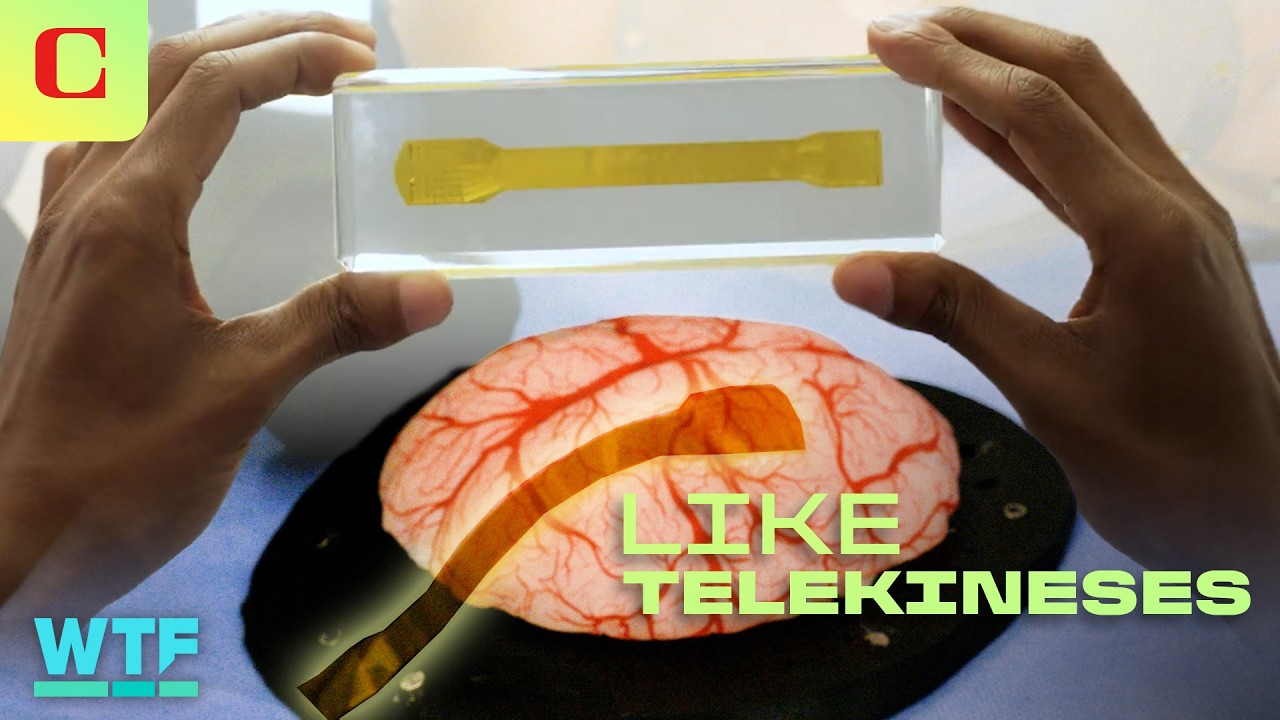
This Removable Brain-Computer Implant Feels ‘Like Telekinesis’
We visited the headquarters of Precision Neuroscience in New York to check out its removable, upgradable brain-computer interface. You can find the products mentioned in this video linked below *CNET may get a commission on these offers Read more about it on CNET.com Timecode Chapters: 0:00 Intro 0:41 The Implant 2:07 The Surgery 2:22 Purpose…
Science & Technology
Amazon and others are done keeping their data center deals secret | Equity Podcast
Amazon says it will stop using NDAs when negotiating data center deals with local governments, following a similar move from Microsoft earlier this year. Secrecy has fueled community backlash against AI infrastructure, with opposition leading to hundreds of proposed and enacted moratoriums from New York to San Francisco. Meanwhile, a wave of startups is betting…

CNET
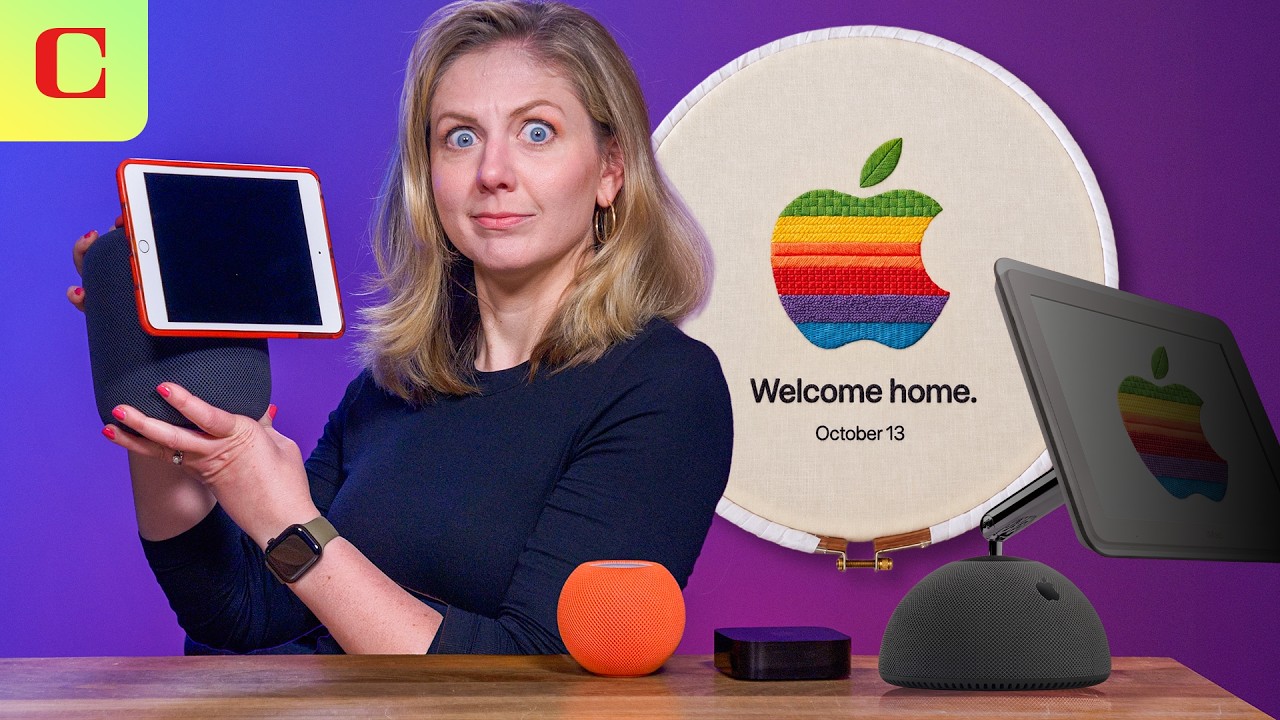
Apple’s Welcome Home Event: Everything Leaked! Apple TV 4K, HomePods and a New Hub | One More Thing
Apple has a ‘Welcome Home’ event on Tuesday, and we’re expecting big changes coming to smart home products, including a new countertop Hub, HomePod mini speakers and Apple TV 4K box. Bridget Carey breaks down the rumors and what has her excited. You can find the products mentioned in this video linked below Apple 2022…

How to Start Any Conversation the Right Way | Chris Fenning | TED

This Removable Brain-Computer Implant Feels ‘Like Telekinesis’

Here’s your reminder that you are enough — and you always will be #WorldMentalHealthDay
-

 Science & Technology6 years ago
Nitya Subramanian: Products and Protocol
-

 People & Blogs5 years ago
Sleep Expert Answers Questions From Twitter ???? | Tech Support | WIRED
-

 CNET6 years ago
Ways you can help Black Lives Matter movement (links, orgs, and more) ????????
-

 Wired7 years ago
How This Guy Became a World Champion Boomerang Thrower | WIRED
-
 Wired7 years ago
Neuroscientist Explains ASMR’s Effects on the Brain & The Body | WIRED
-

 Wired7 years ago
Why It’s Almost Impossible to Solve a Rubik’s Cube in Under 3 Seconds | WIRED
-

 Wired7 years ago
Former FBI Agent Explains How to Read Body Language | Tradecraft | WIRED
-

 CNET7 years ago
Surface Pro 7 review: Hello, old friend ????
@nestoxstar12t
November 19, 2025 at 11:02 am
❤❤❤❤❤❤
@AdvantestInc
November 19, 2025 at 11:04 am
The shift from viewing adolescence as a ‘problem’ to seeing it as a period of potential is such a powerful reframing. This perspective change alone can open the door to healthier conversations around development.
@Jasonxbr
November 19, 2025 at 11:07 am
What are you talking about? Social media is the problem, on-line bullying, harassment, stalking, catfishing, low self-esteem, self worth, comparing to others, body image, predators 😢😢😢😢😢 addiction, social media and the internet is by far the worst invention ever existed. Oh yeah I forgot to add, its a tool to weaponized young minds to join cults, far right groups, spread of extremist ideologies of intolerance and hate, especially the young and naive people. 😢😢😢😢
@thenomad9853
November 19, 2025 at 11:42 am
Agreed. SM is the worst thing to have happened to the human race in my lifetime.
This TED talk basically seeks to bend statistics to fit a narrative, for reasons I don’t really understand. For example – this discusses the importance of friendships, it also touches on socialisation – in the context of mental health.
Real world connection, meeting people IN PERSON, being in nature, exercising … All of these things influence mental health positively – what one thing contributes hugely to NOT doing those things ?, and living a virtual life rather than a real one ?.
Take it up a notch, how do youngsters date now ?, look at the absolute sh*tshow that is dating apps and online dating…. Contrast that to meeting people in real life.
Trying to suggest that social media isn’t bad for our young adults is a fools errand.
@WeR1bodyNChrist
November 19, 2025 at 11:46 am
Exactly 💯
@vanessalamontagne4443
November 19, 2025 at 11:58 am
I mean, social media brings positive things to the world as well. She says it best, the bigger problem is the adults in the kids lives.
@scottbialik6958
November 19, 2025 at 11:59 am
When Science brings real time data and makes the point for a future I am with the Science. Dusty records need cleaning.
@marisoljohnson7172
November 19, 2025 at 12:01 pm
We need to evolve. What you see is neutral unless you labele it. What you see out there is your proyeccion.
@jaughnekow
November 19, 2025 at 11:07 am
Social media was never the problem, we are the problem.
@MianMuhammadHassan-uv8xp
November 19, 2025 at 11:25 am
no, ‘we’ are not the problem, and even if we are you can’t change everyone so yes, social media is the problem
@midmasa
November 19, 2025 at 11:13 am
Lol yes it is. Wtf are you on about.
@heyyflorin
November 19, 2025 at 2:04 pm
Did you even watch the video?
@oKOMAPo
November 19, 2025 at 11:21 am
Not at all, 13 yo girls were always this suicidal , right??? Stfu
@MrOskiee
November 19, 2025 at 11:29 am
Tedx? Check. Portland? Check.
So this is counter culture in play. People want kids off social media because of the obvious negative aspects. Now you’re going to have childless Karen’s telling you you’re wrong and tell you how you should be raising your kid.
@rnedlo9909
November 19, 2025 at 12:58 pm
? Make yourself clear man!
@thenomad9853
November 19, 2025 at 11:32 am
So it’s coincidence that “adolescent brains” changed negatively at precisely the time that social media exploded onto the scene ?. What a massive coincidence.
Are we saying SM is *the only* problem ? No. Have adolescents always had various issues making this a complex period, Yes.
Has SM made a complex time in human life objectively worse in ways we couldn’t have previously imagined ?. *Abso-friggin-lootely*
This TED talk is for the birds. It doesn’t change the fact that SM is making the lives of our children and young adults immeasurably worse than it needs to be.
@gavinde4
November 19, 2025 at 11:35 am
Guys, when you see something so preposterous being peddled in such a flagrant way, just do a quick Google search and see if any 🧃 are involved. The only purpose of this video is for you to see the headline ‘Social Media isn’t the problem’. Nothing else matters. They plant the idea in your head knowing full well you’re not gonna even bother to watch the video, but now that tagline is in your head, and it starts creating a bias in the way you rationalize it. And if you think I’m exaggerating, just bear in mind they’ve been doing stuff like this for hundreds of years. Their master knows all our weaknesses and uses them against us.
@rnedlo9909
November 19, 2025 at 1:00 pm
Did you watch, and more importantly, listen to the video?
@ac7205
November 19, 2025 at 11:46 am
Interesting points. 🙌🙌🙌
@KennaTouye
November 19, 2025 at 11:49 am
I demand and vote for we rewind why do the wickedness and the potions get stronger and eventually wippung out humanity and we as in us created nothing. AI created us
@KennaTouye
November 19, 2025 at 11:50 am
Put your o2 on first
@rezarafiie
November 19, 2025 at 11:51 am
The best talk I’ve ever seen
@PonderDuke
November 19, 2025 at 12:04 pm
– 🧠 **Adolescence is a time of brain growth**: I study adolescent brains, hormones, social lives, and mental health, fascinated by the beauty of the developing brain.
– 💡 **Challenging negative stereotypes**: Society often underestimates adolescents, blaming trends, technology, or hormones for their struggles.
– 🔄 **Adolescence is a period of transformation**: It’s not a problem to be solved, but a stage of growth and opportunity.
– 🔬 **Biology and puberty**: Puberty begins around age 10, with changes like sleep delays and body transformations, and impacts mental health, especially for girls.
– 🚺 **Early puberty can affect self-image**: Early-maturing girls are at higher risk for depression due to societal expectations and changes in how they’re treated.
– 🧑⚖ **Adolescent brains are not immature**: Although developing until the mid-20s, adolescents make strong decisions by age 16, especially when given time and space.
– 📱 **Social media and mental health**: Social media has a small effect on mental health, with bigger factors being relationships and family dynamics.
– 🧑👧 **Family matters more than phones**: Supportive families protect adolescents from mental health issues, even if there are other challenges like bullying.
– 💪 **Building resilience**: Youth resilience is key to mental health—providing support, teaching them to handle emotions, and being there for them makes a big difference.
– 🌍 **Adolescence and societal responsibility**: Adolescents are not a problem to be fixed but are crucial to the future. We need to respect their strengths and give them space to contribute.
– 🚀 **Changing the narrative**: Adolescents are our future, and it’s time to stop doom-shaming them. Let’s create a supportive environment where they can thrive.
@MaryamWazir-q4y
November 19, 2025 at 12:29 pm
Social media is not the cause of youth’s depression. It’s lack of communication between children and their parents…
I think
@rnedlo9909
November 19, 2025 at 12:43 pm
never; Never; NEVER blame the child. The child is a product of the environ created for the child. If you want to look for who is to blame for problems with children, find a mirror.
@AnnieB-v8j
November 20, 2025 at 12:14 pm
Emotional and spiritual maturity has been in decline since the ‘me’ generation of the 1980s, at least. Selfish parents tend to resent and abandon their roles as parents and then blame their kids for not knowing how to grow into healthy participants in society.
@ExistentialWolf
November 19, 2025 at 1:34 pm
The key to youth is just razors 😀 When you get “old” the razor shows up again 8[]
@sherececocco
November 19, 2025 at 1:44 pm
I love it when and old person slams the younger generations when it is directed towards me (an old person)
I challenge their beliefs everytime. No holding back. Either they shut up or we have a heart felt conversation it about 50/50. Some adolescents are 45 and 50 and older.
@RichardCharter
November 19, 2025 at 2:03 pm
I accept the scientific consensus and her reasoning that mental health is largely tied to parental influence. Yet we’re still concerned whether some data regarding brain development and media’s affects on personality are not acknowledged here. It strikes me, as an adult user of social media that there is at least an anecdotal experience of depression from use, despite a strong upbringing and strong critical thinking skills. I feel that it’s reasonable to be suspicious of the bullying, brainrot and algorithms feeding on outrage that are characteristic of social media. Dr. Pfeifer says it herself: “Youth who are bullied have double the risk of developing depression.” Surely a social media rife with bullying has an effect on impressionable youth, no? If adolescents “represent our brightest future,” ~four hours/day of social media algorithms feeding on outrage does not seem like a behaviour to be sidestepped.
@thenomad9853
November 20, 2025 at 6:59 am
Agreed. I think also there’s an element of using statistics to shape the narrative in a given direction. For example the talk suggests the importance of socialisation, and friendships in positive affirmation of mental health and as influencing factors of avoiding causatives for depression.
However. This frames SM as *a part of that socialisation and friendship* – it should really be noted that it’s a proven positive to mental health to meet friends *in person* and cultivate real life interactions – our physiology and neural activity is affected by oxytocin and dopamine in these encounters, real world interaction greatly outweighs the benefits of “socialising online” even before we start to look at the ways in which the algorithm is playing people like a fiddle for maximum ad revenue into the bargain.
Likewise: being in nature, exercising, downtime away from screens, reading, engaging in hobbies. All have known mental health benefits and *all demand real world, rather than online engagements*
What is the single factor most heavily influencing humanity in general *against* engaging more (or in some cases at all) in real world activity in these categories ?. *Social media*
I mean you could roll up: the global economic downturn, distribution of wealth/poverty, the pandemic, and the price of fish into this as well of course – but my point is social media is one of if not the biggest influencing factor in the decrease in real world face to face interactions and real world activity. How you spin the argument depends on which statistics you want to pick on and how you spin them.
And simply blame shifting to the parents is a cheap move – bad parenting will of course always hurt children’s development and make their lives more complex, but parents cannot control what their children do 100% of the time past a certain age, and social media is all encompassing at some point it will infiltrate even the best controlled homes.
Children in the UK are generally given mobile phones when they start secondary school for example – for safety as the primary concern. However well you “lock down” a child’s phone they will still be affected *to some degree* by social media and the effects of “always on, 24/7 communication”.
Bad parenting I’m sure can make this a whole lot worse – but simply shifting the blame sideways from social media, to parents is a very weak argument.
@J2TMFA
November 20, 2025 at 8:14 am
Don’t forget, they can VOTE at age 16.
This sounds like she was not only for it but apart of the mutilating child’s bodies movement also we are trying to stop in our society.
@user-fk8zw5js2p
November 21, 2025 at 7:43 am
It was easy for the speaker to show slides with a collage of headlines that said adolescent problems come from their brain not being fully formed yet 6:02 and at 8:45 where smart phones are destructive. But where is the slide that shows the science that says social media is the least influential factor at 9:10?
Her numbers also aren’t showing the entire picture at 11:58. It’s easy to know because 20% + 23% + 40% + 70% = 153% so the numbers aren’t proportional to each other and the only reason why they aren’t (assuming this wasn’t a mistake) would be to blame parents.
@ruchinpatel1515
November 19, 2025 at 2:12 pm
Ohk, let them make decisions at 16, give them phones, support them in whatever they wish to do, eliminate death penalty for them, that’s the cure she says, wtf are you talking about, wasted 15 mins on this garbage content
@jordanetherington1922
November 19, 2025 at 2:20 pm
Social Media inherently? No. The social media we have NOW? Oh it’s ruining all of us
@fletcherjacobs3688
November 19, 2025 at 4:49 pm
Preach 🙌🏻
@adcashmo
November 19, 2025 at 2:34 pm
Cal Newport?
Gonna comment dude?
@LuisGonzalez-en1kd
November 19, 2025 at 6:45 pm
How society sees things is still rooted in biology.
@MrMscience
November 19, 2025 at 7:03 pm
Just because cell phones may not contribute significantly to depression doesn’t mean they haven’t impacted children. Ask any teacher.
@ForEntanglement
November 19, 2025 at 8:16 pm
The fact we live in such a broken world and massive decline in our world of what used to be filled with intelligence, morality, and creativity…that is until the internet was born and made most people stupid, irrational, sheep, and lack of thinking proves her so undeniably wrong. Duh, she must be living on another planet to be completely void of the abundance of evidence right in front of her face how wrong she is. A PhD does not produce intelligence, obviously🙄🙄🙄
@Jcinsight67
November 19, 2025 at 8:57 pm
The evidence says otherwise who is responsible for this study IT industry?!
@juanjodic
November 20, 2025 at 9:38 am
There is an indirect financial link through the Chan Zuckerberg Initiative (CZI).
Dr. Pfeifer serves as Co-Director of the National Scientific Council on Adolescence (NSCA). This council is part of the Center for the Developing Adolescent at UCLA, which receives funding from the Funders for Adolescent Science Translation (FAST) consortium.
The Chan Zuckerberg Initiative, the philanthropic organization founded by Mark Zuckerberg and his wife Priscilla Chan, is a key member and funder of this consortium.
@timothyhaley6187
November 20, 2025 at 12:00 am
No
@sivakumarr2418
November 20, 2025 at 2:01 am
The Christian US Toxic culture bred scientists and audience those simply don’t understand the bad effects being created worldwide – especially through such Talks and Hollywood movies.
The parentage, defective upbringing by both of the couples working – divorced etc, chasing the non-existent American Dream create a mess of the US Society.
The so called scientists and the speaker included, don’t have any idea of the impressions that are created in one’s brain – right from Childhood. This is called as impressions – VAASANA in Sanskrit – Indian – language. Result more drug abuse, mental disorders etc.
Proper upbringing away from the junk spewed out by the media, TV etc all create proper vaasana. America will never learn. Lousy Ted lecture and content. People in the west talk about Karma, added to that is Dharma – which is unknown in the Christian West.
@bipolarbear7325
November 20, 2025 at 2:02 am
Apparently it only takes me 58 seconds to spot an idiot because I didn’t make it to the one minute mark.
@J2TMFA
November 20, 2025 at 8:12 am
Im listening attentively and I heard the exact same information in the 90’s.
THE ONLY DIFFERENCE is her using slightly different words that we use today when explaining things but they all mean the same thing. So basically she has not said ANYTHING we didn’t already know.
The dumbing down of human beings is complete in their minds. And they think they’re ready to start over and program them the way they want for the future generations of slaves I mean consumers I mean humans…
We always have known development in the brain doesn’t stop until age 26.
Stop the fake b.s.
I could 100% have easily made this speech myself over night and I bet it would’ve been more informational and more logical. Age 16 cannot vote. They’re children… they’re just little mimics and to say you feel they can vote for the developing nations leaders after saying you know their brains are not fully developed is just dumb….
And these people have her an INFLUANCED PREASURED SLOW SOFT CLAP clapped after she said 16 year old could vote with developed brains.
Then goes into the mental health crisis of teens…
“16 year olds can vote but bullied youths have double the amount of depression risks”
But they can VOTE SHE SAID in a sentance previous….
This lady needs to sit down and take a knee. She has shared no new information about teens development or brains at all… We have known this exact information for the last 40 years already.
What is even going on?????
@J2TMFA
November 20, 2025 at 8:29 am
The slow forced hesitated clap because the entire crowd KNEW voting at age 16 was way off the wall and someone forced that clap from the audience.
She is pushing to allow kids to vote and make their own medical decisions at age 16….
At precisely 06:49 you can hear the voice pitch change and hesitation and slight stutter, she is convincing herself at the same time she is trying to convince the crowd of what she is saying.
Wake up…
This is a Ted talk to get back to operating on children’s bodies to mutilate them.
@fj8344
November 20, 2025 at 8:41 am
Speaker choosing only the “science“ that fits her narrative. And this is done in Portland. Enough said!
@rbroccoli_
November 20, 2025 at 9:56 am
This is propaganda. Her work is sponsored by major funding bodies include the Annie E. Casey Foundation, Bezos Family Foundation, and the Stuart Foundation. Ever heard anyone famous with the name Bezos?
@m.8765L
November 20, 2025 at 10:33 am
There’s very strong scholarly evidence that social media contributes to poor mental health, particularly with anxiety, depression, and body image. Parents are, however, a major contributor to maturity. When parents are overprotective and don’t enforce consequences, they actively undermine the brain’s growing ability to anticipate—and avoid—negative outcomes, as well as preventing kids from developing the resilience they need to be happy adults.
@techcoachmahi
November 20, 2025 at 10:37 am
Absolutely fascinating! The teenage brain is so misunderstood ,glad this talk breaks it down so clearly.
@Kiarash.karami
November 20, 2025 at 1:26 pm
You are just chasing attention and what your saying is absolutely nonsense. Many book have been written that shows how dangerous it is to expose yourself in social media both mentally and physically.
@cranfktubner7677
November 20, 2025 at 3:19 pm
First time i don’t like the speaker on TED 🤔
The intonation does not align with the subject matter, introducing an unnecessary level of emotion into the language. Additionally, the delivery gives the impression of seeking external validation, which may suggest a lack of confidence in the arguments presented.
@GOD999MODE
November 20, 2025 at 4:33 pm
Like any new tool that has been brought into the world, it’s up to the conscious intelligence (humans) to understand it and know how best to utilize it. In the wrong hands (and minds) it’s absolutely detrimental, to the wise, it is a boon. We can’t expect young people to understand and foresee the wisdom that older people know.
Intelligent and socially aware parents generally raise their children that way. Others, not so much. Even then, the technology itself IS ADDICTIVE and it IS designed by big tech psychologists for constant consumption.
It doesn’t help that smartphones have essentially become an extra limb, and if social pressures cause young teens and kids to feel like they’re not “with it” if they’re not following popular trends online, or that they should have a smartphone by age 12 because “the cool kids do,” they will eventually be made to feel like an outcast. No amount of “smart parenting” will takeaway the feeling of not being equal to their peers.
@devilrevelator
November 20, 2025 at 6:44 pm
Wow this vid really irritates the right. The suggestion that parenting is the biggest factor in how kids grow up? Made by a woman even?! And telling us to think about science? OMG we need to blow up the world!!1!
@stigberntsen9301
November 21, 2025 at 1:32 am
So… Basically, kids are kids, parents are parents, people are people. Life is life? Stop telling everyone what to do then. Let parents be parents, kids be kids, and go on with life itself. The interference from “experts”, scientists, Mr and Mrs. Knowhows who MUST tell everyone how to live- is the noice- none actualle need. The whole thing is called life. Live while you have it, it will soon enough be over.
@Hellyman12
November 21, 2025 at 9:38 am
I definitely feel like if you want people to believe in this message you need to provide those studies and be able to speak to them in depth. And I will tell you now if there are any short comings in those studies be prepared to be roasted hard. Your stats seem arbitrary at best and contrived at worst. What are these studies if the science is so clear? Where can I find the exact research you pulled all this from and how would you argue against studies that state the opposite?
@auroramancinelli2102
November 21, 2025 at 12:56 pm
12:29
I would say this: it is not that social media are responsible for the main problems in adolescence, but they are often the excuses for the parents to not taking properly care of their children. Social media, as well as TV in the past, are considerate the babysitter who will make children grow, and when they don’t do the job well then the parents complains, instead of blaming themselves for their children problem. They are the easy, normalized, common and effective excuses to avoid taking care of their own sons and daughters.