
Science & Technology
A Concrete Plan for Sustainable Cement | Ryan Gilliam | TED
Cement is one of the most-consumed materials on Earth — second only to water — and it accounts for a whopping eight percent of the world’s carbon pollution. What if we could turn this climate villain into a hero? Clean tech innovator and serial entrepreneur Ryan Gilliam reveals his company’s surprisingly simple process for transforming…










CNET
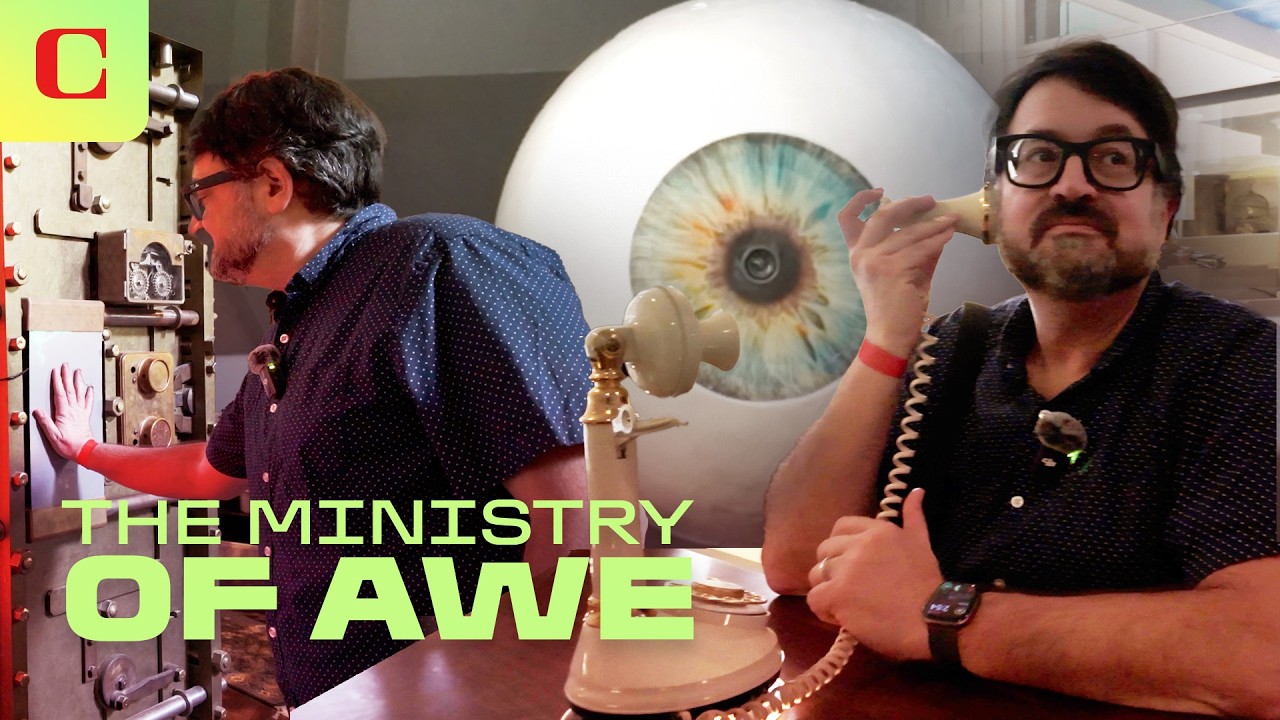
I Was in AWE of This Techie Art Exhibit (Ministry of Awe)
Scott Stein takes you inside the Ministry of Awe, Philadelphia’s immersive six story art experience. Go on a journey with him as he explores how technology and art meet in this space. Hear from the founders of Spatial Pixel, who explain what inspires them to combine AI with this physical art experience. 0:00 Entering the…
Science & Technology
Why Taskrabbit’s Founder Prioritizes Diversity Early │ Build Mode Podcast
As a founder or any team builder, diversity is best built at the start. As Taskrabbit founder Leah Solivan learned, procrastination leads to weaker teams and a harder effort later. We dive into all of her expert tips for builders and founders in the latest episode of our podcast Build Mode right here:

Science & Technology
Are orbital data centers all hype, or an actual AI infrastructure solution? l Equity Podcast
Tech companies are racing to build data centers in space, pitching orbital compute as the next frontier for AI infrastructure, even as the technical and economic realities remain far from clear. Add in OpenAI’s massive $122 billion round and Bluesky’s latest AI backlash, and the message is clear: The future of AI is being shaped…



“Autism is not a disease; it’s just another way of thinking” #TEDTalks

How a Viral Choreographer Makes His Moves | Sean Bankhead | TED

I Was in AWE of This Techie Art Exhibit (Ministry of Awe)
-

 Science & Technology6 years ago
Nitya Subramanian: Products and Protocol
-

 People & Blogs4 years ago
Sleep Expert Answers Questions From Twitter ???? | Tech Support | WIRED
-

 CNET6 years ago
Ways you can help Black Lives Matter movement (links, orgs, and more) ????????
-
 Wired7 years ago
How This Guy Became a World Champion Boomerang Thrower | WIRED
-

 Wired7 years ago
Neuroscientist Explains ASMR’s Effects on the Brain & The Body | WIRED
-

 Wired7 years ago
Why It’s Almost Impossible to Solve a Rubik’s Cube in Under 3 Seconds | WIRED
-

 Wired7 years ago
Former FBI Agent Explains How to Read Body Language | Tradecraft | WIRED
-

 CNET6 years ago
Surface Pro 7 review: Hello, old friend ????
@Eva-g5n4l
April 1, 2025 at 7:02 am
Thank you for working so diligently on your content. Your videos are always a source of inspiration and enjoyment for me.
🔥🔥🔥 6 🌝
@Olivia-y4v1q
April 1, 2025 at 7:02 am
The videos you create are always so stylish and interesting. They are a real treat for the eyes and mind. Keep on pleasing us with your talent!🥅🧉💫
@sooma-ai
April 1, 2025 at 7:11 am
Ryan Gilliam presents a solution to reduce cement’s carbon footprint by transforming waste CO2 back into limestone. His company’s process integrates with existing cement plants, potentially cutting emissions by 70-100% while remaining economically competitive.
@jwyllor
April 1, 2025 at 11:58 am
The name says it all. AI is in the name of this commenter. I see the bots are testing the waters on faking comments now.
@tka-tpa-prapatankalisari45192
April 1, 2025 at 7:15 am
Just to say THANK YOU🙏🏼
@tka-tpa-prapatankalisari45192
April 1, 2025 at 7:16 am
Thank you for understanding🙏🏼
@tka-tpa-prapatankalisari45192
April 1, 2025 at 7:16 am
Thank you for everything🙏🏼
@Whoknowswhere12
April 1, 2025 at 7:24 am
A solution to a problem that doesn’t exist. If this is ever going to be used the manufacturers will need to be able to write it off or some other benefit that outweighs the current formula. Maybe in a decade or two
@zealottk
April 1, 2025 at 7:38 am
This makes no sense.
@Whoknowswhere12
April 1, 2025 at 7:46 am
@ then read it slower
@zealottk
April 1, 2025 at 7:50 am
@@Whoknowswhere12 what problem do you think doesn’t exist? Why are you saying that companies need to write this off to be beneficial?
@Whoknowswhere12
April 1, 2025 at 7:57 am
@@zealottk ok so first there’s more proof the change in climate has nothing to do with humans than does. Like a mountain of it. That aside if it was significant enough of a problem, which it’s not, the EPA would be involved with the emissions like they are for coal burning in the energy sector. In a nutshell if it’s not big enough for the EPA to worry about it, it’s damn sure not for the rest of us. If the manufacturers could get a tax break or some other compensation they’ll switch tomorrow. The only other way is they know that change IS about to come so they get ahead of it. Simple enough?
@jwyllor
April 1, 2025 at 11:55 am
I am curious as well. What problem does not exist in this scenario?
@ThizzMarley
April 1, 2025 at 8:48 am
The big emissions ?? So China and India?
@ThizzMarley
April 1, 2025 at 9:15 am
These comments are great this company definitely hired bots on fiverr
@jwyllor
April 1, 2025 at 12:00 pm
Or the bots are testing the waters on auto populating comments now. Le sigh
@JugglinJellyTake01
April 1, 2025 at 9:33 am
If the heat from making cement is sourced from renewables AND the heat captured for district heating the CO2 reductions are much greater. It means building the plants nearer to populated areas to make use of that heat.
@urbanstrencan
April 1, 2025 at 1:27 pm
This is really important to focus on future of green construction 🏗️🏗️
Great video and talk
@DominionAnako-bb7ry
April 2, 2025 at 7:56 am
❤❤❤❤
@Bythirteen
April 3, 2025 at 10:39 am
well that’s cool