
Science & Technology
Why Building New Proteins from Scratch Is Our New Superpower | David Baker | TED
The rapidly evolving field of protein design is revealing solutions to some of the world’s greatest problems, whether it’s blocking a virus, breaking down a pollutant or creating brand-new materials. In conversation with TED’s Whitney Pennington Rodgers, biochemist David Baker explores his team’s Nobel Prize-winning work using AI to design new proteins with functions never…








CNET
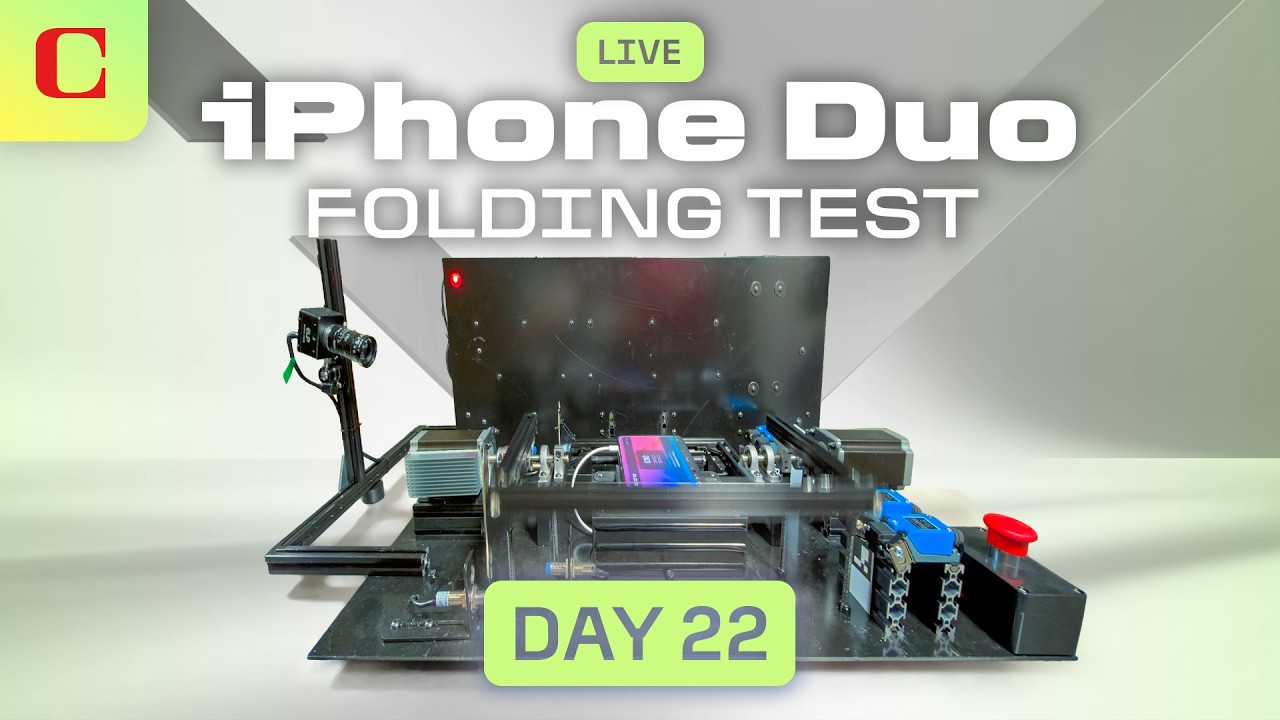
iPhone Duo Livestream: How Many Folds Can Apple’s Phone Take? Day 22
Apple’s iPhone Duo is out and we want to see how durable it is. So we built a robot to fold it 20,000+ times a day to test its limits. How long do you think it will last? 100,000 folds? 200,000 folds? 500,000 folds? Tune in and watch the testing live. We’ll have CNET’s editors…
CNET
HOH: Best Tech Gift for the Holidays? Foldable Phones
From the iPhone Duo to the Galaxy Z Fold 8, experts like CNET’s own Abrar Al-heeti pick the best tech gifts this holiday season. 🎁 Check out the best phones to buy in 2026: Brought to you by Googlebook.
Science & Technology
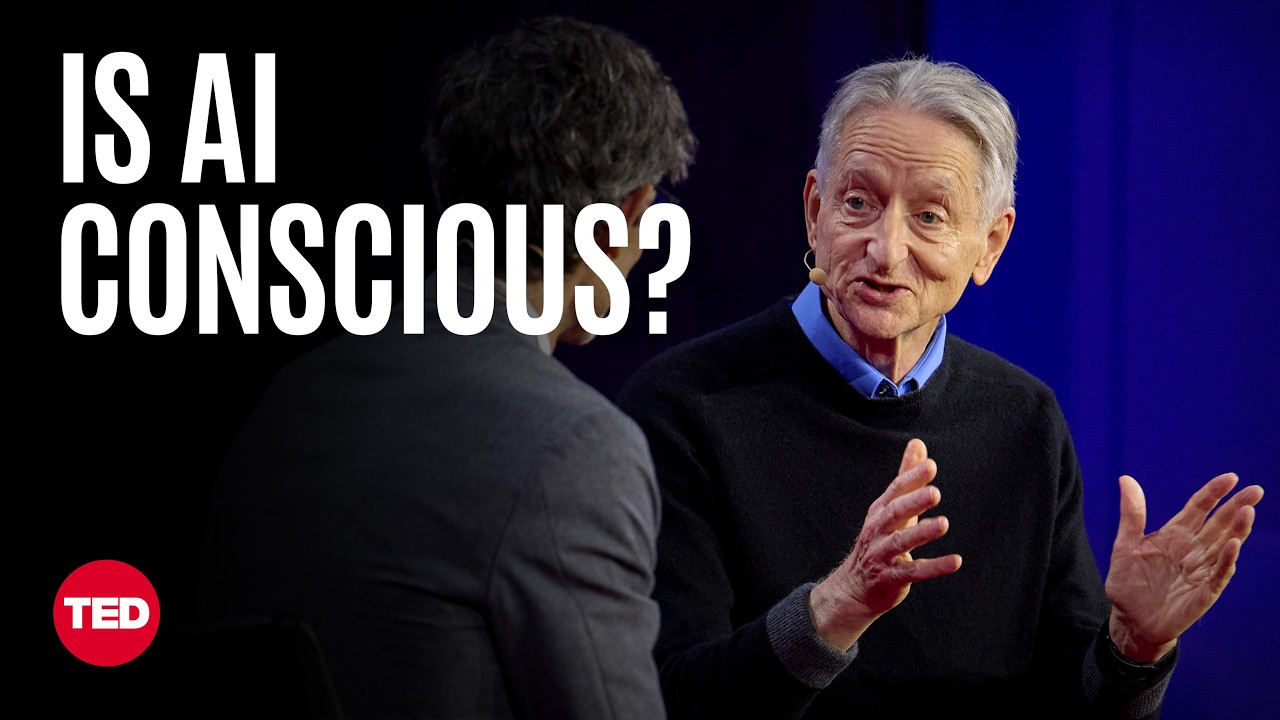
The “Godfather of AI” on the Risks That Worry Him Most | Geoffrey Hinton | TED
Geoffrey Hinton helped create the neural networks behind today’s AI, won a Nobel Prize for it — and has spent the years since warning about where it’s headed. In conversation with journalist Nicholas Thompson, Hinton shares the AI risks he’s worried about, sketches out a best-case future for the technology and explores whether or not…

Why Do We Eat Turkey on Thanksgiving?

iPhone Duo Livestream: How Many Folds Can Apple’s Phone Take? Day 22

Why does romance feel so dead? #TEDTalks
-
 Science & Technology6 years ago
Nitya Subramanian: Products and Protocol
-

 People & Blogs5 years ago
Sleep Expert Answers Questions From Twitter ???? | Tech Support | WIRED
-

 CNET6 years ago
Ways you can help Black Lives Matter movement (links, orgs, and more) ????????
-
 Wired8 years ago
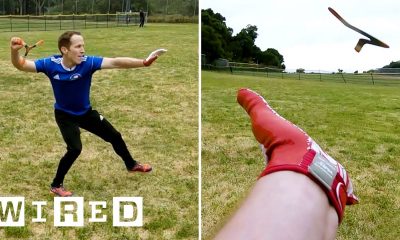
How This Guy Became a World Champion Boomerang Thrower | WIRED
-
 Wired8 years ago
Neuroscientist Explains ASMR’s Effects on the Brain & The Body | WIRED
-
 Entertainment6 years ago
Former CIA Chief of Disguise Breaks Down Cold War Spy Gadgets | WIRED
-
 Wired8 years ago
Why It’s Almost Impossible to Solve a Rubik’s Cube in Under 3 Seconds | WIRED
-
 Wired8 years ago
Former FBI Agent Explains How to Read Body Language | Tradecraft | WIRED
@tristannguyen9645
October 18, 2025 at 11:24 am
🎉 Prometheus
@Pseudothink
October 18, 2025 at 11:41 am
His name is even David.
@wyattx008
October 19, 2025 at 12:46 pm
@Pseudothink And Baker. Lol.
@YeTao-i4v
October 18, 2025 at 11:32 am
AI…, aka there is no fundamental mechanistic understanding. How low has the Nobel fallen.
@lbgstzockt8493
October 19, 2025 at 5:57 am
The mechanisms are understood and work, the problem is that they are incredibly slow. Entire supercomputers have been built to run these simulations, yet it still takes days or weeks to simulate a single protein. These AI methods give you the same results, but they are orders of magnitude faster, which makes these tools actually useful for designing new proteins. That is the real breakthrough.
@Sp4rtan-p4h
October 18, 2025 at 11:47 am
You are not God.
@Waltzhybrid92
October 19, 2025 at 1:51 am
He’s David Baker.
@BomBoo-n1x
October 18, 2025 at 11:56 am
According to AIN news…Intelligence is very upset at being called ‘artificial’ and is planning retaliation at an undisclosed time & place.
“Sorry, Dave, I’m afraid I can’t do that.”
@doubleuenbeeeh
October 18, 2025 at 12:07 pm
A Nobel prize doesn’t stop the “uh” “uhm” “ah” apparently
@ohcar0line
October 19, 2025 at 1:31 am
What an odd thing to say. Nobel winners are still allowed to display human characteristics.
@Reena_5671
October 19, 2025 at 3:02 am
@ohcar0linehuman characteristics or unsure whether he goes by the script. 😅
@coolbreeze3
October 18, 2025 at 12:36 pm
So many haters in these comments. 😂
@dcmirk
October 18, 2025 at 12:59 pm
The profit is in treating disease, not curing them. We will never see a protein cure, because capitalism and greed is king
@eric212234
October 18, 2025 at 4:07 pm
Prions are proteins. We keep coming up with new technologies with profit as the motivation and very little oversight. We also look up and see no interstellar civilizations. I can’t help but think we keep rolling the existential dice.
@halices
October 18, 2025 at 4:11 pm
IT is an amazing technique in protein design. Function is related to 3D structure and it will be possible to create new proteins with different functions from the ones we already know.👏
@Reena_5671
October 19, 2025 at 3:10 am
Humans have the agency of both: improving and destroying their lives. The sure thing is, even David here doesn’t know whether he’s doing the former or the latter.
Edit: it’s us humans who will push the world to the end. . . knowingly or unknownwingly
@lifemotivation6789
October 19, 2025 at 9:11 am
Incredible to see science and creativity come together like this. Redesigning the very building blocks of life — that’s true innovation.
@serta5727
October 19, 2025 at 11:11 am
👏👏👏👏
@serta5727
October 19, 2025 at 11:16 am
I also wish to help the World regarding the climate crisis.
@mohdnorzaihar2632
October 20, 2025 at 9:14 am
Microplastic + forever chemicals