Connect with us

Nonprofits & Activism

The real-life superheroes helping Syrian refugees | Feras Fayyad

Visit to watch more groundbreaking talks from the TED Fellows. With his films, he’s on a mission to separate the facts about refugees from fiction, as a form of resistance — for himself, his daughter and the millions of other Syrian refugees across the world. A harrowing account, a quest to end injustice and a…

Published

on

Visit to watch more groundbreaking talks from the TED Fellows.

With his films, he’s on a mission to separate the facts about refugees from fiction, as a form of resistance — for himself, his daughter and the millions of other Syrian refugees across the world. A harrowing account, a quest to end injustice and a testament to the power of storytelling.

The TED Talks channel features the best talks and performances from the TED Conference, where the world’s leading thinkers and doers give the talk of their lives in 18 minutes (or less). Look for talks on Technology, Entertainment and Design — plus science, business, global issues, the arts and more. You’re welcome to link to or embed these videos, forward them to others and share these ideas with people you know.

Become a TED Member:
Follow TED on Twitter:
Like TED on Facebook:
Subscribe to our channel:

TED’s videos may be used for non-commercial purposes under a Creative Commons License, Attribution–Non Commercial–No Derivatives (or the CC BY – NC – ND 4.0 International) and in accordance with our TED Talks Usage Policy (). For more information on using TED for commercial purposes (e.g. employee learning, in a film or online course), please submit a Media Request at

[SHAPE YOUR FUTURE]

Society has a set
of stories it tells itself

about who refugees are
and what they look like.

But let me tell you a different story.

My story.

I’m a filmmaker and a refugee

from a small village in northern Syria.

In our village, growing up,
there was no stable electricity supply.

We spend most of our nights
around gas lanterns

and told stories about Syrian
mythological superbeings

that protected the vulnerable.

I was a boy who loved
the stories of superheroes.

But later on, these stories shifted
to tales of heroes

that my family has to face
under the Assad dictatorship.

One of my uncles was killed under torture.

My father had to burn his books
before they were even published

in order to protect us from the regime.

He burned his dreams along with his books.

These stories must not be forgotten,

my parents insisted.

The stories stopped being a pastime.

It became a form of resistance.

I studied filmmaking
and focused on documentaries.

Documentary filmmaking, you see,
became my way of resistance.

I documented stories of Syrians
who opposed the Assad regime,

in 2011, when the revolution started.

I was arrested, tortured

and sexually assaulted.

When I was released, I left Syria.

I was traumatized

and tried to end my life.

My wife stood by me
and helped me hang onto life.

But as a result, I stopped making films.

Despite my arrest and torture,

I took many risks
in order to see my family.

So a year later, when the Assad regime
lost control of the north of Syria,

I was able to visit my hometown.

There, I met many inspiring Syrians,

real life superheroes
who stayed behind to save lives.

I was captivated by how genuine they were.

Without planning, I took out
my camera and started filming,

I felt inspired.

These real-life superheroes
saved the filmmaker in me.

Khalid was one of the heroes
in my first feature film,

“Last Men in Aleppo.”

Khaled was a simple man
who dreamed to be a firefighter,

but he couldn’t follow his dream.

So he worked as a house painter.

When the war destroyed his city,
he found his calling.

He joined the White Helmets,

a group of Syrian volunteers
who formed a civil defense organization

to rescue civilians
from their bombed homes.

Khalid saved hundreds of lives.

While doing that, he died as a hero.

The second hero is Dr. Amani Ballour,

whose story I told
in my second film, “The Cave.”

It’s a story of an extraordinary woman

who founded an underground
hospital in eastern Ghouta.

She treated injured children,
victims of atrocities,

while bombs fell around them.

As a female scientist,

she defied sexism and patriarchy

to save civilians who suffered two attacks
with chemical weapons.

And then there are the two superheroes
who saved my own life.

Khalil Ma’touq and Anwar al-Bunni.

They are the lawyers who took up my case

and got me out of the most notorious
torture facilities in Damascus.

While Anwar now is in Germany,
fighting for justice for Syrian refugees,

Khalil was arrested in 2012
because of his work.

We don’t know anything about him

because the Syrian regime
continues to deny his arrest,

but his work is not in vain.

It’s for Khalil I faced
my torturer in Germany.

In June 2020 I gave my testimony

at the first trial
on Syrian state of torture

before a German court in Koblenz.

It is for Amani and Khalid

I’m still the filmmaker today.

They inspired me to create
a new cinematic universe of superheroes,

based on their quest to end injustice.

Creating this cinematic universe
has not been an easy journey.

It’s been a brutal struggle

against racism and discrimination
in the film industry,

an industry dominated by people
who think they know how the audience,

how you want a film about Syrians to be,

how you want superheroes
or refugees to look.

But refugees look just like me.

These refugees were superheroes

who defied the status quo and stereotype.

So I will not stop. I owe it to them.

I owe it to my daughter,
the young refugee child.

To tell the stories of superheros

who look just like her.

For her, I will continue to resist.

Thank you.

Nonprofits & Activism

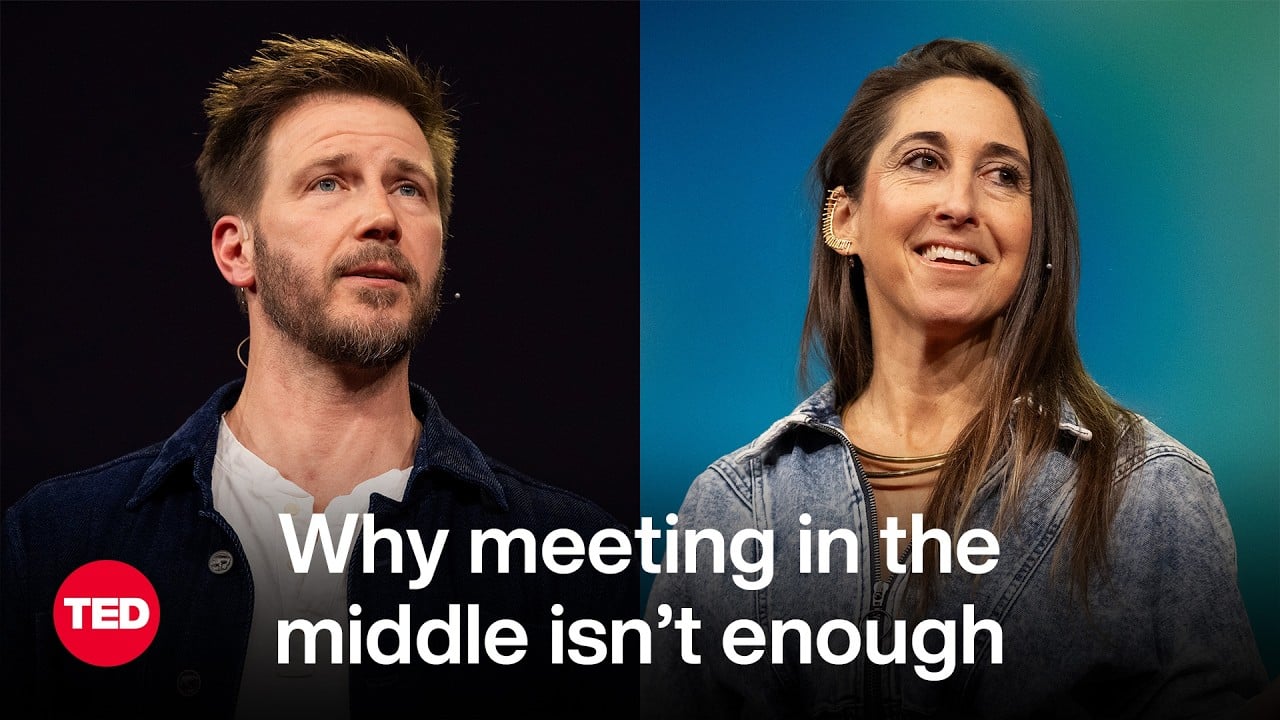
Meeting in the Middle Isn’t Enough for Today’s Trickiest Debates | Bill Heck & Stephanie Lepp | TED

Can art help us usefully address polarizing issues such as gender, abortion or race? In a performance of “Faces of X” — a series that seeks to reframe culture-war clashes — actor Bill Heck stages different sides of a debate between capitalism’s champions and its critics, illuminating a new way to grapple with complex realities.…
Published

on

Can art help us usefully address polarizing issues such as gender, abortion or race? In a performance of “Faces of X” — a series that seeks to reframe culture-war clashes — actor Bill Heck stages different sides of a debate between capitalism’s champions and its critics, illuminating a new way to grapple with complex realities. After the performance, creator Stephanie Lepp offers three questions we should all ask to move to clear perspective and new understanding. (Recorded at TED2025 on April 9, 2025)

Join us in person at a TED conference:
Become a TED Member to support our mission:
Subscribe to a TED newsletter:

Follow TED!
X:
Instagram:
Facebook:
LinkedIn:
TikTok:

The TED Talks channel features talks, performances and original series from the world’s leading thinkers and doers. Subscribe to our channel for videos on Technology, Entertainment and Design — plus science, business, global issues, the arts and more. Visit to get our entire library of TED Talks, transcripts, translations, personalized talk recommendations and more.

Watch more:

TED’s videos may be used for non-commercial purposes under a Creative Commons License, Attribution–Non Commercial–No Derivatives (or the CC BY – NC – ND 4.0 International) and in accordance with our TED Talks Usage Policy: . For more information on using TED for commercial purposes (e.g. employee learning, in a film or online course), please submit a Media Request at

#TED #TEDTalks #SocialChange

Continue Reading

Nonprofits & Activism

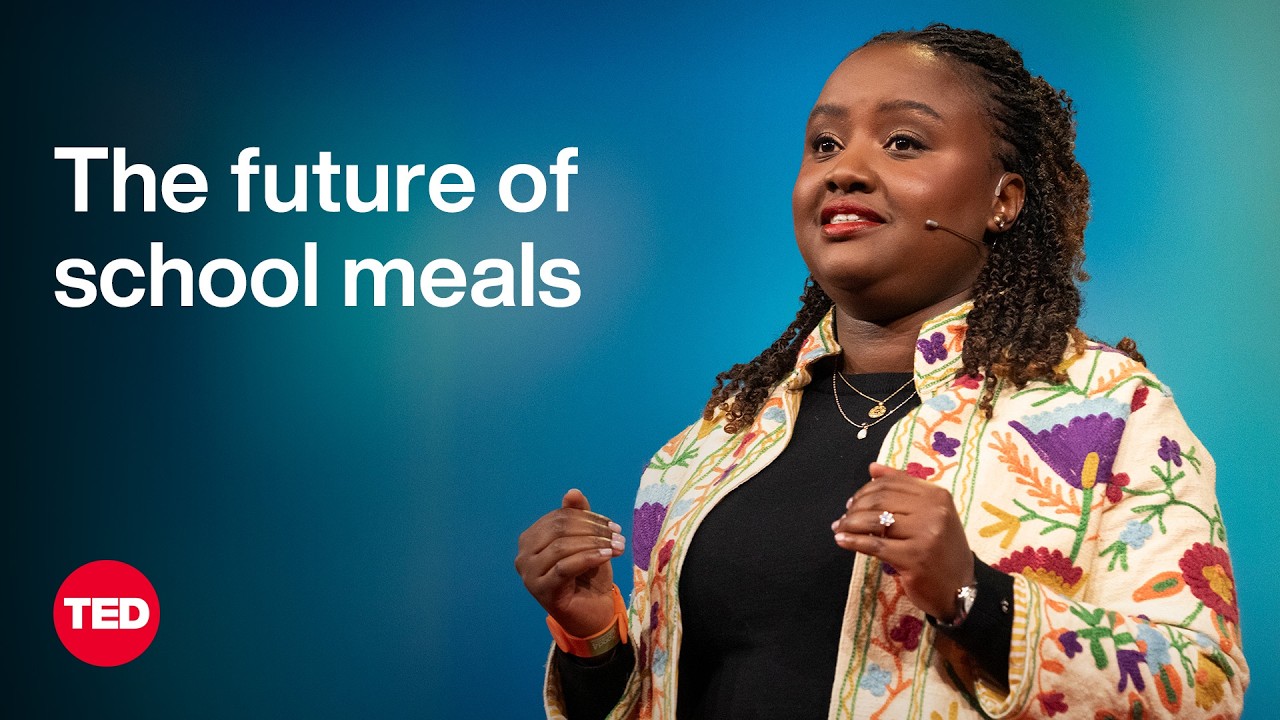
The Blueprint for Serving a Million School Lunches — Every Day | Wawira Njiru | TED

Sometimes feeding just one child can seem challenging. Not for entrepreneur Wawira Njiru, who’s gone from serving lunch to 25 children from a makeshift kitchen to establishing her nonprofit, Food4Education, as a cornerstone of Kenya’s school meals system. Currently serving half a million meals to children every day, she’s now thinking even bigger. Hear about…
Published

on

Sometimes feeding just one child can seem challenging. Not for entrepreneur Wawira Njiru, who’s gone from serving lunch to 25 children from a makeshift kitchen to establishing her nonprofit, Food4Education, as a cornerstone of Kenya’s school meals system. Currently serving half a million meals to children every day, she’s now thinking even bigger. Hear about her incredible plan to serve delicious, nutritious daily meals to millions of kids across Africa by 2030. (This ambitious idea is part of The Audacious Project, TED’s initiative to inspire and fund global change.) (Recorded at TED2025 on April 9, 2025)

Join us in person at a TED conference:
Become a TED Member to support our mission:
Subscribe to a TED newsletter:

Follow TED!
X:
Instagram:
Facebook:
LinkedIn:
TikTok:

The TED Talks channel features talks, performances and original series from the world’s leading thinkers and doers. Subscribe to our channel for videos on Technology, Entertainment and Design — plus science, business, global issues, the arts and more. Visit to get our entire library of TED Talks, transcripts, translations, personalized talk recommendations and more.

Watch more:

TED’s videos may be used for non-commercial purposes under a Creative Commons License, Attribution–Non Commercial–No Derivatives (or the CC BY – NC – ND 4.0 International) and in accordance with our TED Talks Usage Policy: . For more information on using TED for commercial purposes (e.g. employee learning, in a film or online course), please submit a Media Request at

#TED #TEDTalks #Nutrition

Continue Reading

Nonprofits & Activism

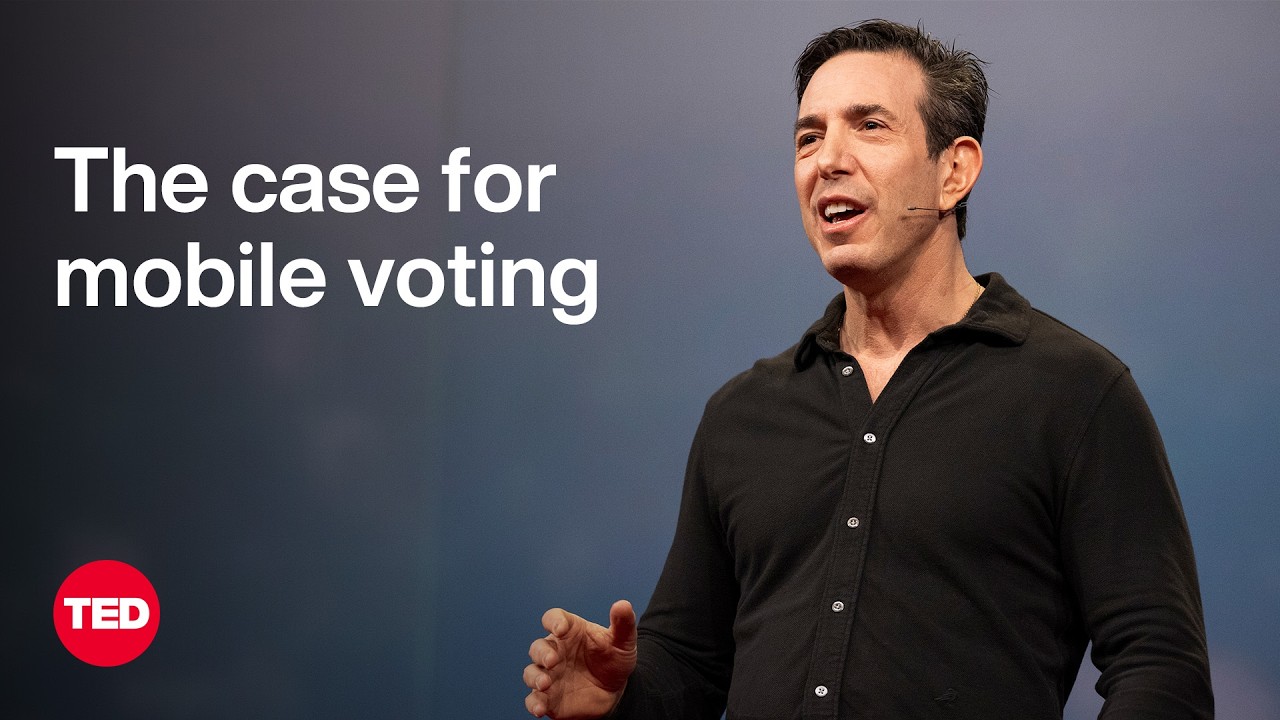
Why You Should Be Able to Vote on Your Phone | Bradley Tusk | TED

The US political system is broken — and the solution might be in the palm of your hands, says political strategist Bradley Tusk. Drawing on his deep experience with government and technology, he makes the case for allowing Americans to vote on their phones, explaining how it can be done safely and securely. Learn why…

Published

on

The US political system is broken — and the solution might be in the palm of your hands, says political strategist Bradley Tusk. Drawing on his deep experience with government and technology, he makes the case for allowing Americans to vote on their phones, explaining how it can be done safely and securely. Learn why mobile voting could be the best way to increase voter turnout, reduce political extremism and save our broken democracy. (Recorded at TED2025 on April 10, 2025)

Join us in person at a TED conference:
Become a TED Member to support our mission:
Subscribe to a TED newsletter:

Follow TED!
X:
Instagram:
Facebook:
LinkedIn:
TikTok:

The TED Talks channel features talks, performances and original series from the world’s leading thinkers and doers. Subscribe to our channel for videos on Technology, Entertainment and Design — plus science, business, global issues, the arts and more. Visit to get our entire library of TED Talks, transcripts, translations, personalized talk recommendations and more.

Watch more:

TED’s videos may be used for non-commercial purposes under a Creative Commons License, Attribution–Non Commercial–No Derivatives (or the CC BY – NC – ND 4.0 International) and in accordance with our TED Talks Usage Policy: . For more information on using TED for commercial purposes (e.g. employee learning, in a film or online course), please submit a Media Request at

#TED #TEDTalks #Politics

Continue Reading

Trending