
People & Blogs
Your immune system has feelings, too. Take care of your body AND your mind. #TEDTalks
Your immune system is more socially aware than you think, says social neuroscientist and psychology professor Keely Muscatell. Investigating the interconnectedness of your mood and your inflammatory system, she offers an evolutionary reason as to why being sick may make you feel depressed — and vice versa.




People & Blogs
Chasing external validation can leave you feeling empty — try this instead #TEDTalks
Over two decades of interviewing countless creative people, Debbie Millman (host of the iconic “Design Matters” podcast) had a realization: the pride and joy of accomplishing something often evaporates almost instantly. She explains how to stop chasing external validation for your achievements and instead live for the act of creation itself.
People & Blogs
The Four Steps to Hearing Hard Feedback Gracefully | Chris Wheatley | TED
We all have a “thing” — the way we act when we’re not at our best that we somehow can’t see in ourselves. Leadership expert Chris Wheatley learned about his when his best friend at work called him on it. He shares how hearing that hard truth shattered a lifelong pattern of defensiveness, offering a…
People & Blogs
What’s harder: Asking for help or offering it? #TEDTalks #TEDIntersections
Is conversation a lost art, or is it just evolving? Journalist Joshua Johnson and social entrepreneur Blake Mycoskie answer questions on everything from the male loneliness crisis to what it actually takes to connect with others — and reveal two deceptively simple tips for going deeper with the people around you. (This conversation is part…



Chasing external validation can leave you feeling empty — try this instead #TEDTalks

The Four Steps to Hearing Hard Feedback Gracefully | Chris Wheatley | TED

Meet the ‘Landlords in the Stratosphere’
-

 Science & Technology6 years ago
Nitya Subramanian: Products and Protocol
-
 People & Blogs5 years ago
Sleep Expert Answers Questions From Twitter ???? | Tech Support | WIRED
-
 CNET6 years ago
Ways you can help Black Lives Matter movement (links, orgs, and more) ????????
-

 Wired7 years ago
How This Guy Became a World Champion Boomerang Thrower | WIRED
-
 Wired7 years ago
Neuroscientist Explains ASMR’s Effects on the Brain & The Body | WIRED
-

 Wired7 years ago
Why It’s Almost Impossible to Solve a Rubik’s Cube in Under 3 Seconds | WIRED
-
 Wired7 years ago
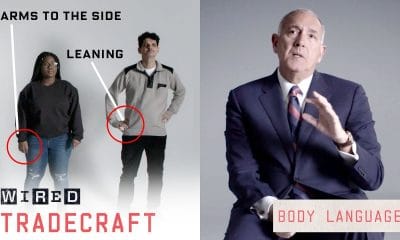
Former FBI Agent Explains How to Read Body Language | Tradecraft | WIRED
-

 CNET7 years ago
Surface Pro 7 review: Hello, old friend ????
@maje9448
July 14, 2025 at 1:04 pm
Colleague announce
@ToshSan-3
July 14, 2025 at 1:04 pm
❤❤❤❤
@Mundproductionfunkhaus
July 14, 2025 at 1:05 pm
oh boy
@tqdinh2
July 14, 2025 at 1:19 pm
Immune system logic: we’re ready to fight don’t stress out brain 😅
@ExistentialWolf
July 14, 2025 at 1:36 pm
brimstone but i’d have to review jr high atomic theory to explain this to you did you try lye??
@thepicturemandannydannytho5711
July 14, 2025 at 1:48 pm
WOW THANKS BEAUTIFUL
@陳鈞鼎
July 14, 2025 at 1:57 pm
Taiwan 🇹🇼 cc
@Luri1970
July 14, 2025 at 2:07 pm
Your perspective of/on stress is more important and powerful
@felixccaa
July 14, 2025 at 3:00 pm
I would very much like to know how these results corespond with access deaths after wrong Covid-govermental measures
if stress increases inflamatory symptoms, how many ppl got realy sick (like long covid symptoms) just because they were scared to death due to over dramatic media reports
@Ázzeeke
July 14, 2025 at 3:09 pm
😮
@En_theo
July 14, 2025 at 4:07 pm
For some reasons ,my left hear is much stressed compared to my right one
@GunGrave0
July 14, 2025 at 4:20 pm
Sounds like a good incentive to be financially independent and retire early 😂
@GunGrave0
July 14, 2025 at 4:21 pm
Kids might use this as excuse not to do anything 😂
@skip5971
July 14, 2025 at 6:18 pm
Wtf is with the audio on this clip
@RileyEnglish1
July 14, 2025 at 8:17 pm
That was a whole lot of word salad. If you really want to stay healthy stay away from doctors. Big pharma pays them to push drugs on you that keep you unhealthy and coming back for more.
@Chethakmp3
July 16, 2025 at 12:00 pm
Thanks for your speech : )
@jmclivingwithart581
July 16, 2025 at 6:10 pm
I call it “artificial depression” when I withdraw, pull down the blinds and lie in bed in the middle of the day. Being in retirement helps, of course. I’ll go a long way to avoid stress, but some of it, much of it, is homegrown…