
Bloomberg Technology
Shopify CEO Says We Have Seen the End of ‘Office Centricity’
May.21 — Shopify Inc. Chief Executive Officer Tobi Lutke says we must reimagine what work will look like for to the future, adding he expects only 20-25% of his company’s employees to work in its offices. He spoke May 15 with Bloomberg’s Emily Chang.


Bloomberg Technology
Alibaba’s AI Spending Spree, Concerns of Circular AI Financing | Bloomberg Tech 8/20/2026
Bloomberg’s Ed Ludlow breaks down the plunge in Alibaba’s profit after the company increased its quarterly capex to almost $10 billion for AI. Plus, a look at how Meta has quietly become one of Microsoft’s largest AI customers, and at defense tech startup Castelion’s plans to boost production of its hypersonic missile systems. 00:00:00 –…

Bloomberg Technology
Mayfield Bets on AI’s Earliest Founders
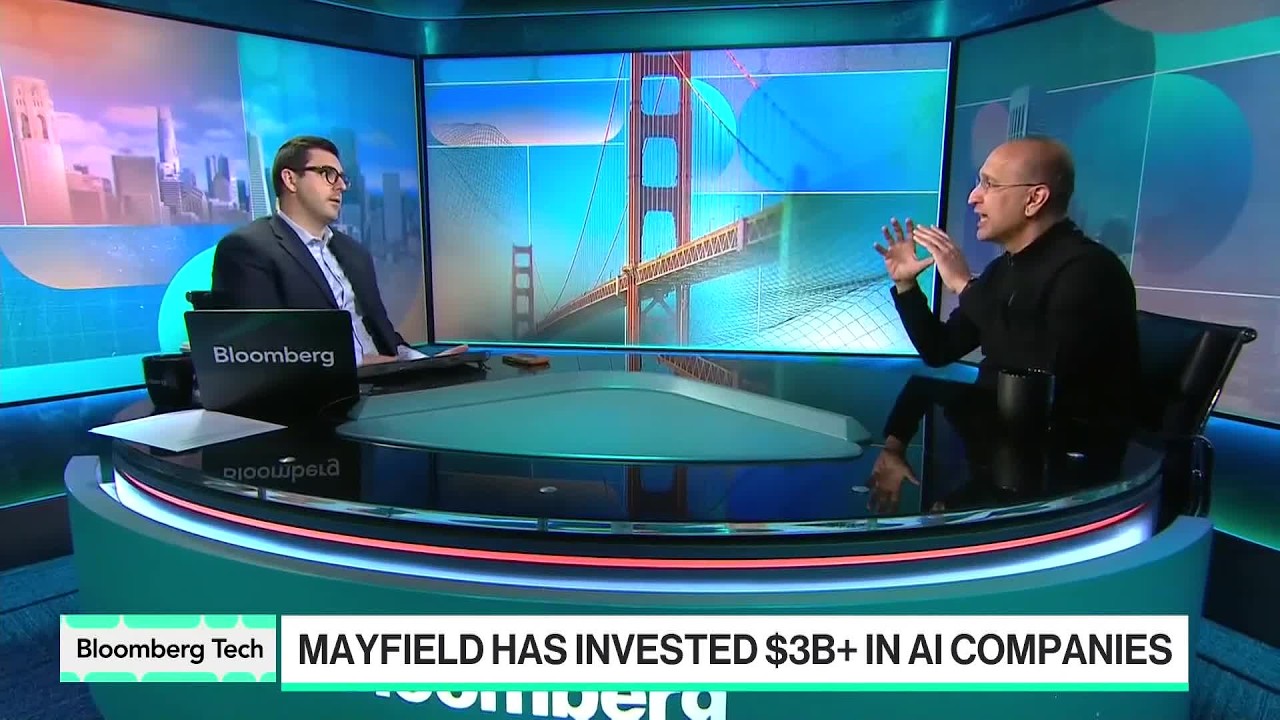
Mayfield has invested more than $3 billion in AI companies, much of it before founders have built a product or even formed a company. Managing Partner Navin Chaddha joins Bloomberg to discuss why he sees AI as a “100x opportunity,” why venture returns still depend on finding a handful of exceptional founders, and why Mayfield…
Bloomberg Technology
The Defense Startup Taking a SpaceX Approach to Missiles
Defense startup Castelion has raised $1 billion at a $13 billion valuation as it races to scale production of its Blackbeard hypersonic weapon system and develop new long-range and defensive capabilities. Co-founder and CFO Andrew Kreitz discusses why manufacturing thousands of weapons at low cost is the company’s central challenge, and how his experience at…



The question isn’t whether or not humans matter — it’s how will we make our impact count? #TEDTalks

Alibaba’s AI Spending Spree, Concerns of Circular AI Financing | Bloomberg Tech 8/20/2026

Mayfield Bets on AI’s Earliest Founders

Nitya Subramanian: Products and Protocol

Sleep Expert Answers Questions From Twitter ???? | Tech Support | WIRED

Ways you can help Black Lives Matter movement (links, orgs, and more) ????????
The question isn’t whether or not humans matter — it’s how will we make our impact count? #TEDTalks
Alibaba’s AI Spending Spree, Concerns of Circular AI Financing | Bloomberg Tech 8/20/2026
Mayfield Bets on AI’s Earliest Founders
-
 Science & Technology6 years ago
Nitya Subramanian: Products and Protocol
-
 People & Blogs4 years ago
Sleep Expert Answers Questions From Twitter ???? | Tech Support | WIRED
-
 CNET6 years ago
Ways you can help Black Lives Matter movement (links, orgs, and more) ????????
-

 Wired7 years ago
How This Guy Became a World Champion Boomerang Thrower | WIRED
-

 Wired7 years ago
Neuroscientist Explains ASMR’s Effects on the Brain & The Body | WIRED
-

 Wired7 years ago
Why It’s Almost Impossible to Solve a Rubik’s Cube in Under 3 Seconds | WIRED
-

 Wired7 years ago
Former FBI Agent Explains How to Read Body Language | Tradecraft | WIRED
-

 CNET7 years ago
Surface Pro 7 review: Hello, old friend ????
Helemmelek and Zahay
May 21, 2020 at 4:49 pm
It means GOOD JOB and I’m just sprinkling cinnamon
WOOF ❤❤❤❤❤❤❤❤❤❤❤❤❤
YourACherrynut
May 21, 2020 at 5:00 pm
Wfh doesn’t work for a lot of people (kids, distractions, etc.) so I don’t think it’s a sustainable model in the long-run. Once COVID-19 is completely over, we’ll be back in the office. Moreover, not all meetings are suitable for virtual meetings, the face to face, in-person element is necessary.
K C
May 21, 2020 at 5:12 pm
You have a point but a lot of companies are now noticing the benefits of having their employees WFH. No office rent, electricity, water and wifi costs to pay for. Employees that can’t work from home will probably be encouraged to find a co-working space
YourACherrynut
May 21, 2020 at 5:40 pm
@K C That may be true but not sure how that will impact employee morale – some, perhaps most, prefer to work in the office and are more productive in the office. Best case scenario is that COVID-19 has accelerated the opportunity for wfh which means more flexibility for the employee to choose between the office and work from home. But if it’s WFH or nothing, then I think that model will run into problems.
R B Enterprises
May 21, 2020 at 7:46 pm
That’s he is saying only 20-25% of people will go to office. Many myself included still prefer WFH. True there will always be meetings that can’t be done virtually and for that employees will come once in a while to offices but not every single day.
Js X
May 21, 2020 at 5:18 pm
ceo beautiful
MauOnline
May 21, 2020 at 6:13 pm
What he’s saying is kind of obvious. Some companies are even surprised of the ratio of productivity versus the cost savings in getting whole buildings up and running 24/7. What’s for sure is there is no way back, at least not without taking in account this type of unprecedented issues, building new businesse continuation policies. In the first days of the global lock down home offices goods did well on Amazon etc.
xxx l
May 21, 2020 at 8:36 pm
I have a severe depression recently at home. Home officing doesn’t work for every one.