
People & Blogs
If you want more people to read, read books yourself #TEDTalks
If you want to live in a world where people read, novelist Ann Patchett has news for you: it’s your job to help create that reality. Tracing her path from a chance airport encounter through a career writing iconic novels and opening a beloved independent bookstore, she makes the case that reading isn’t a private…







People & Blogs
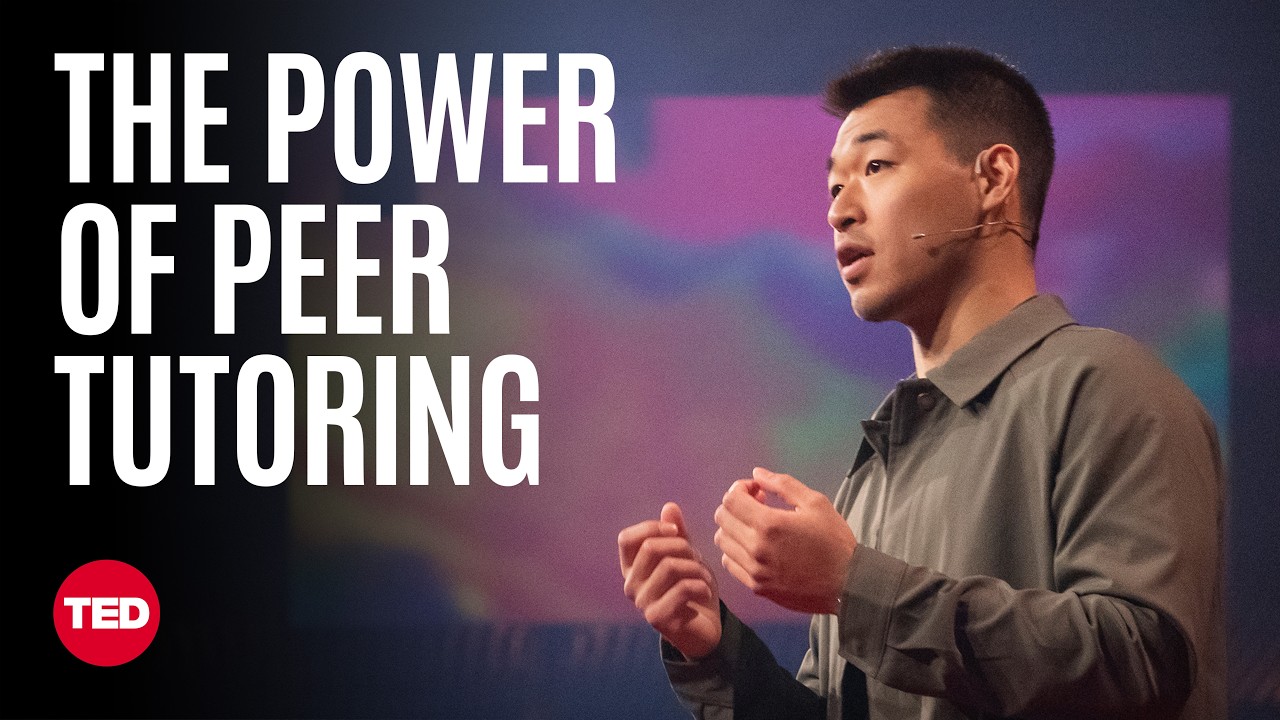
Why AI Will Never Replace a Great Teacher | Matt Wu | TED
What’s the most powerful tool in any classroom? In the age of AI, education advocate Matt Wu still believes it’s the people. In this hopeful talk, he discusses the nonprofit he leads, Schoolhouse, which pairs students with peer tutors from across the globe, building the crucial human connection that every person needs to thrive. Peer…
People & Blogs
Want to make a difference? Try this #TEDTalks
How do you find common ground when people disagree? Opportunity builder Anuj Gupta and Visit Philadelphia CMO Neil Frauenglass discuss why democracy needs debate and why we all have more political power than we think. They explore whether society is divided or just disconnected, how local action makes a difference and what it takes to…

People & Blogs
D. Scott Phoneix thinks instead of fearing of AI, we should embrace it completely #TEDTalks
Deep tech entrepreneur D. Scott Phoenix spent years building AI — now, he believes we’re on the cusp of a profound merger between humans and machines. Reframing the AI debate through the lens of evolutionary biology, he shifts the question from whether we should fear or embrace AI to whether we understand what’s at stake…



AI Fuels Nuclear Renaissance in Asia | Bloomberg Tech: Asia 7/24/2026

How Nvidia Sees The New Entrepreneurship Wave

If you want more people to read, read books yourself #TEDTalks
-
 Science & Technology6 years ago
Nitya Subramanian: Products and Protocol
-
 People & Blogs4 years ago
Sleep Expert Answers Questions From Twitter ???? | Tech Support | WIRED
-
 CNET6 years ago
Ways you can help Black Lives Matter movement (links, orgs, and more) ????????
-
 Wired7 years ago
How This Guy Became a World Champion Boomerang Thrower | WIRED
-
 Wired7 years ago
Neuroscientist Explains ASMR’s Effects on the Brain & The Body | WIRED
-
 Wired7 years ago
Why It’s Almost Impossible to Solve a Rubik’s Cube in Under 3 Seconds | WIRED
-
 Wired7 years ago
Former FBI Agent Explains How to Read Body Language | Tradecraft | WIRED
-
 CNET7 years ago
Surface Pro 7 review: Hello, old friend ????
@CantTalkImRiding
July 26, 2026 at 1:06 pm
On dating apps I ask what people are reading. If they don’t read it’s a bit of a bummer. Doesn’t have to be nonfiction. Just read stuff.
@tatianazal
July 26, 2026 at 1:37 pm
My parents are both educated readers and encouraged us early, but out of all my siblings only I ended up a reader. So like 1/3 kids in same family. But I can’t say that my siblings are less smarter than me. My own family’s example leaves me rather disenchanted with reading. Society sees reading as this magical universally good habit, and it really isn’t. It’s just a way to process information, not much else.
@chasmenear7130
July 26, 2026 at 1:39 pm
The PRINTED word is unequaled in keeping the brain nimble…. second only to playing music. Read EVERYTHING. You might figure something out…!
@frenchgold
July 26, 2026 at 3:12 pm
Some books are not ment for children. They do not belong in elementary schools, some middle school books are poor decisions. This is not that same as cultivating readers that love reading.
@agoatinadress
July 26, 2026 at 3:28 pm
Only fascists ban books, Darlene.
@ajs1998
July 26, 2026 at 9:13 pm
Booooo
@walterkelly
July 26, 2026 at 3:17 pm
Says the lady on the YT short.
@Doadeoke
July 26, 2026 at 3:37 pm
Model your idealogy. A universal truth.
@eliaskulp306
July 26, 2026 at 8:48 pm
“Books are not the things endangering our children.” Incredible.