
Science & Technology
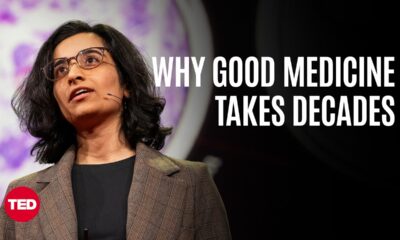
What You Miss When You Focus on the Average | Sharon Zicherman | TED
Are you looking at the right data when making big decisions? Data deconstructor Sharon Zicherman challenges our reliance on averages, showing how they can be misleading — especially in life-changing moments. By rethinking the way we interpret data, he reveals a smarter approach to assessing risk and making better choices. (Recorded at TED@BCG on November…











Science & Technology
Investors Are Asking AI About Your Startup
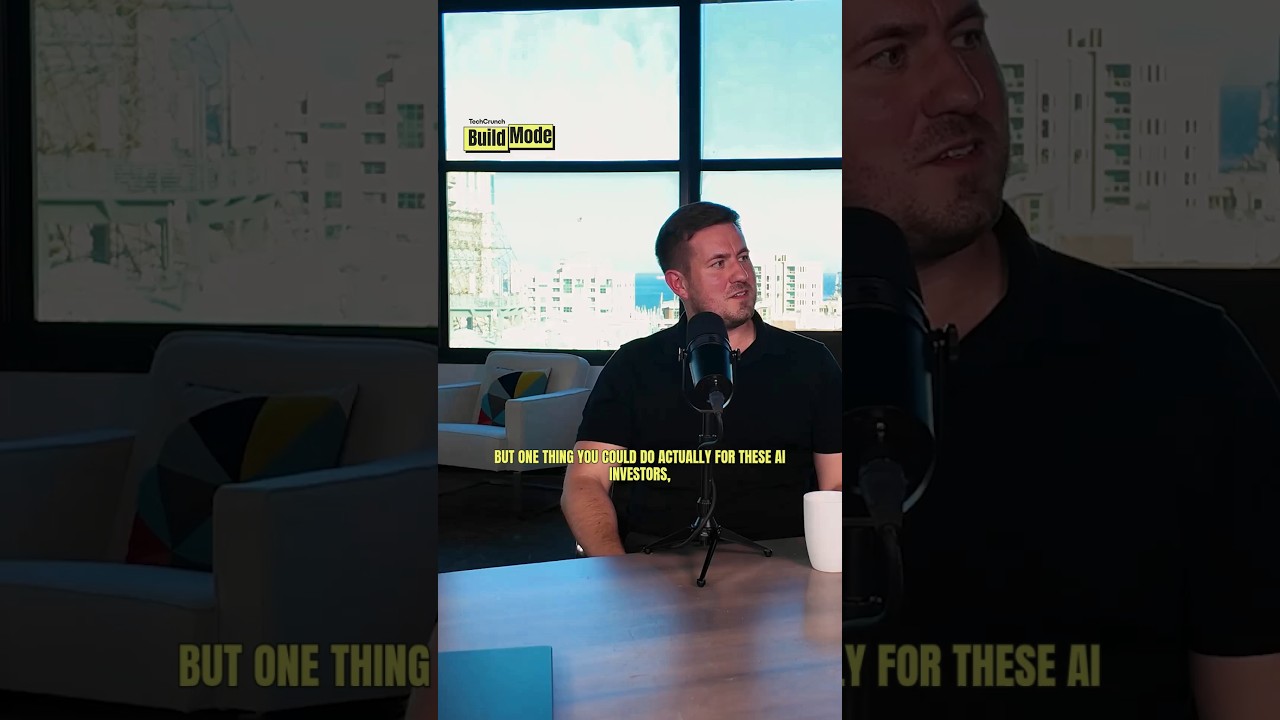
What does ChatGPT say about your startup? Dr. Eike Gerhardt explains why founders should think about what LLMs will find when investors use AI to research their companies. Watch the full episode of Build Mode with Eike and Nephrogen founder Demetri Maxim for more advice on building a stronger investor pitch.
Science & Technology
A PhD in Pitching Breaks Down a Startup Battlefield Pitch l Build Mode
There is no such thing as the perfect pitch. But you can get close by implementing a few research-backed methods to your delivery, deck, and message. In this episode of Build Mode, host Isabelle Johannesen sits down with Dr. Eike Gerhardt, who has aPhD in pitching and spent nearly a decade studying the science of…

CNET
Sennheiser Momentum True Wireless 5 Review: Just What I Was Asking for
Featuring an improved design, including replaceable batteries, along with better noise-canceling and voice-calling performance, the excellent sounding $300 Momentum TWS 5 are top earbuds contender and earn a CNET Editors’ Choice award. Timecode Chapters: 0:00 Intro 0:21 Design Changes 0:41 Replaceable Batteries 0:56 New Features 1:04 Compared to the Momentum True Wireless 4 1:25 Ear…



Investors Are Asking AI About Your Startup

A PhD in Pitching Breaks Down a Startup Battlefield Pitch l Build Mode

Uber, Wayve Unleash Supervised Robotaxis in London
-

 Science & Technology6 years ago
Nitya Subramanian: Products and Protocol
-
 People & Blogs5 years ago
Sleep Expert Answers Questions From Twitter ???? | Tech Support | WIRED
-

 CNET6 years ago
Ways you can help Black Lives Matter movement (links, orgs, and more) ????????
-

 Wired7 years ago
How This Guy Became a World Champion Boomerang Thrower | WIRED
-

 Wired7 years ago
Neuroscientist Explains ASMR’s Effects on the Brain & The Body | WIRED
-

 Wired7 years ago
Why It’s Almost Impossible to Solve a Rubik’s Cube in Under 3 Seconds | WIRED
-

 Wired7 years ago
Former FBI Agent Explains How to Read Body Language | Tradecraft | WIRED
-

 CNET7 years ago
Surface Pro 7 review: Hello, old friend ????
@rohitsaha8419
March 31, 2025 at 7:01 am
First 🥇
@Olivia-g3j9t
March 31, 2025 at 7:01 am
I watch your channel with pleasure. Your videos are always so exciting and high quality.🍋🍅🏂
@sooma-ai
March 31, 2025 at 7:10 am
Sharon Zicherman challenges reliance on averages in decision-making, using her cancer diagnosis as an example. She proposes three key questions to consider when using averages: Is it the right metric? Are we focusing on the right average? What are we missing by focusing on averages?
@reactionwithwork
March 31, 2025 at 7:17 am
Thank for 80 subscriber,s youtube family 🙏🥹🥰
@DarckAngel11
March 31, 2025 at 7:36 am
Related to investments and trading averages, I keep thinking that an impressive amount of the people that lose their money are part of a very different average than one might expect, and it is because you can do it without studying/learning anything at all and it is very likely that they are a majority which gives us a false-positive metric about how people lose their money.
@BenSmith-mg5jv
March 31, 2025 at 7:42 am
If we in the 🇺🇲 could focus on the average we’d be 2 or 3 degrees BETTER than where we are CURRENTLY. Does ANYONE throughout the FREE WORLD REALLY, TRULY BELIEVE that the 🇺🇸is the beacon of light, the match that lights freedom’s FLAME 🔥?!? Do they REALLY think we’d come to the rescue from overwhelming tyranny NOW? NO, they DON’T. GET REAL! AVERAGE? PSSHHH! BELOW AVG AT BEST!
@BonheurIRANZI
March 31, 2025 at 7:59 am
hello
@JunichiroMorita-n6x
March 31, 2025 at 8:19 am
Focus👈🏽👈🏽?
@jonisolis9645
March 31, 2025 at 9:11 am
The more meat you eat the higher your chance of getting colon cancer. A vegan diet also helps you live longer if you have cancer.
@aldoconciso
March 31, 2025 at 9:16 am
‘Age at death’ average (life expectancy) before birthing assistants started washing hands with soap, also a bad metric that is constantly used
@DominionAnako-bb7ry
March 31, 2025 at 9:54 am
Beautiful 😍 🤩 👌
@twoyuber
March 31, 2025 at 11:29 am
idea not worth sharing
@Iconoclasher
March 31, 2025 at 12:34 pm
The odds are exactly 100% that something will happen or it won’t. 🤔
@helenilindsell5684
March 31, 2025 at 2:17 pm
Needed to hear this. Thank you for sharing ❤
@niccolom
March 31, 2025 at 4:20 pm
In other words, statistics need to be studied much more deeply in highschool.
By focusing on the average, yes, you are ignoring the outliers. But make sure that is done by choice instead of due to ignorance.
@VidSkipperAI
March 31, 2025 at 5:54 pm
Summary (with chapter timestamps): Focusing solely on averages can be misleading because they often mask critical outliers and individual variations; therefore, it’s essential to question the relevance of averages, consider the right average for your specific context, and examine outliers to make informed decisions.
0:04 😥 Confronting the Average
• Diagnosed with Stage 3C colorectal cancer at 39, the speaker initially felt paralyzed by the 50% five-year survival statistic.
• She realized that averages include diverse factors like age, lifestyle, and genetics, prompting her to question the use of averages in critical decisions.
• As a management consultant, she applies ‘de-averaging’ to understand clients’ needs beyond surface-level data.
1:25 🤔 Three Key Questions About Averages
• Question 1: Is the average the right metric? Sometimes, like in designing the Burj Khalifa to withstand a 7.0 magnitude earthquake (despite the average being much lower), planning beyond averages is crucial for managing risk.
• Question 2: Are you focusing on the right average? The value of AEDs isn’t based on the average likelihood of use, but on the potential impact on survival rates.
• Question 3: What are you missing by focusing on the average? Firms that survived the subprime mortgage crisis examined worst-case scenarios, not just average default rates.
2:35 🫀 AED Usage and Impact
• The average usage of an AED must be very low but the value of having an AED accessible isn’t based on the average likelihood of witnessing a cardiac arrest or using an AED.
• Every minute after a cardiac arrest your chance of survival decreases by seven to 10 percent, but if you receive an AED shock within the first minute your chance of survival can jump to nine in ten.
• Focusing on the potential impact of having an AED makes all the difference in rationalizing why we invest so much.
3:35 📅 Relevance of Averages in Cancer Diagnosis
• The survival statistic that she encountered was based on broad data covering many ages and geographies, but over 80 percent of colorectal cancers occur in people over the age of 49, 10 years older than she was.
• This data was outdated and didn’t consider her specific treatment plan, which had only been developed in recent years.
• If you’ve decided to rely on an average to make decisions, make sure it’s the right one by asking yourself what this average includes that may not be relevant in my situation.
4:27 🌟 The Importance of Outliers
• Learning from the averages often means ignoring the outliers, but there’s a lot that we can learn.
• Dr. Jeffrey Rediger explores spontaneous remissions in terminally ill patients in his book "Cured ".
• It’s critical that when we decide to use the average and are looking at the right one we also consider outliers; otherwise, we could find ourselves getting an average medical treatment instead of one tailored to our specific needs.
** Generated using ✨ VidSkipper AI Chrome Plugin
@martin-krzywinski
March 31, 2025 at 6:06 pm
“Rethinking the way we interpret data”??? Statisticians have been interpreting the average correctly for a long time now. This isn’t rethinking … it’s just education.
@luxfcast3288
March 31, 2025 at 6:18 pm
I don’t know what to comment so ye this is my comment 🙂
@johnhoumis275
March 31, 2025 at 8:10 pm
You’re very brave. Thanks for your research and coming to share your story with the world
@FriendlyAlpaca
March 31, 2025 at 10:45 pm
I have brain cancer…
Thank you 🙇♂️
@alejandromazo242
April 1, 2025 at 3:54 am
Thank you for sharing this, it makes me believe more that I can cure my ill and find and recieve a proper treatment.
@Patricianeel
April 1, 2025 at 4:16 am
Nice video! I just can’t believe my Husband left me after 18 years. He doesn’t even want to talk to me anymore. I’ve tried everything possible to get him back, but nothing seems to work and I can’t stop thinking about him. I’m frustrated, i don’t see my life with anyone else. I’ve done my best to get rid of the thoughts of him, but I can’t. I really miss him and just can’t stop thinking about him!
@BonnieShadow33
April 2, 2025 at 7:33 pm
Well this has absolutely nothing to do with the video. Sounds like you didn’t actually watch the video and you just want to complain about your life. There are plenty of videos out there that are actually relevant to your situation. I suggest you look them up.
@ZishanChaudhary-v2z
April 1, 2025 at 6:32 am
I want to dub your video in hindi are you agree with this or not ? Reply fast