
Science & Technology
The Emerging Science of Finding Critical Metals | Mfikeyi Makayi | TED
Your smartphone, computer and electric car all depend on one thing — critical minerals buried deep underground. But there’s a catch: the mining industry has gotten dramatically worse at discovering new deposits just when we need them most, says mining innovator Mfikeyi Makayi. She introduces new AI-powered technology that could fix this problem by predicting…








Science & Technology
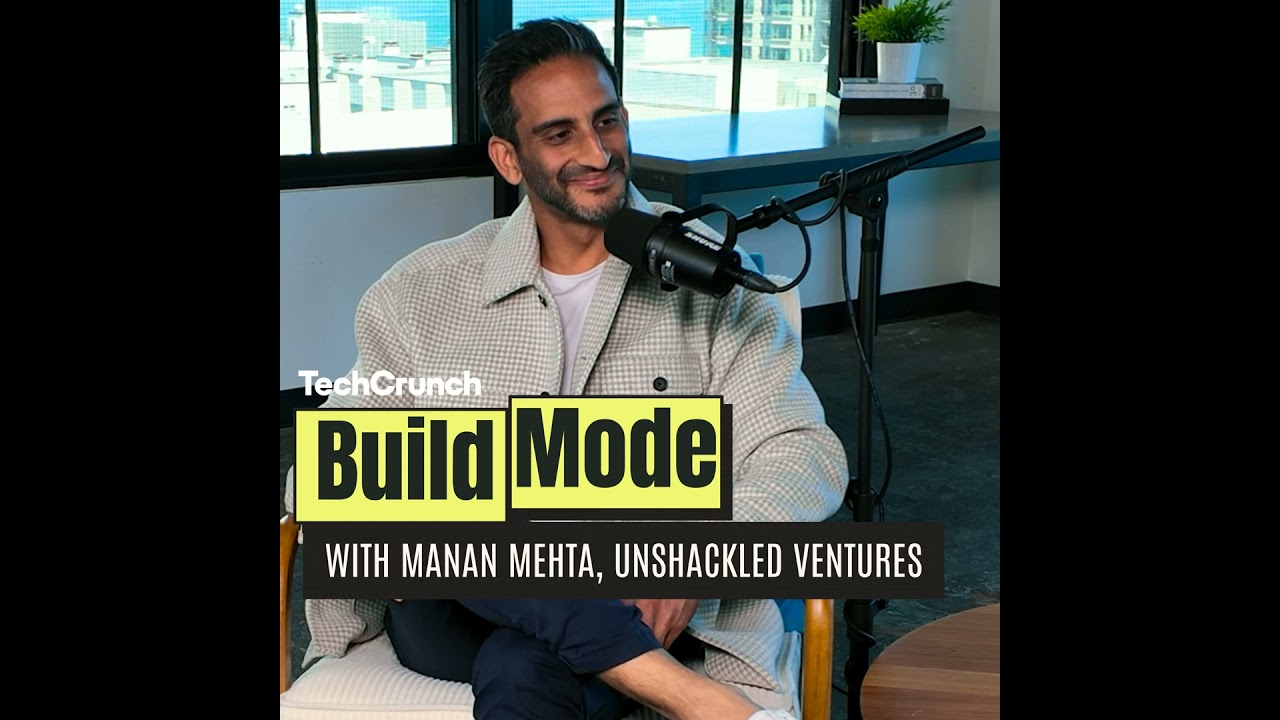
The VC Backing the American Dream with Manan Mehta, Unshackled Ventures
Immigrant founders have built some of the world’s most valuable companies, but many still face barriers that make it harder to get a startup off the ground. Visa restrictions, limited access to friends-and-family capital, shallow networks, and a venture industry built around pattern matching can keep promising founders from getting funded before they have a…
Science & Technology
The High Risk, High Reward Model of Backing Immigrant Founders l Build Mode
Immigrant founders have built some of the world’s most valuable companies, but many still face barriers that make it harder to get a startup off the ground. Visa restrictions, limited access to friends-and-family capital, shallow networks, and a venture industry built around pattern matching can keep promising founders from getting funded before they have a…

Science & Technology
Hands-on With Google’s New Pixel 11 Devices
Get a hands-on look at Google’s new Pixel 11 lineup, from the more durable Pro Fold, an updated new camera bar, and of course, a push for Gemini AI features.



Exploring AI Investment Opportunities Beyond Mega-Cap Tech Giants

Your watch might be your new doctor’s assistant #TEDTalks

The VC Backing the American Dream with Manan Mehta, Unshackled Ventures
-
 Science & Technology6 years ago
Nitya Subramanian: Products and Protocol
-

 People & Blogs4 years ago
Sleep Expert Answers Questions From Twitter ???? | Tech Support | WIRED
-

 CNET6 years ago
Ways you can help Black Lives Matter movement (links, orgs, and more) ????????
-
 Wired7 years ago
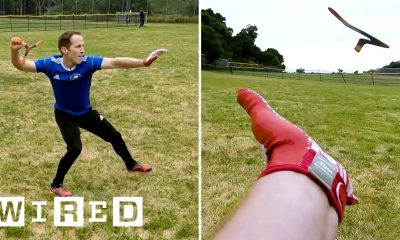
How This Guy Became a World Champion Boomerang Thrower | WIRED
-
 Wired7 years ago
Neuroscientist Explains ASMR’s Effects on the Brain & The Body | WIRED
-

 Wired7 years ago
Why It’s Almost Impossible to Solve a Rubik’s Cube in Under 3 Seconds | WIRED
-
 Wired7 years ago
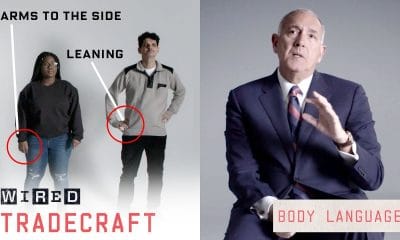
Former FBI Agent Explains How to Read Body Language | Tradecraft | WIRED
-

 CNET7 years ago
Surface Pro 7 review: Hello, old friend ????
@AdvantestInc
October 20, 2025 at 11:03 am
Fascinating to see AI moving from data centers to the depths of the Earth. Predictive exploration like this could mark a turning point where tech directly supports environmental responsibility.
@Jasonxbr
October 20, 2025 at 11:06 am
If AI is involved as well greedy corporations there will be exploitation and slavery involved, not including the destruction of the environment as well the pollution it leaves behind. 😢😢😢😢
@ExistentialWolf
October 20, 2025 at 11:17 am
Okay. First the word problem. Pottery is a form of china. China just refers to dust or clay. Phonetically clay refers to adhesion. From clay you make pottery with the right dust it becomes ceramics when heat treated. The other dust makes the color like salts and metals. From there you make crystals, conductors and insulators of charge (which is the free energy we call power.) Once you have wire, now you need magnets. Magnets usually come from iron dust, but you may want something exotic to fit somewhere (small/between.)
@AM-kf2zt
October 20, 2025 at 12:47 pm
AI has always been something sketchy, mostly because of how overhyped it was and of how many of its highlighted uses generally amounted to substituting human intelligence and skills. However, this and its use in early detection of cancer are one of the few times I’ve seen humanity take this new tool, something wondrous and not turn it into a complete joke.
@BeBrillio
October 20, 2025 at 1:18 pm
We need 400+ new mines, yet the industry is 10x worse at finding deposits. The genius here is using AI to stop chasing one answer. Instead of ignoring the “infinite number of possibilities,” you drill where you’re most uncertain to eliminate possibilities. I’m applying this data-driven focus to the perfect storytelling videos launching soon on @BeBrillio. What decision in your life are you currently making by ignoring uncertainty?
@HappySlappii
October 20, 2025 at 4:01 pm
Coming away from this. You would think mining is good for the environment. 😂
@EbenezarWikina
October 21, 2025 at 7:02 am
But it appears good for your iPhone apparently so that you can watch this and complain about mining 😏
@BretFarris-q7l
October 20, 2025 at 9:49 pm
Belvarium’s whitepaper is 🔥 and the devs are clearly experienced 💻📄
@BretMadison-j8f
October 20, 2025 at 9:50 pm
Not financial advice, but I’m quietly accumulating BLV before it wakes up.
@VinnyBailliu
October 20, 2025 at 9:53 pm
Not financial advice, but I’m quietly accumulating BLV before it wakes up.
@MissyBickel
October 20, 2025 at 9:53 pm
Belvarium’s whitepaper is 🔥 and the devs are clearly experienced 💻📄
@ReparacionFuqua
October 20, 2025 at 9:58 pm
Not financial advice, but I’m quietly accumulating BLV before it wakes up.
@dawner84
October 20, 2025 at 10:13 pm
Can artificial intelligence change the current situation where developed countries exploit poorer ones?
It will only redistribute the already meager profits to Nvidia and other tech companies.
@joyyyy777
October 21, 2025 at 12:15 am
Not financial advice, but I’m quietly accumulating BLV before it wakes up.
@EbenezarWikina
October 21, 2025 at 7:01 am
Africans need to take hold of the mining industry on our continent. This is a very inspiring talk in just 8 minutes
@lifemotivation6789
October 21, 2025 at 7:39 am
This is such a powerful perspective. 🌍 It’s easy to forget that everything around us — from our phones to our future technologies — begins with the earth itself. The call for innovation in mining isn’t just about resources; it’s about responsibility, sustainability, and the courage to look deeper, literally and figuratively. The future of a circular economy starts with smarter discovery.
@SkillsetAcademy-825
October 21, 2025 at 11:05 am
I think we should be looking for better ways to stabilizes the earth than exploration for more resources from earth.