
Science & Technology
Nili Gilbert: The crucial intersection of climate and capital | TED Countdown
The financial sector often talks of decarbonizing investment portfolios as a way to fight climate change. But portfolios can be “cleaned” without having any real impact on the problem, says investment expert Nili Gilbert. Bringing science to finance, she unpacks how investors can actually help decarbonize the world — a costly endeavor, estimated at three…









Science & Technology
Learn What VCs Actually Want, From a Founder Who’s Raised $1B l Build Mode
Investors want founders who understand the financial reality of their business. Messy data, misunderstood metrics, or waiting until you’re nearly out of cash to start fundraising can cost founders leverage, valuation, and even a term sheet. In this episode of Build Mode, host Isabelle Johannesen sits down with Sasha Orloff, founder and CEO of Puzzle…

Science & Technology
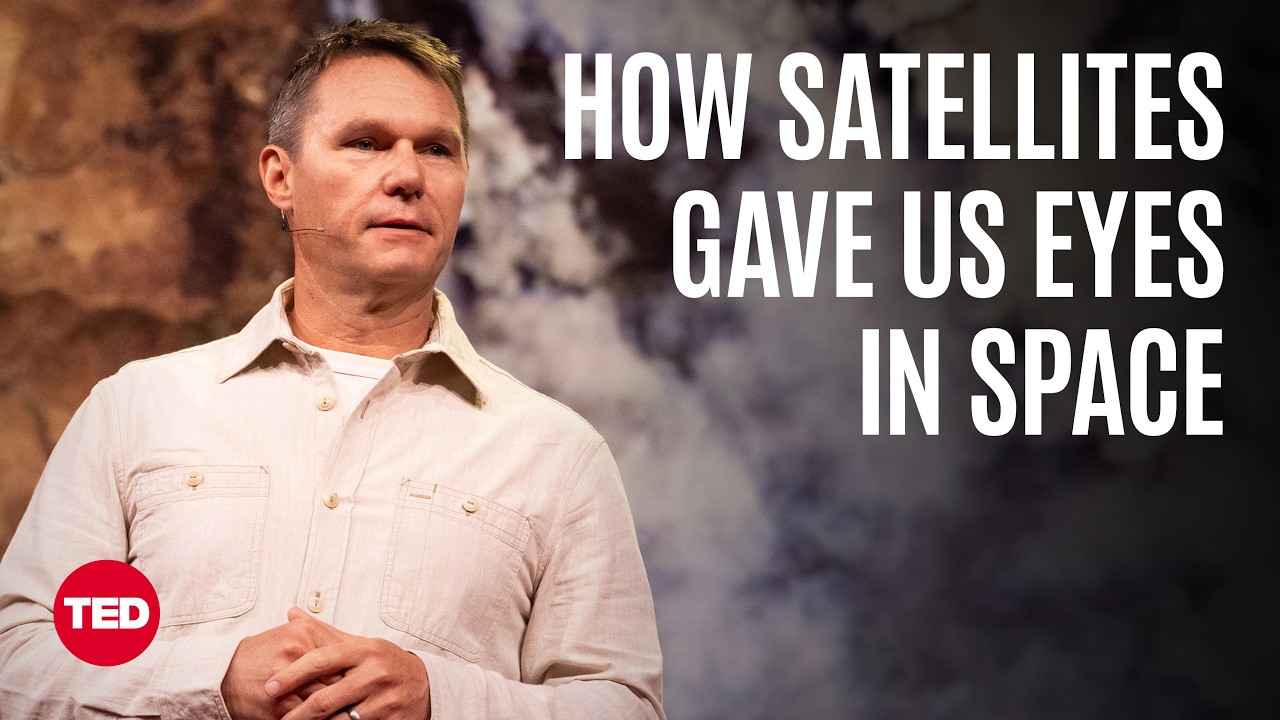
How Satellites and AI Can Protect the Planet | Robbie Schingler | TED
Space technologist Robbie Schingler cofounded a satellite company that images the whole planet every day, making visible changes on Earth. He shows how pairing that data with AI creates a “planetary intelligence” we can use to spot emerging threats we might not have seen otherwise. Now he asks: Can we close the gap between seeing…
CNET
That Voicemail Isn’t Real, It’s AI. The New Wave of AI-Impersonation Scams
Scammers are using AI to impersonate high-profile targets, such as celebrities and politicians. Here’s how you can stay safe. You can find the products mentioned in this article linked below Commerce Link *CNET may get a commission on these offers Link to CNET article: Read more about X on CNET.com: Timecode Chapters: 00:00 The Threat…



The question isn’t whether or not humans matter — it’s how will we make our impact count? #TEDTalks

Alibaba’s AI Spending Spree, Concerns of Circular AI Financing | Bloomberg Tech 8/20/2026

Mayfield Bets on AI’s Earliest Founders

Nitya Subramanian: Products and Protocol

Sleep Expert Answers Questions From Twitter ???? | Tech Support | WIRED

Ways you can help Black Lives Matter movement (links, orgs, and more) ????????
The question isn’t whether or not humans matter — it’s how will we make our impact count? #TEDTalks
Alibaba’s AI Spending Spree, Concerns of Circular AI Financing | Bloomberg Tech 8/20/2026
Mayfield Bets on AI’s Earliest Founders
-
 Science & Technology6 years ago
Nitya Subramanian: Products and Protocol
-
 People & Blogs4 years ago
Sleep Expert Answers Questions From Twitter ???? | Tech Support | WIRED
-
 CNET6 years ago
Ways you can help Black Lives Matter movement (links, orgs, and more) ????????
-

 Wired7 years ago
How This Guy Became a World Champion Boomerang Thrower | WIRED
-

 Wired7 years ago
Neuroscientist Explains ASMR’s Effects on the Brain & The Body | WIRED
-

 Wired7 years ago
Why It’s Almost Impossible to Solve a Rubik’s Cube in Under 3 Seconds | WIRED
-

 Wired7 years ago
Former FBI Agent Explains How to Read Body Language | Tradecraft | WIRED
-

 CNET7 years ago
Surface Pro 7 review: Hello, old friend ????
????Open Quotes - Motivation Mentor
February 8, 2022 at 4:01 pm
????If you are depressed , you are living in the past .????
???? If you are anxious , you are living in the future???? .
????If you are at peace , you are living in the present.????
Love From a Self-development Youtuber????????.
MZ ZH
February 8, 2022 at 4:01 pm
first
gamer t65
February 8, 2022 at 4:03 pm
Great
sevgi
February 8, 2022 at 4:03 pm
????????????????
Aman Aman
February 8, 2022 at 4:04 pm
“Sometimes people don’t want to hear the truth because they don’t want there illusions to be destroyed”- Friedrich Nietzsche.
Olga Kovtun
February 8, 2022 at 4:06 pm
Co2 is not our biggest enemy, climate change is as it is a 12000 year cycle and we are it! I watched the conference in December Global Crisis. Time for The truth. Co2 is a great biz model for a few but is not where our gocis needs to be to save human lives. We need a system change from profit driven to life-saving.
Jesse Torres
February 8, 2022 at 4:08 pm
I once saw this political cartoon where there was a map of the United States of America. In the image, all of the landlocked states were in red with one big word bubble that said “climate change is a myth.” Meanwhile, all of the coastal/southern border states were blue with multiple word bubbles that said “we beg to differ” since those landlocked states don’t experience the impacts of climate change that the coastal states do. Also, you’d figure that more Conservative Evangelicals would actually care about climate change and it’s impacts on society. Keep in mind, The Bible does say that the Earth is God’s gift to man, and it’s our duty to take care of it and everyone and everything on it. But, even if they found a way around this, you’d figure that they would at least want to prevent millions of migrants from countries that are no longer habitable from wanting to come to America in the future. Finally, even if you don’t support The Green New Deal because you don’t believe in climate change (or are paid not to), why wouldn’t you at least support it because it would promote new jobs here in the United States?
And I’ll end with a joke:
Ben Shapiro: If you believe you’re in an area that’s gonna be flooded from climate change then just sell your house and move.
Responder: Just 1 small problem: Sell our houses to who, Ben?! Aquaman?!
Save Money Save the Planet
February 8, 2022 at 4:10 pm
I’m open with what she’s preaching but it’s not always practical. The average American has most of their investment money in their 401k. So we’re beholden to what options our company decides to make available to us.
So we’ll need to jump on ANY opportunity our company provides which allows us to not invest in fossil fuels. And ideally we can petition our companies to do more research on a proper ETF like she describes.
Besides that, the $1k a year that I throw into decarbonization companies is just peanuts!
seasong
February 8, 2022 at 4:37 pm
We definitely need to start investing in Chile and Congo to improve mining conditions for the battery industry. People only think about TSLA and other EVs, but there are lot of parts going into a car that need to be green as well.
Harvey the paragliding chaser
February 8, 2022 at 4:38 pm
You might be on to something
Albert Bandura
February 8, 2022 at 5:44 pm
You have nailed it but the greedy investors do not really want to hear the truth. They would rather wipe out the universe and have their pockets lined with colour, than think about the future.
Pikunat
February 8, 2022 at 6:06 pm
We need veganism where able to and we need land back.
Make Racists Afraid Again
February 8, 2022 at 6:17 pm
Anthropogenic Global Warming is real and an existential threat to human life on the Earth.
Almost nobody cares more about the future than what they can get right now.
I appreciate your efforts. We should all be doing what we can in case I’m wrong and it’s not already too late.