Connect with us

Science & Technology

Alicia Chong Rodriguez: A smart bra for better heart health | TED

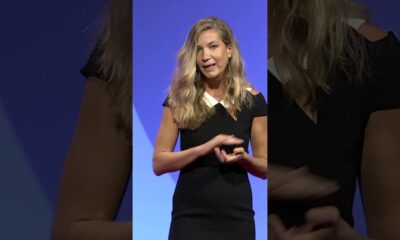
Could an everyday clothing item help protect your health? In this quick talk, TED Fellow Alicia Chong Rodriguez introduces us to a smart bra designed to gather real-time data on biomarkers like heartbeat, breath and temperature. Learn how this life-saving gadget could help close the gender gap in cardiovascular research — and, finally, usher women’s…

Published

on

Could an everyday clothing item help protect your health? In this quick talk, TED Fellow Alicia Chong Rodriguez introduces us to a smart bra designed to gather real-time data on biomarkers like heartbeat, breath and temperature. Learn how this life-saving gadget could help close the gender gap in cardiovascular research — and, finally, usher women’s health care into the 21st century.

Visit to get our entire library of TED Talks, transcripts, translations, personalized talk recommendations and more.

The TED Talks channel features the best talks and performances from the TED Conference, where the world’s leading thinkers and doers give the talk of their lives in 18 minutes (or less). Look for talks on Technology, Entertainment and Design — plus science, business, global issues, the arts and more. You’re welcome to link to or embed these videos, forward them to others and share these ideas with people you know.

Become a TED Member:
Follow TED on Twitter:
Like TED on Facebook:
Subscribe to our channel:

TED’s videos may be used for non-commercial purposes under a Creative Commons License, Attribution–Non Commercial–No Derivatives (or the CC BY – NC – ND 4.0 International) and in accordance with our TED Talks Usage Policy (). For more information on using TED for commercial purposes (e.g. employee learning, in a film or online course), please submit a Media Request at

I am proudly named Alicia
after my grandma.

She dedicated her life
to women’s health as an obstetrician,

in a time when women were rarely allowed
to obtain medical degrees.

We lost her to a heart attack
when I was 13 years old.

When one of my cofounders, Monica, was 12,

she was waiting at school
for her mom to pick her up.

Only that didn’t happen,

because her mom, a 44-year-old physician,

had suddenly passed away from a stroke.

Unfortunately, our stories are common.

Heart disease and stroke

are the leading causes of death
and disability worldwide.

And for women,

it is not only harder to recognize,
diagnose and treat,

but after a heart attack or a stroke,
women also face higher mortality.

There are about 44 million women
living in the US with heart disease,

and the incidences for women
under 65 are on the rise.

So what’s going on?

The answer lies at the intersection
of two areas: data and medical devices.

Let’s look at data first,

or the lack of it.

When I was doing
cardiovascular research at MIT,

I had access to huge data sets.

Realizing that women were one
of the largest subgroups underrepresented

was eye-opening.

In fact, women were basically excluded
from cardiovascular clinical trials

until the NIH mandated inclusion in 1993.

This is why existing technologies
and therapies often fall short,

because most of them have been designed

using data primarily
from male animals and men.

And as artificial intelligence
helps turbocharge digital health,

there’s a danger that algorithms
mostly trained with male data and biases

will actually perpetuate the problem.

Next, let’s look at medical devices.

The “one type fits all” approach

doesn’t even take into account the fact
that heart disease and stroke

can present differently in women.

Way too often, female thresholds
are not programmed.

Smaller arteries cannot be visualized,

and poor clinical-grade monitoring systems

cannot accommodate
two different body shapes

or stages in life.

In the 1800s, Amelia Bloomer
led a movement against damaging corsets,

towards more comfortable
and useful garments for women.

She inspired us to think:

What if we could solve both the data
and the device challenge

by using a garment
that most women already wear daily?

What if a garment
designed to support women

could also augment their health?

Our idea is to turn the everyday bra
into an actual lifesaver.

And this is how we’re doing it.

This is our augmented garment platform.

It gives women the ability

to continuously and remotely
acquire physiological data.

By wearing these bras,

women can view insights and patterns

and keep an automated
journal in their phones,

giving them a simple way to tag symptoms

and collect life-saving data
to share with their doctors

for early detection
and targeted management.

It can even track the safety
and efficacy of certain therapies.

We’ve built medical-grade textile sensors

that can adapt to multiple
bra styles and sizes

for continuous, reliable
and repeatable data,

all around her torso and her heart.

We can track heart rhythm, breathing,
temperature, posture and movement,

and by applying algorithms,
we can use this data to decode symptoms,

articulate arrhythmia triggers

and generate personalized
digital biomarkers.

Unlike traditional biomarkers, like blood,
that take a snapshot in time,

digital biomarkers work more like a video,

using data collected over time
to explain, influence

and even predict health outcomes.

They have the potential
to enable care immediately.

No more wait time for results.

She has the data available
when she needs it the most.

With medical-grade technology
as easy as wearing a bra,

we could catch up, close the data gap,

enable easier participation
in clinical trials

and bring women’s health care
into the 21st century.

The more women that wear
these augmented bras,

the faster we can create
a truly meaningful and inclusive data set

on women’s health.

Collectively, this data
can enable breakthroughs

in digital diagnostics and therapeutics

to solve some of the biggest
health-care challenges

humanity faces today.

With our unique biological data,

our ability to gather more and more of it

and our ability to learn from it using AI,

the dream of making medicine
without bias and truly personal

can be achieved.

And that, of course, benefits all of us.

Thank you.

(Cheers and applause)

Continue Reading
Advertisement
40 Comments

40 Comments

  1. Rajendra Divecha

    October 20, 2021 at 3:20 pm

    Next invention: smart underwear for men!

  2. Dark Soul

    October 20, 2021 at 3:24 pm

    Very interesting but not for me! I would rather die young from a stroke than live long under the stress of having something counting my breath and heartbeat!!
    + screw bras! … prefer patches!
    Though seriously … it’s a very smart and inspiring idea ????

  3. Hippienolic 2

    October 20, 2021 at 3:26 pm

    Finally a bra that you can justify spending $90 on

    • Kevin Bailey

      October 20, 2021 at 9:52 pm

      Beautiful china wimin

  4. Gladys Villero

    October 20, 2021 at 3:31 pm

    Why she doesnt look confident with what shes presenting?

  5. jxj__

    October 20, 2021 at 3:32 pm

    What happened to the other video posted earlier?

  6. Kehrey Anne Dean

    October 20, 2021 at 3:37 pm

    Great…. Now they wanna collect data on my boobs…. and at the same time…. Fill my body with more emf. Oh joy! Thanks… But no thanks!!!! Stop collecting data on people for hidden greedy purposes.

  7. Erica Nelson

    October 20, 2021 at 3:42 pm

    Brilliant idea.

  8. j.s [기마이] Varaba

    October 20, 2021 at 4:05 pm

    ???????????? 쌍따봉~

    • Henry Strauss

      October 21, 2021 at 10:04 am

      Some ting wong

  9. MultiBorsch

    October 20, 2021 at 4:57 pm

    What’s going on is obesity, not bras. Also men are way more succeptible to heart desease and stroke. Nice infomercial though.

    • sketchur

      October 20, 2021 at 7:13 pm

      Exactly ….We don’t need to buy something new to be more in-tune with our bodies. People need to just start paying attention to their diet, exercise, sleep and overall lifestyle better. A bra is not going to fix that.

  10. way2girly

    October 20, 2021 at 5:53 pm

    That’s awesome!

  11. HA

    October 20, 2021 at 6:25 pm

    When you see a 5 year old presenting a TED talk you know how sideways this whole thing has gone! Keep pumping garbage TED keep pumping garbage

    • Gabriella ballor

      October 20, 2021 at 7:30 pm

      How is this relevant to the video? Stop taking away from the situation at hand. This pertains to womens health. If you cannot respect that go somewhere else.

    • Robert Golden

      October 21, 2021 at 4:11 am

      She doesn’t present as anything but an adult female

  12. Visão Setentrional72

    October 20, 2021 at 6:30 pm

    Great

  13. Bia Bux

    October 20, 2021 at 6:38 pm

    How do you wash it if it has connectors?

    • YBOUZL

      October 21, 2021 at 12:12 am

      You dont

  14. K B

    October 20, 2021 at 7:30 pm

    Very cool, happy to see this

  15. Amirah

    October 20, 2021 at 9:04 pm

    I might get this wrong but since you’re putting a ‘smart’ bra very close to your body, won’t there be radiation? And that could lead to tumours forming? Could increase chances of breast cancer

  16. John Alvitre

    October 20, 2021 at 9:10 pm

    This is cool. It would be cool if the app. also said…. “Calling 911” then gives you a 5 second delay so you can say nope, if it is a false read. Also, as a medical provider myself, I see this being designed for men too. I am really curious and would love to offer any insight on this project.

  17. landofthelivingskies

    October 20, 2021 at 9:27 pm

    Where can we attain these bras ? Or is there a chance we could get a free sample SmartBra ? I’m over 50, live in Canada, and I would happily join a group of HeartSmart women.

  18. Srey pich Daok

    October 20, 2021 at 10:29 pm

    Excuse me admin,why don’t have subtitle?

  19. Lisa Love Ministry

    October 20, 2021 at 11:29 pm

    Seek the kingdom of God
    Proverbs 9:10

    • devils/advocate

      October 21, 2021 at 1:43 am

      All hail Satan, the one being who fought for his own free will and for all mankind. Praise be to satan.

  20. True Crime Queen TV

    October 20, 2021 at 11:57 pm

    Love your content!! Stay safe everyone ????❤️????

  21. Iama freespirit

    October 21, 2021 at 12:33 am

    I had an aneurysm of the Brain which was found shortly before it burst…i thank Jehova for saving my life and making me go to the doctor when time was critical.
    I was one of the lucky ones who came out almost normal after my surgery. Only a few minor long-term effects are still with me today, but it is nothing compared to over 45 years of daily disabling headaches…

  22. l0gic23

    October 21, 2021 at 12:35 am

    No one ever covers privacy… Your data is the cash cow, not the price of the bra. The data should be owned by you with full granular control (if desired).

    • MandyWatchesYoutube

      October 23, 2021 at 4:48 am

      It’s medical research – your name wouldn’t be attached to the data.

    • l0gic23

      October 24, 2021 at 1:35 am

      @MandyWatchesYoutube it’s possible for data brokerages, insurance companies and others to figure out who individuals are from anonymized data…

      Also, who profits from that research, how many times over do they profit and how much do they profit.

      Your doctor does not care for your fitbit data and probably wont care about this data either…. But someone will profit, someone always does… You should not pay for someone to make billions not with the product you bought but the data they gather on you….

  23. Manish Kumar

    October 21, 2021 at 6:56 am

    Ok, so when we are having a session on smart underwear, exclusively for male testicles.

  24. Ruth Proctor

    October 21, 2021 at 11:44 am

    Good stuff

  25. scott denoncour

    October 21, 2021 at 11:56 am

    You don’t need a bra your in the itty bitty titty club don’t worry about it

  26. KIA SCHLUETZ

    October 21, 2021 at 1:16 pm

    Ok but this bra still doesn’t support my back dog

  27. Nick Vasilatos

    October 21, 2021 at 1:41 pm

    Best bra is no bra.

  28. Angela Bilyeu

    October 21, 2021 at 4:08 pm

    ‘Easy as wearing a bra.’ I hate wearing those things. I think of them as torture devices. I was hoping this talk would help me find a comfortable bra. Interesting talk anyway. ????

  29. Ligia Sommers

    October 22, 2021 at 2:53 am

    Doesn’t our Apple Watches or Fitbit watches show all this type of data? Mine does… ????????????

  30. wah mun Choo

    October 23, 2021 at 2:15 pm

    Marketing oppurtunity in the weakness of women… Booo..

  31. electrical bijli fitting

    October 24, 2021 at 5:00 am

    Nice job ????

Leave a Reply

Your email address will not be published. Required fields are marked *

Science & Technology

Learn What VCs Actually Want, From a Founder Who’s Raised $1B l Build Mode

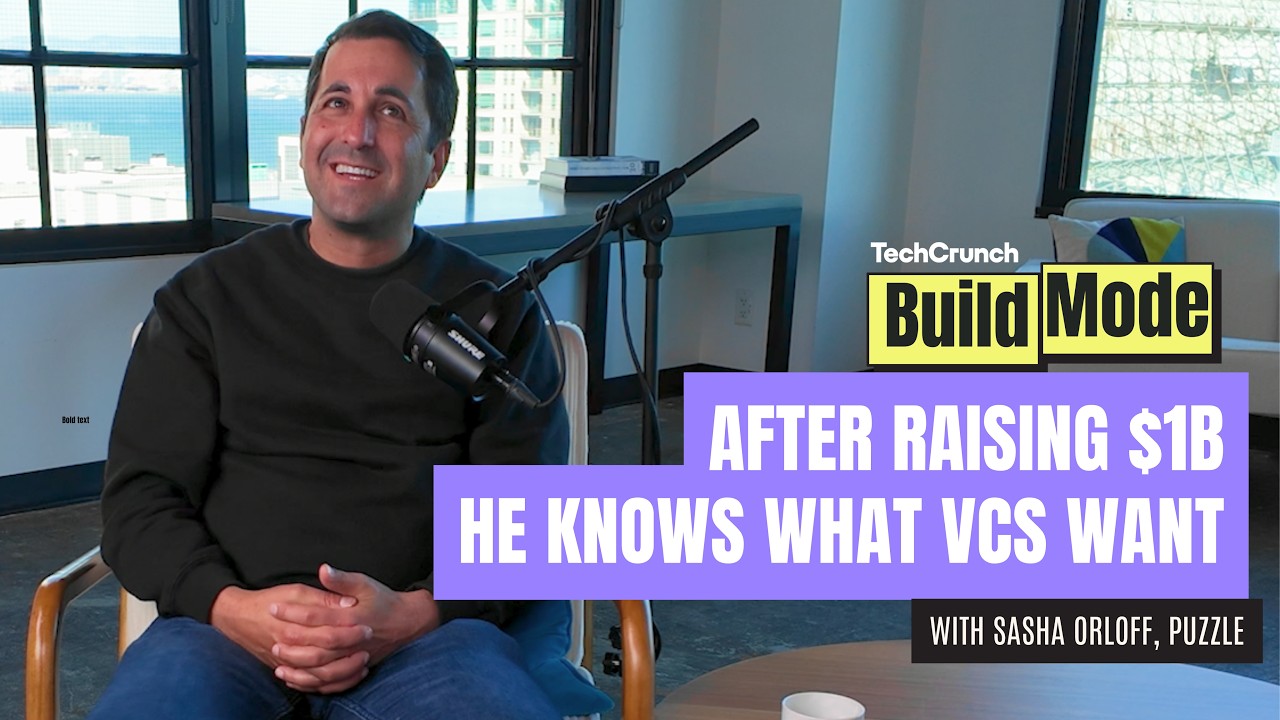
Investors want founders who understand the financial reality of their business. Messy data, misunderstood metrics, or waiting until you’re nearly out of cash to start fundraising can cost founders leverage, valuation, and even a term sheet. In this episode of Build Mode, host Isabelle Johannesen sits down with Sasha Orloff, founder and CEO of Puzzle…
Published

on

Investors want founders who understand the financial reality of their business. Messy data, misunderstood metrics, or waiting until you’re nearly out of cash to start fundraising can cost founders leverage, valuation, and even a term sheet.

In this episode of Build Mode, host Isabelle Johannesen sits down with Sasha Orloff, founder and CEO of Puzzle and Startup Battlefield alum, to talk about what he’s learned from building companies that have raised more than $1 billion collectively.

Sasha breaks down what investors look for during fundraising, which financial metrics founders should know by heart, and why VCs don’t expect your startup to be perfect—they expect you to understand its reality. He also shares how he nearly lost a term sheet because his data room wasn’t ready, how fundraising diligence changes as a startup grows, and why getting your financial house in order can help founders raise with more confidence and leverage.

They get into:
– What raising more than $1 billion across multiple companies taught Sasha about fundraising
– Why investors value founders who have a strong grasp of their company’s financial reality
– The financial metrics founders should know before pitching VCs
How investor expectations change from pre-seed and seed through Series A, B, and beyond
– Why revenue growth and the quality of that revenue are critical fundraising metrics
– How runway, margins, sales efficiency, and profitability factor into investor decisions
– Why waiting until you’re running out of cash can hurt your fundraising leverage
– How Sasha nearly lost a term sheet because his data room wasn’t ready
– Why financial organization and compliance can influence investor confidence and startup valuations
– What founders should have prepared for the due diligence process
– Why VCs don’t expect perfection—and why being honest about what isn’t working can make for a stronger pitch
– How Sasha’s own fundraising and finance frustrations ultimately led him to build Puzzle
– How AI could change the way startups manage accounting and understand their financial health

Chapters:
00:00 – Why VCs Want Founders Who Understand Reality
01:26 – Sasha Orloff’s Journey to Building Puzzle
05:05 – Why Puzzle Started With Startup Founders
08:38 – What Founders Should Know Before Fundraising
11:08 – What Investors Look for During Due Diligence
14:37 – Understanding the Financial Health of Your Startup
17:52 – The Financial Mistakes Founders Make
20:19 – When Startups Need Accountants and Finance Teams
24:04 – How Sasha Almost Lost a Term Sheet
26:10 – The Financial Metrics Founders Should Know Cold
28:20 – Lessons From Raising $1B+ Across Multiple Companies
31:45 – Why Financial Readiness Matters to Investors
33:49 – How AI Is Changing Startup Accounting
37:17 – Inside Puzzle’s Series A With General Catalyst
38:52 – Launching Puzzle at Startup Battlefield
40:38 – Sasha’s Advice for Early-Stage Founders

Subscribe to Build Mode:
Apple Podcasts
Spotify
Wherever you like to listen
New episodes of Build Mode drop every Thursday.

Continue Reading

Science & Technology

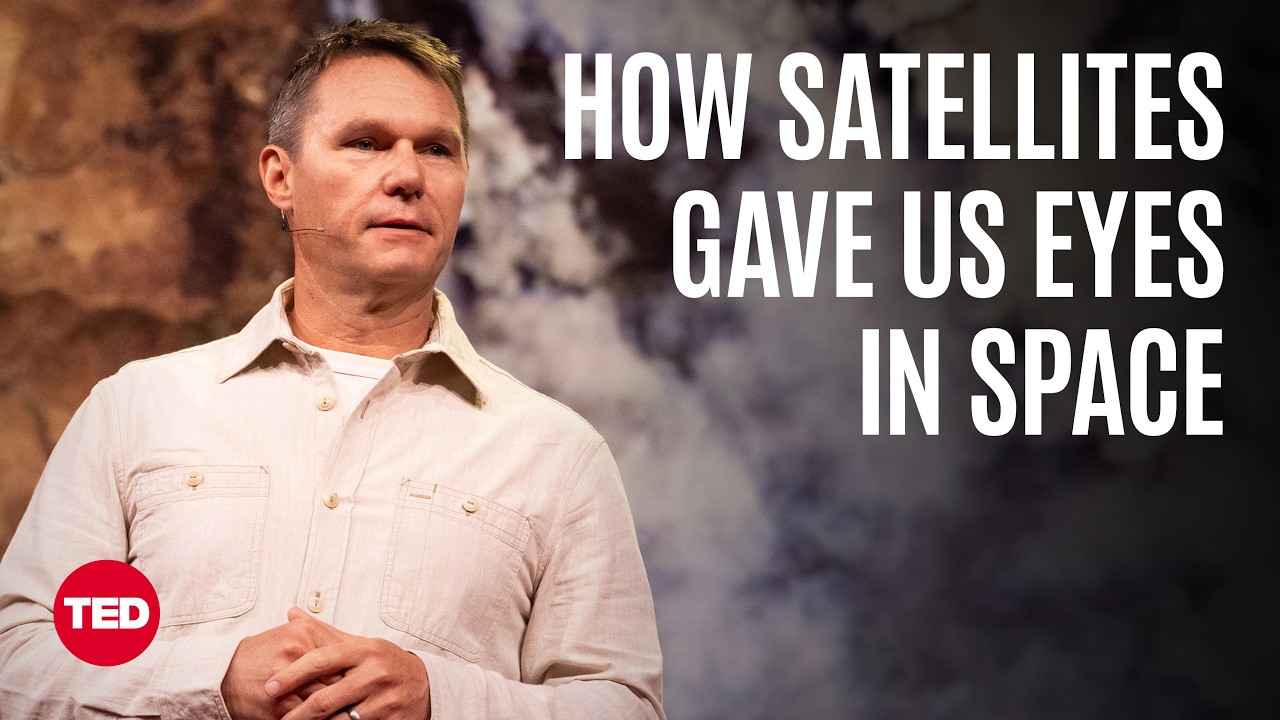
How Satellites and AI Can Protect the Planet | Robbie Schingler | TED

Space technologist Robbie Schingler cofounded a satellite company that images the whole planet every day, making visible changes on Earth. He shows how pairing that data with AI creates a “planetary intelligence” we can use to spot emerging threats we might not have seen otherwise. Now he asks: Can we close the gap between seeing…
Published

on

Space technologist Robbie Schingler cofounded a satellite company that images the whole planet every day, making visible changes on Earth. He shows how pairing that data with AI creates a “planetary intelligence” we can use to spot emerging threats we might not have seen otherwise. Now he asks: Can we close the gap between seeing a crisis coming and actually stopping it? (Followed by a note from TED guest curators Divya Siddarth and Audrey Tang) (Recorded at TED2026 on April 14, 2026)

Join us in person at a TED conference:
Become a TED Member to support our mission:
Subscribe to a TED newsletter:

Follow TED!
Instagram:
LinkedIn:
TikTok:
Facebook:
X:

The TED Talks channel features the best talks and performances from the TED Conference, where the world’s leading thinkers and doers give the talk of their lives in 18 minutes (or less) — plus originals, podcasts and exclusive content. Look for videos on Technology, Entertainment and Design as well as science, business, global issues, the arts and more. Visit for our entire library, transcripts, translations and personalized recommendations.

Watch more:

TED videos may be used for non-commercial purposes under a Creative Commons License, Attribution–Non Commercial–No Derivatives (or the CC BY – NC – ND 4.0 International) and in accordance with the TED Talks Usage Policy: . For more information on using TED for commercial purposes (e.g. employee learning, in a film or online course), submit a request at

#TED #TEDTalks #Tech #ClimateChange

Continue Reading

CNET

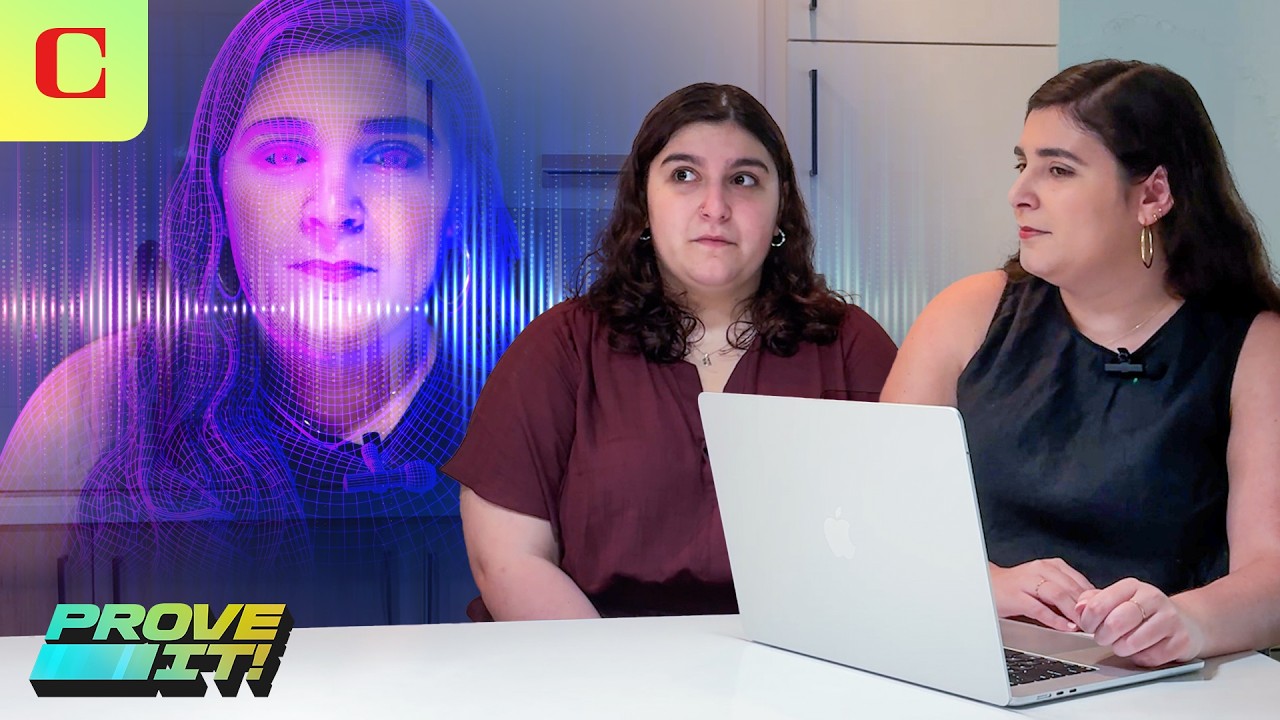
That Voicemail Isn’t Real, It’s AI. The New Wave of AI-Impersonation Scams

Scammers are using AI to impersonate high-profile targets, such as celebrities and politicians. Here’s how you can stay safe. You can find the products mentioned in this article linked below Commerce Link *CNET may get a commission on these offers Link to CNET article: Read more about X on CNET.com: Timecode Chapters: 00:00 The Threat…
Published

on

Scammers are using AI to impersonate high-profile targets, such as celebrities and politicians. Here’s how you can stay safe.

You can find the products mentioned in this article linked below
Commerce Link
*CNET may get a commission on these offers

Link to CNET article: Read more about X on CNET.com:

Timecode Chapters:
00:00 The Threat of AI Impersonation
01:25 How Deepfakes Are Used in Politics
04:07 The Rise of Hyper-Personalized Fraud
05:42 Testing a Voice Clone on My Boss
07:11 Audio Blind Taste Test With My Sister
11:10 How to Stay Vigilant Against AI Clones

Video Credits:
Host: Katelyn Chedraoui
Scripted by:Katelyn Chedraoui
Producer: Numi Prasarn
Camera: Carly Marsh
Video Editor: Jon Gomez
Thumbnail Designer: Zooey Liao

Add CNET as a trusted news source
Never miss a deal again! See CNET’s browser extension 👉
Check out CNET’s Amazon Storefront:
Subscribe to CNET on YouTube:
Follow us on TikTok:
Follow us on Instagram:
Follow us on Bluesky:
Like us on Facebook:
CNET’s AI Atlas:
Follow us on X:
Visit CNET.com:

Continue Reading

Trending