Connect with us

Science & Technology

NEA’s Tiffany Luck says enterprises are still figuring out their AI ROI | Equity Podcast

Tokenmaxxing was the hottest trend in Silicon Valley earlier this year, with CEOs encouraging employees to push AI usage as far as it would go. Then the bill came due. Uber reportedly blew through its annual AI budget in a few months, some companies cut Claude licenses for parts of their org, and Meta killed…


Published

on

Tokenmaxxing was the hottest trend in Silicon Valley earlier this year, with CEOs encouraging employees to push AI usage as far as it would go. Then the bill came due. Uber reportedly blew through its annual AI budget in a few months, some companies cut Claude licenses for parts of their org, and Meta killed its internal leaderboard.

This tension between hype and ROI is exactly where NEA partner Tiffany Luck lives these days. She got her start convincing companies that e-commerce was the future, and now she’s all in on AI, especially when it comes to the possibilities for “magic moments” in the consumer business.

On this episode of TechCrunch’s Equity podcast, Luck joins Rebecca Bellan to talk about the future of personal agents, her thoughts on this year’s AI IPOs, and how startups are stepping in to help enterprises track return on AI spend.

Subscribe to Equity on YouTube, Apple Podcasts, Overcast, Spotify and all the casts. You also can follow Equity on X and Threads, at @EquityPod.

Chapters:

00:00 Intro

00:51 Tiffany Luck’s path from Lot18 to Amazon to VC

3:45 Magic moments: Waymo, healthcare, and the gap in personal agents

7:36 Privacy, security, and trusting AI with your life

10:39 IPO outlook: Anthropic vs. OpenAI on public markets

13:58 Compute, infrastructure, and where the value sits

15:41 What’s the ROI on tokenmaxxing?

27:07 Forward deployed engineers as a ‘Trojan horse’

32:49 Outro

Continue Reading
Advertisement
1 Comment

1 Comment

  1. @1o1carolina53

    June 17, 2026 at 3:09 pm

    Good Lord

    You’re beautiful……

Leave a Reply

Your email address will not be published. Required fields are marked *

Science & Technology

Don’t Give VCs More Leverage Than You Have To

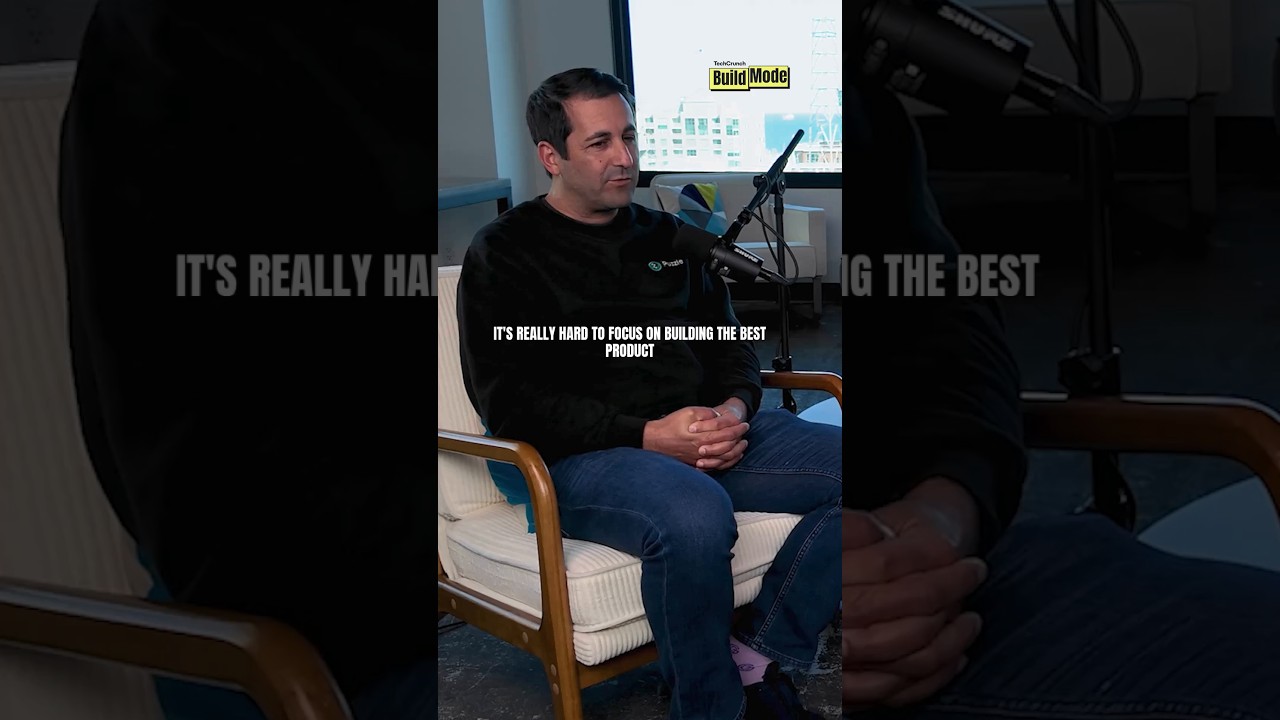
Investors know when a founder is desperate. Sasha Orloff has raised a collective $1 billion in his career and he shares his advice for staying on top of your financial situation. Listen to the full episode of Build Mode with Puzzle’s founder and CEO:
Published

on

Investors know when a founder is desperate. Sasha Orloff has raised a collective $1 billion in his career and he shares his advice for staying on top of your financial situation.

Listen to the full episode of Build Mode with Puzzle’s founder and CEO:

Continue Reading

Science & Technology

The Singularity Isn’t the Real Reason Stripe Paid $7.5B for OpenRouter

Stripe claims “the singularity” is here, and justifies its $7.5B acquisition of OpenRouter. The truth, as the Equity podcast crew highlights, is much more practical, as unglamorous as token expense management may seem:

Published

on

Stripe claims “the singularity” is here, and justifies its $7.5B acquisition of OpenRouter.

The truth, as the Equity podcast crew highlights, is much more practical, as unglamorous as token expense management may seem:

Continue Reading

Science & Technology

Why is the DOJ investigating Andreessen Horowitz over board seats? | Equity Podcast

Andreessen Horowitz has two partners sitting on the boards of companies that now compete with each other: Ben Horowitz at Databricks and Martin Casado at Fivetran. Nothing too scandalous on the surface, except ⁠the Department of Justice has reportedly been investigating the arrangement ⁠for almost a year, dusting off a 112-year-old antitrust law that’s rarely…

Published

on

Andreessen Horowitz has two partners sitting on the boards of companies that now compete with each other: Ben Horowitz at Databricks and Martin Casado at Fivetran. Nothing too scandalous on the surface, except ⁠the Department of Justice has reportedly been investigating the arrangement ⁠for almost a year, dusting off a 112-year-old antitrust law that’s rarely used against VCs. 

Board conflicts aren’t exactly new, and these companies weren’t necessarily direct competitors when a16z first invested in them. But as portfolio companies expand into each other’s markets, the DOJ’s scrutiny raises a much bigger question for venture firms: How do you manage board seats when the boundaries between your portfolio companies keep moving? 
 
On this episode of TechCrunch’s⁠ Equity⁠ podcast, Kirsten Korosec, Anthony Ha, and Sean O’Kane dig into the a16z probe, what it could mean for VCs, and more of the week’s headlines. 

Subscribe to Equity on ⁠YouTube⁠,⁠ Apple Podcasts⁠,⁠ Overcast⁠,⁠ Spotify⁠ and all the casts. You also can follow Equity on⁠ X⁠ and⁠ Threads⁠, at @EquityPod. 
 
Chapters: 
 
00:00 Intro 
1:02 TechCrunch Disrupt and the Startup Battlefield 200 
3:17 The DOJ is investigating a16z over board seats 
14:47 Why Stripe just paid $7.5B for “the Stripe for AI” 
18:18 The mid-tier AI scramble: gateways, pivots, and acquihires 
23:17 Anthropic’s revenue surges while OpenAI’s losses deepen 
27:08 Also raises $150M and drops the “micro mobility” label 
32:30 Uber teams up with Zipline for drone delivery 
37:19 Wispr hits a $2B valuation 
38:26 Outro

Continue Reading

Trending